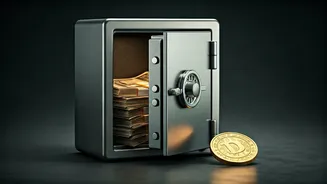









What is a 'Cash Buffer'?
Think of a cash buffer, often called an emergency fund, as your personal financial shock absorber. It’s not your regular savings account for a vacation or a new phone. This is a separate, dedicated pool of money that is easily accessible and sits there
for one purpose only: to cover unexpected, essential expenses. This isn't investment capital; it's insurance against life’s curveballs. The key characteristics are liquidity (you can get it within a day or two without penalty) and safety (it shouldn't be invested in anything that can lose value). It's the boring but essential bedrock upon which a strong investment portfolio is built.
Your Defence Against Panic and Ruin
Why is this buffer so critical before investing in volatile assets? The reason is both financial and psychological. Imagine you’ve invested a significant sum in the stock market, and it’s doing well. Suddenly, you face a major medical emergency or an unexpected job loss. Without a cash buffer, your only option might be to sell your investments. If the market is down at that moment—as it often is during times of economic uncertainty—you’ll be forced to sell at a loss, locking in your losses and derailing your long-term goals. A cash buffer allows you to navigate these emergencies without touching your long-term investments. It gives you peace of mind and the resilience to stay invested during downturns, which is often when the best long-term gains are solidified. It prevents a short-term problem from becoming a long-term financial disaster.
How to Calculate Your Ideal Buffer
The standard rule of thumb is to have three to six months' worth of essential living expenses saved in your cash buffer. To calculate yours, be ruthlessly honest about what is 'essential'.
1. **List Your Must-Pay Monthly Bills:** Include home loan EMIs or rent, electricity, water, internet, and phone bills.
2. **Add Household Essentials:** Account for groceries, cooking gas, and transportation costs.
3. **Factor in Dependent Costs:** This includes school fees, tuition, and basic needs for children or elderly parents.
4. **Include Insurance Premiums:** Don't forget your health, life, and vehicle insurance premiums.
Add up this total for one month and multiply it by three for a basic buffer, or by six for a more robust one. If you are a freelancer, a small business owner, or in a volatile industry, aiming for six to twelve months is even wiser. This money should be kept in a high-yield savings account or a liquid fund—somewhere safe and accessible, but not so accessible that you’re tempted to dip into it for non-emergencies.
Defining 'Volatile Investments'
Once your buffer is in place, you can start thinking about investments. But it's crucial to understand what 'volatile' means. These are assets whose prices can swing dramatically over short periods. They offer the potential for high returns but come with an equally high risk of significant losses.
- **Equities (Stocks):** Especially small-cap and mid-cap stocks, which can be more unpredictable than their large-cap counterparts.
- **Cryptocurrencies:** Known for extreme price fluctuations, making them one of the most volatile asset classes available today.
- **Derivatives (Futures & Options):** Complex financial instruments that are highly leveraged and risky, intended for experienced traders.
- **Angel Investing/Startup Equity:** Investing in early-stage companies is a high-risk, high-reward game where most investments can fail.
These are not places for the money you need to live on. They are for capital you can afford to lose.
The Smart Investor's Order of Operations
Wealth creation isn't a race; it's a structured process. Think of it as building a pyramid. The wide, solid base is your cash buffer.
1. **Build the Base:** Fully fund your emergency cash buffer. Do not skip this step.
2. **Secure the Core:** Start investing in relatively safe, long-term instruments like Public Provident Fund (PPF), fixed deposits, and large-cap mutual funds through SIPs. This forms the stable middle of your pyramid.
3. **Add the Peak:** Only after the base and core are secure should you allocate a *small percentage* of your investment capital (typically 5-10%) to volatile, high-risk assets. This is the 'satellite' part of your portfolio, where you take calculated risks for potentially higher returns, knowing that your financial foundation is not at stake.