

A Perfect and Unchanging Universe
For nearly 2,000 years, the Western world’s view of the cosmos was shaped by the Greek philosopher Aristotle. In this model, the Earth was the stationary centre of everything. Surrounding it were a series of perfect, crystalline spheres carrying the Moon,
the Sun, and the planets. Beyond them all was the sphere of the 'fixed stars'. A core tenet of this belief system was that the heavens were perfect, eternal, and, most importantly, unchangeable. Change and decay happened only in the imperfect terrestrial realm, below the Moon. The celestial world above was meant to be constant and divine.
The Intruder in the Heavens
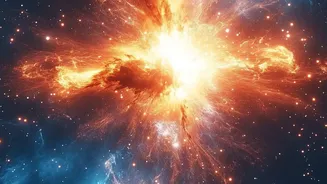
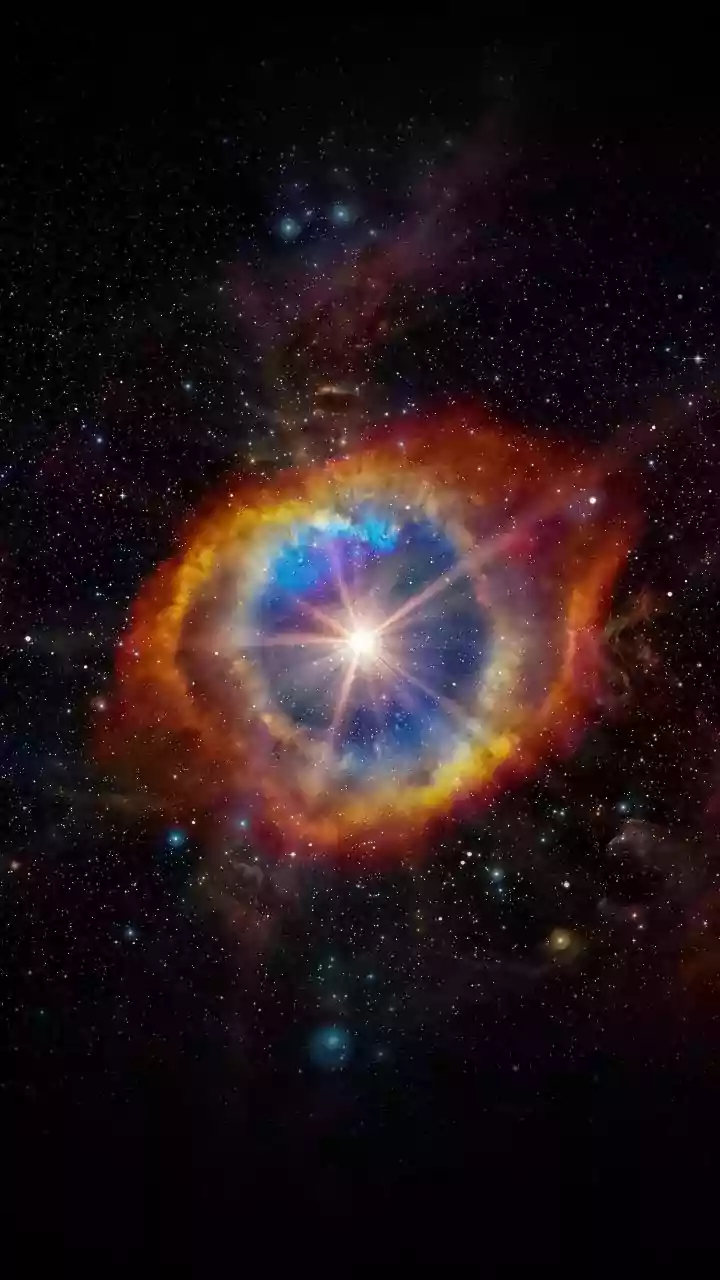
Then, in early October 1604, observers in Europe and Asia noticed a brilliant new star in the constellation Ophiuchus, the 'serpent-bearer'. It was an impossible sight. The 'stella nova', or new star, grew so bright that it outshone all other stars and even the planet Jupiter, remaining visible during the day for over three weeks. Its appearance posed an immediate and profound problem for the followers of Aristotle: if the heavens were truly unchangeable, how could a new star suddenly appear where none had been before?
Johannes Kepler's Careful Observations
While many saw the new star, the German astronomer Johannes Kepler gave it the most systematic study. Though not the first to spot it, he began his meticulous observations on October 17 and tracked the object for over a year until it faded from view. Inspired by Tycho Brahe's work on a similar supernova in 1572, Kepler documented his findings in a book titled 'De Stella Nova' ('On the New Star'). His most critical contribution was using geometry and careful measurement to show that the star had no discernible parallax—the apparent shift in position when viewed from different locations. This proved it was not an atmospheric phenomenon but was located far beyond the Moon, deep within the supposedly immutable realm of the fixed stars.
Shattering the Crystal Spheres
Kepler's conclusion was revolutionary. The appearance of a new star—and its eventual fading—in the celestial sphere was direct, observable evidence that the heavens were not changeless. This single event provided powerful ammunition for a new generation of thinkers who were beginning to question ancient authority. It bolstered the Sun-centred, or heliocentric, model proposed by Nicolaus Copernicus decades earlier. If Aristotle's perfect heavens could change, his entire Earth-centred cosmology was thrown into doubt. The supernova of 1604 didn't just add a new point of light to the sky; it punched a hole in a worldview that had dominated for centuries.
The Dawn of Modern Astronomy
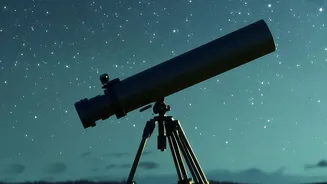
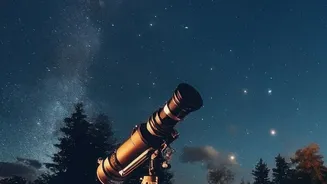
The supernova acted as a catalyst. It encouraged astronomers like Galileo Galilei, who lectured on the event, to challenge established doctrines with their own observations. Just a few years later, Galileo would point his newly improved telescope at the heavens, discovering the moons of Jupiter and the phases of Venus—further evidence that demolished the old Aristotelian system. Kepler's Star was a pivotal moment where direct observation began to triumph over inherited dogma, paving the way for the scientific revolution and our modern, dynamic understanding of the cosmos.
What We Know Today
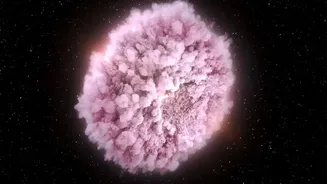
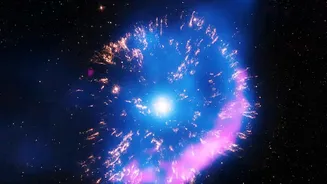
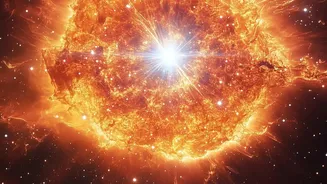
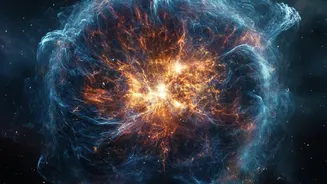
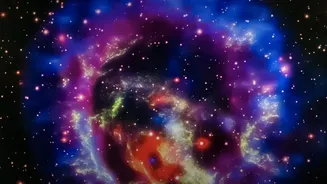
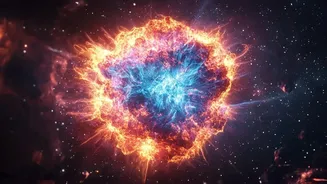
Today, we know that the 'new star' of 1604 was not a birth but a violent death. Designated SN 1604, it was a Type Ia supernova, the thermonuclear explosion of a white dwarf star in a binary system. Located an estimated 20,000 light-years from Earth, the light from this cataclysmic event took millennia to reach us. The remnant of Kepler's Supernova is still an object of intense study, helping astronomers understand the life cycle of stars and the expansion of the universe.