






A Blueprint Passed Through Generations
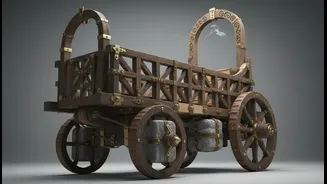
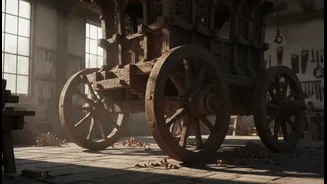
The construction of the three chariots—Nandighosha for Lord Jagannath, Taladhwaja for Lord Balabhadra, and Darpadalana for Devi Subhadra—is a sacred responsibility entrusted to a select group of artisans known as 'Biswakarma Sevayats'. These craftsmen
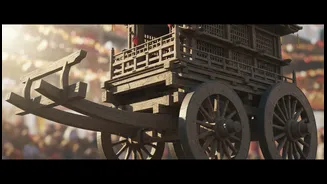
do not use written blueprints or modern machinery. Instead, they rely on hereditary knowledge passed down orally for centuries, using measurements like 'haat' (hand size) and 'anguli' (finger size). This tradition ensures that the chariots, despite being rebuilt from scratch annually, maintain their precise dimensions and structural integrity, with Lord Jagannath's Nandighosha standing tallest at around 45 feet.
The Science of Selecting Wood
The process begins months before the yatra with the careful selection of wood. Specific trees like Phasi (Anogeissus acuminata) and Dhausa (Anogeissus latifolia) are chosen from designated forests. This isn't random; it’s a deliberate choice based on material science. Phasi wood, known for its robustness, is used for the massive wheels, while the strong and durable Dhausa is ideal for the axles that bear the immense load. Each log must meet strict criteria for height and girth, ensuring it can handle the tremendous stress and strain during the procession. This careful selection is the first step in mastering the physics of the structure.
Mastering the Center of Gravity
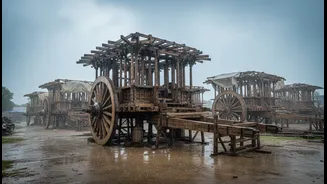
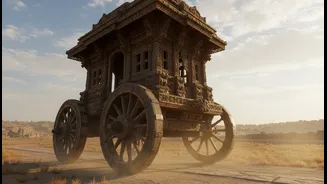
One of the most critical physics principles at play is the center of gravity. The chariots are engineered to be incredibly stable, a necessity when being pulled by thousands of devotees. The design features a wide, heavy base that tapers upwards, ensuring a low center of gravity. Lord Jagannath's chariot, Nandighosha, stands on 16 massive wheels, each about seven feet in diameter. This broad and heavy foundation prevents the towering structure from tipping over, much like how a pyramid maintains its stability. The sheer weight at the bottom anchors the entire chariot, allowing the ornate upper sections to rise high without compromising balance.
The Genius of Nail-Free Joinery
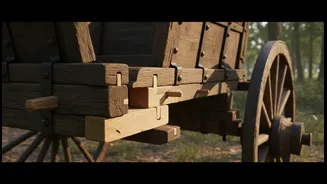
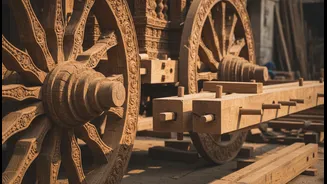
Perhaps the most astounding engineering feat is that these massive structures are assembled without a single iron nail. Instead, the Biswakarmas employ ancient joinery techniques, fitting over 800 pieces of wood for Nandighosha alone using mortise and tenon joints, pegs, and dowels. This method, locally known as 'salabendha', provides a crucial advantage: flexibility. A rigid structure with metal nails would be more prone to cracking under the dynamic stress of movement. The wooden joints allow for micro-movements, absorbing and distributing the immense torsional forces generated as the chariot is pulled along the Bada Danda (Grand Road), preventing catastrophic failure.
Wheels and Axles: Overcoming Inertia
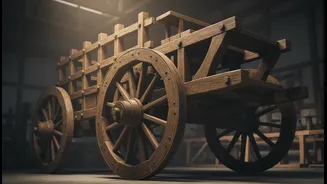
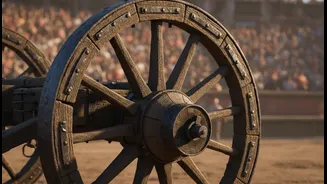
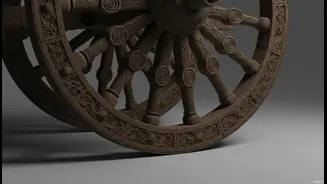
Setting a multi-tonne chariot in motion requires overcoming immense inertia, and the design of the wheels is key. The large diameter of the wheels helps in rolling over the uneven surfaces of the road with greater ease. The wheels are not monolithic but are constructed from sections of wood, which helps in distributing stress more evenly. They are fixed to the axles, which are made from the strongest Dhaura wood to bear the load. The entire weight of the chariot, its divine occupants, and the elaborate decorations is channelled down through the body, onto the axles, and finally to the wheels, demonstrating a sophisticated understanding of load distribution.