






Beyond the Marketing Hype
Tech companies and AI evangelists are framing large language models (LLMs) as revolutionary partners, capable of everything from eliminating writer's block to generating entire novels over a weekend. The allure is obvious: faster turnarounds, endless
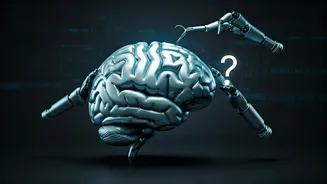
ideas, and a shortcut through the often-grueling creative process. This narrative is powerful and, for many, seductive. Yet it often glosses over the fundamental mechanics of these tools. Current AI models don't think or understand; they are sophisticated pattern-matchers, trained on vast datasets of existing text to predict the next most likely word. They are, in essence, remixing what has already been written by humans, which is a far cry from genuine creation.
The Limits of the Algorithm
When writers look past the polished demos, the cracks in AI's capabilities become clear. These systems often struggle with the very things that define quality writing: nuance, emotional depth, and originality. Because they lack lived experience, their attempts at storytelling can feel flat, recycling familiar tropes and predictable character arcs. Furthermore, AI models are prone to “hallucinations,” where they confidently state incorrect facts or invent sources. They can also reflect and amplify biases present in their training data, producing content that is stereotyped or culturally unaware. Their output can sound plausible and fluent, but this smoothness can mask a lack of genuine understanding or, worse, propagate misinformation. Relying on them without rigorous oversight isn't just a creative risk; it's an ethical one.
What AI Can't Replicate
The conversation about AI replacing writers often misses the point of what makes writing valuable in the first place. It's not just about arranging words into grammatically correct sentences. It’s about human connection. A writer's unique voice, shaped by their personal experiences, values, and perspective, is something an algorithm cannot possess. True creativity isn't about statistical probability; it's about making choices, taking risks, and conveying a specific intent or emotion that resonates with a reader. AI can generate text, but it cannot have a purpose. It cannot draw from a well of personal memory, exercise ethical judgment, or build the trust with an audience that comes from authentic, human-driven storytelling.
A New Professional Responsibility
Questioning AI's confident claims is not Luddism; it is a core professional responsibility for writers today. As communicators, writers are uniquely positioned to shape the public's understanding of this technology. This requires moving beyond a simple “man vs. machine” debate and engaging with the tools critically. It means understanding their limitations and using them as assistants, not authors. The real challenge for the modern writer is not to compete with AI on speed, but to provide the essential human layer that machines cannot: fact-checking, providing context, ensuring originality, and taking accountability for the final work. Transparency is also key; disclosing when AI has been used for assistance fosters trust with readers and publishers alike.