





The Unforgiving Lunar Night
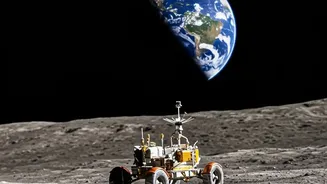
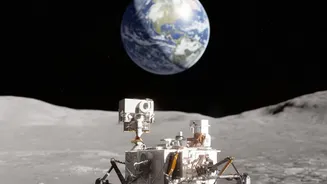
Surviving on the Moon isn't just about navigating craters and dust; it's a battle against temperature. With virtually no atmosphere to trap heat, the lunar surface experiences wild thermal swings. During the two-week-long night, any sunlight-dependent
machine is left in total darkness and crippling cold. These conditions can freeze batteries, crack circuits, and destroy sensitive scientific instruments, effectively ending a multi-million-dollar mission. Early lunar missions were short dashes during the relative safety of the lunar morning. But for long-term exploration, especially in the promising but permanently shadowed regions near the poles, rovers need a way to generate their own warmth without sunlight.
The Unsung Hero: Radioisotope Heater Units
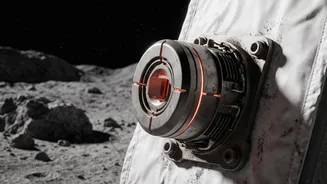
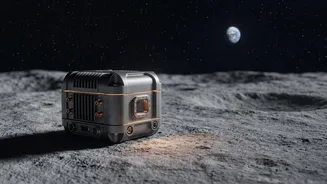
The primary solution to this freezing problem is a small but powerful device called a Radioisotope Heater Unit, or RHU. These are not generators that power the rover's wheels or computers; their job is much simpler but just as critical: they produce heat. An RHU is essentially a tiny, indestructible furnace that doesn't need any electricity or solar power to run. Each unit, often no bigger than a C-cell battery, provides a small but constant stream of warmth, ensuring that a rover's vital components stay within their operational temperature range even when the world outside is frozen solid. By using RHUs, mission designers can dedicate the rover's precious battery power to science and communication, rather than draining it on simple survival heating.
How a Tiny Pellet Creates Decades of Heat
The magic behind an RHU lies in the natural process of radioactive decay. Inside each unit is a small, ceramic pellet of Plutonium-238, a material chosen for its stable and predictable decay over a very long time. As the plutonium atoms naturally break down, they release energy in the form of heat. This is not a nuclear reaction like in a power plant; there is no chain reaction or fission. It's a slow, steady, and reliable process, akin to a hand warmer that can stay hot for decades. The pellet is encased in multiple layers of extremely tough, heat-resistant materials to ensure it remains safe even in the unlikely event of a launch failure. This simple, elegant system with no moving parts is one of the most reliable technologies in space exploration.
Beyond Heaters: Generating Power from Decay
While RHUs are designed solely for heating, a related technology takes the concept a step further. Radioisotope Thermoelectric Generators (RTGs) use the same principle of heat from plutonium decay but convert that heat directly into electricity. Devices called thermocouples, which generate a voltage when there is a temperature difference across them, are used to transform the heat from the decaying plutonium into a steady supply of electrical power. This is the technology that has powered legendary deep-space missions like Voyager and Mars rovers such as Curiosity and Perseverance, allowing them to operate far from the Sun or during planet-encompassing dust storms. For the Moon, this technology, often called a Multi-Mission Radioisotope Thermoelectric Generator (MMRTG), offers a way to not only survive the night but to potentially stay active through it.
The Future of Staying Warm on the Moon
As humanity plans for a sustained presence on the Moon through programs like Artemis, the need for robust power and heating is paramount. While radioisotope systems are proven and reliable, engineers are exploring a new generation of thermal technologies. NASA is working with private companies to develop new, affordable radioisotope power systems specifically for lunar operations. Other innovations include advanced insulation, phase-change materials that absorb heat during the day and release it at night, and sophisticated heat-switching devices that can actively manage a rover's temperature, dissipating heat when it's hot and insulating it when it's cold. These technologies are crucial for enabling longer missions, exploring the frigid permanently shadowed craters that may hold water ice, and ultimately, building a permanent human outpost on the Moon.