






The Promise of Processing
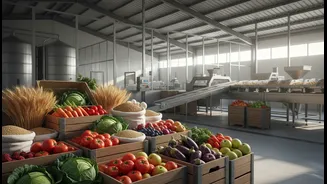
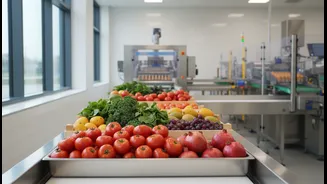
The recently inaugurated Rongoge Mega Food Park at Dolikoto is envisioned as a game-changer for Arunachal Pradesh. At its core, a mega food park is a hub designed to link agricultural production directly to processing. It offers shared infrastructure
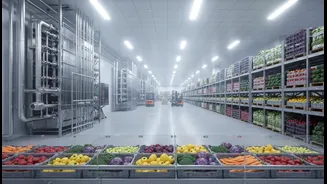
like cold storage, warehouses, quality control labs, and processing lines that individual small-scale farmers or entrepreneurs could never afford. For a state that is India's largest producer of kiwi and a major grower of oranges, pineapple, ginger, and turmeric, the potential is enormous. The goal is to transform this perishable raw produce into value-added products like juices, pickles, powders, and preserves, capturing more economic value within the state itself.
A Boost for Farmer Wallets?
One of the project's primary aims is to significantly increase farmer incomes. By creating a direct link between the farm and the factory, the park aims to cut out the middlemen who often absorb a large chunk of the profits. This cluster-based approach provides a guaranteed market for farmers, reducing their risks and ensuring more stable, and hopefully higher, prices for their produce. Studies in the Northeast have shown that even basic primary processing like cleaning, sorting, and packaging can increase a farmer's income from ginger by over 40% per kilogram. With promises of major companies like Haldiram and Varun Beverages expected to set up units, the demand for local produce is anticipated to surge, creating a more robust agricultural economy.
Tackling Tremendous Waste
Post-harvest loss is a crippling problem across India, and particularly in the Northeast, where poor road connectivity and a lack of storage facilities mean that an estimated 25-30% of fruits and vegetables perish before they ever reach a consumer. For farmers, this is not just lost produce; it is lost income and wasted effort. The Mega Food Park is designed to tackle this head-on. With its integrated cold chain and preservation units, it can quickly procure perishable goods from farmers, extending their shelf life and ensuring they can be processed or sold, rather than left to rot. This 'waste to wealth' concept is a cornerstone of the project's economic and environmental logic.
The Infrastructure Reality Check
This is where the headline's skepticism about 'infrastructure-as-instant-solution' becomes critical. While the park itself is a modern facility, it does not exist in a vacuum. The project's own promoter has highlighted the critical need for uninterrupted power and adequate water supply for its success. Furthermore, the park's efficiency is entirely dependent on the network of roads connecting it to farms, many of which are in remote areas. While the government is investing heavily in road projects across the state, with 17 new projects recently approved, challenges remain. The state's rugged terrain and annual monsoon-triggered floods and landslides often disrupt connectivity, posing a constant threat to any supply chain reliant on timely transport.
Beyond Bricks and Mortar
Ultimately, the success of the Mega Food Park will depend on much more than its physical infrastructure. A state-of-the-art factory is of little use if farmers aren't trained in the specific quality standards required for processing, or if logistical networks can't consistently deliver raw materials. Delays in past years were blamed on the slow provision of essential external infrastructure like approach roads and power. Success requires a holistic ecosystem: a skilled workforce for the 35 expected industrial units, robust market linkages for the final products, and a reliable transportation grid that can function year-round. The park creates the opportunity for industrial development, but it cannot single-handedly solve the deep-rooted challenges of power, connectivity, and workforce training that have long constrained the region's growth.