





The Colour and Flavour of Rain
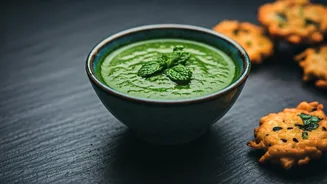
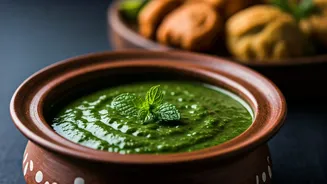
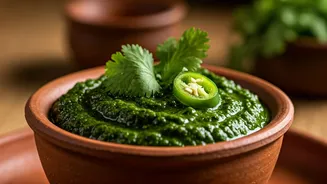
As the grey skies open up, a splash of brilliant green on the plate feels like a promise. Mint chutney, or pudina chutney, is more than just a dip; it's a sensory experience tied directly to the Indian monsoon. Its sharp, cool freshness cuts through the humidity
of the season, a bright counterpoint to the earthy smell of petrichor. The flavour profile is a masterful balancing act: the cooling taste of fresh mint leaves, the sharp tang of lemon or raw mango, the fiery kick of green chillies, and a hint of sweetness or spice from jeera or ginger. It is the taste of relief, of comfort, and of a season joyfully welcomed.
The Perfect Partner for Fried Delights
Monsoon is the unofficial season of deep-fried food in India. From street-side stalls to home kitchens, the sound of sizzling bhajiyas, samosas, and kachoris is everywhere. And mint chutney is their soulmate. Why? It provides a crucial acidic and fresh element that cuts through the richness and oiliness of these snacks. A hot, crispy aloo bonda dipped into cool, zesty mint chutney is a study in contrasts that creates a perfect, harmonious bite. It prevents the palate from becoming overwhelmed, allowing you to enjoy one more pakora than you probably should. Without it, the experience is simply incomplete; the chutney elevates a simple snack into a celebrated ritual.
A Dose of Traditional Wisdom
The chutney's essential status isn't just about taste. Traditional Indian wisdom and Ayurvedic principles have long celebrated the properties of its core ingredients, especially during the monsoon when digestion can be sluggish. Mint is renowned for its digestive aids; it helps soothe the stomach and combat indigestion. Ginger and cumin, often added to the blend, are also powerful digestive stimulants. In a season where the humidity can take a toll on the body's digestive fire (agni), this zesty condiment is a delicious and natural way to keep your gut happy. It's a classic example of how Indian cuisine seamlessly integrates flavour with function, turning food into a form of wellness.
The Constant in Every Kitchen
One of the chutney's greatest strengths is its versatility and simplicity. While the core ingredients remain mint and chilli, the recipe is a canvas for regional and household variations. Some add a handful of coriander for body and a different herbaceous note. Others toss in a piece of onion for pungency or peanuts and coconut for a creamy texture, especially in the western and southern parts of India. A spoonful of yogurt can transform it into a milder, creamier dip perfect for kebabs. It’s not just a dip for snacks; it's spread in sandwiches, drizzled over chaat, and mixed with rice. This adaptability makes it a constant fixture, a quick-to-prepare condiment that finds its way onto the table in countless forms.
An Heirloom on a Plate
For many, the definitive mint chutney recipe is not found in a cookbook but in memory. It's the one made by a mother or grandmother, pounded traditionally on a stone sil-batta, its texture and flavour impossible to replicate perfectly with a modern blender. The proportions of mint to coriander, the exact number of chillies, the souring agent of choice — these are secrets passed down through generations. Making it is a ritual, a connection to family and heritage. Each household’s version tells a story, a small but significant piece of its culinary identity.