
Why Water Is the Ultimate Lunar Resource
The excitement around lunar water isn't just about giving astronauts something to drink. Its true value lies in what it can become. Through a process called electrolysis, water (H₂O) can be split into its core components: hydrogen and oxygen. Oxygen provides
breathable air, a fundamental requirement for any human habitat. Hydrogen, meanwhile, is a powerful rocket propellant. This concept, known as in-situ resource utilization (ISRU), is a complete game-changer. Instead of launching heavy, expensive tanks of water, air, and fuel from Earth, future lunar settlers could generate these essentials on-site. This dramatically reduces the cost and complexity of long-term missions, making a sustainable base economically viable. Suddenly, the Moon isn't just a destination; it's a potential refueling station for deeper space exploration, including missions to Mars.
The Search in Permanent Darkness
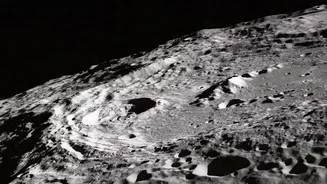
Finding this crucial resource is a monumental challenge. Most lunar ice is concentrated in permanently shadowed regions (PSRs) near the Moon's poles. These are craters and depressions whose floors have not seen direct sunlight for billions of years, creating frigid traps where ice can remain stable. Exploring these dark, extremely cold areas requires a new generation of technology. Orbiting spacecraft like NASA's Lunar Reconnaissance Orbiter and India's Chandrayaan missions used instruments like spectrometers and radar to create initial, wide-area maps indicating the presence of hydrogen, a key signifier of water. But to get a detailed understanding, surface missions are essential. New methods are also being developed, such as using seismic waves from drills or moonquakes to detect subsurface ice, as frozen ground transmits vibrations differently than dry soil.
A Global Fleet of Ice Hunters
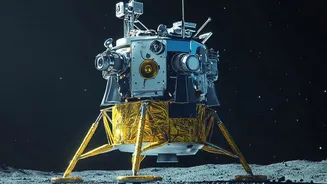
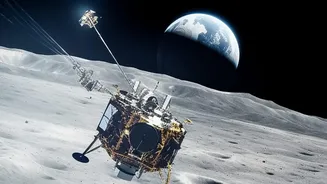
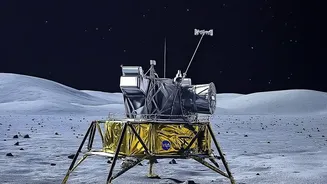
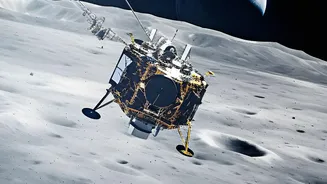
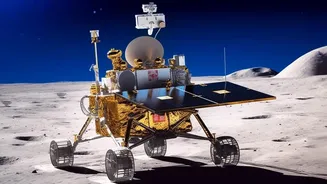
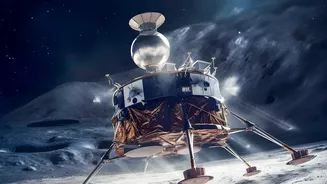
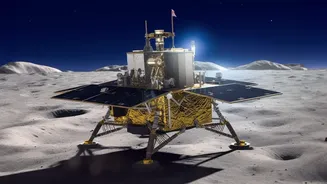
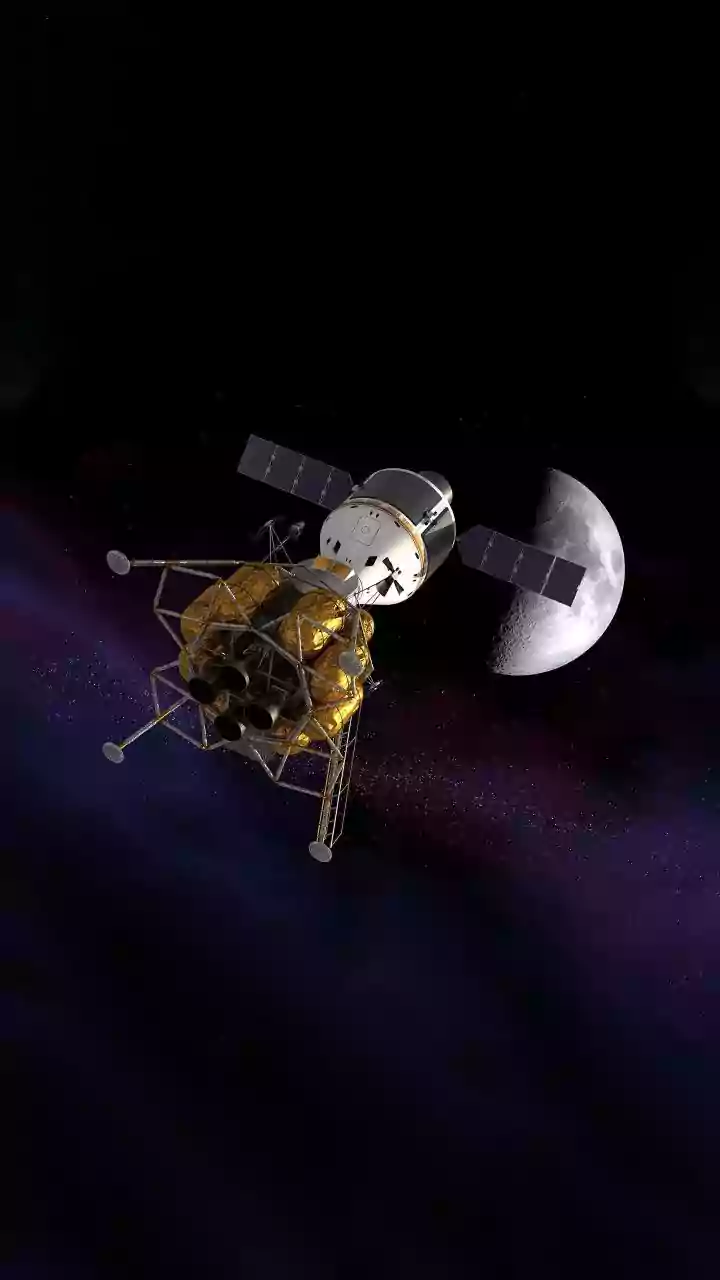
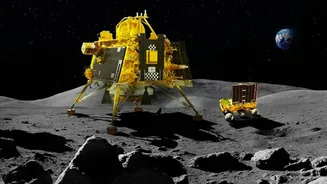
The race to map these resources is a global endeavor. NASA's Artemis program, which aims to establish a long-term human presence on the Moon, is a primary driver of this effort. A key upcoming mission is the Volatiles Investigating Polar Exploration Rover (VIPER). After being cancelled in 2024 due to costs, the fully-built rover was revived in 2025 and is now slated for a 2027 launch with Blue Origin. VIPER is specifically designed to enter PSRs, drill into the lunar soil, and directly measure the concentration and composition of water ice, creating the first ground-truth resource maps of their kind. Other nations are also in the hunt. China's Chang'e-7 mission, planned for late 2026, will use a lander, rover, and a novel hopping probe to investigate shadowed craters near the south pole. Meanwhile, a joint mission from Japan's JAXA and India's ISRO, called LUPEX, will deploy a rover with a NASA-provided neutron spectrometer no earlier than 2028 to search for water.
From Resource Map to Lunar Base
A detailed map of lunar water ice is the foundational blueprint for constructing a permanent base. Just like on Earth, location is everything. Mission planners for the Artemis program need to select a site that offers the best of both worlds: proximity to harvestable water ice in PSRs and access to nearby sunlit areas for solar power generation. Without reliable maps, choosing a landing site for a long-term habitat would be a dangerous gamble. The data gathered by missions like VIPER and Chang'e-7 will allow NASA and other international partners to pinpoint the most resource-rich and strategically advantageous locations. These maps will not only tell us where the water is, but also how deep it is buried and in what form, which dictates the kind of excavation and processing technology required. Knowing the quantity and accessibility of the ice transforms the abstract goal of sustainability into a concrete logistical and engineering problem that can be solved.