







A Nation's Dream Takes Flight
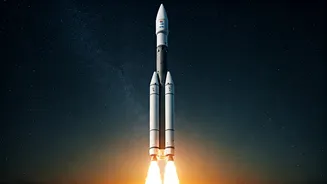
The Gaganyaan mission represents a monumental leap for India, aiming to send a crew of three astronauts into a 400-kilometre orbit for a three-day mission and bring them back safely. Success will make India only the fourth country in the world to achieve
independent human spaceflight capability, a feat that places it in an elite global club. The program is not just about planting a flag in orbit; it's a powerful statement of the nation's scientific prowess, technological self-reliance, and ambition for the future of space exploration. From developing cutting-edge life support systems to a human-rated launch vehicle, Gaganyaan is a catalyst for innovation across Indian industry and academia.
Why Practice Runs Are Not Optional
In the complex and unforgiving environment of space, there is no room for error. When human lives are at stake, the principle of 'safety above all else' dictates every decision. ISRO’s strategy is built on this foundation, mandating that every single system is tested and proven reliable in unmanned missions before astronauts, or 'Gaganyatris,' ever step on board. These uncrewed flights are full dress rehearsals, designed to validate the performance of the launch vehicle, the orbital module where the crew will live, and the critical re-entry and recovery procedures. Everything from the life support systems providing an Earth-like environment to the parachutes that ensure a safe splashdown is put through its paces in real-world conditions. ISRO has already conducted thousands of ground tests and simulations, but nothing replaces the data from an actual flight.
Meet Vyommitra, The Robotic Pioneer
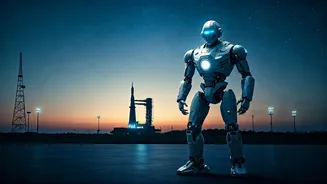
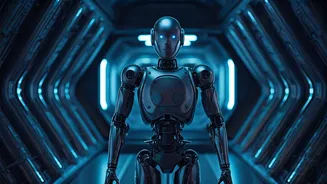
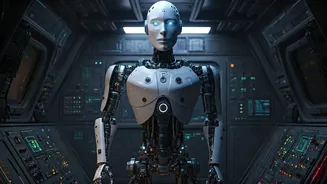
Spearheading these test flights is Vyommitra, a name derived from the Sanskrit words for 'space' and 'friend'. This half-humanoid robot, with a female-presenting torso, head, and arms, will be the sole occupant on the first uncrewed Gaganyaan-1 mission, scheduled for the latter half of 2026. Vyommitra is far more than a simple dummy; it is an intelligent stand-in for a human astronaut. Its job is to simulate human functions, interact with the life support systems, operate switch panels, and monitor the cabin's environment. It can communicate in both Hindi and English, relaying vital data on how the spacecraft performs and how the internal systems respond to the rigours of launch, orbit, and re-entry. By using Vyommitra, ISRO can gather invaluable information on the conditions an astronaut would face, ensuring the crewed capsule is perfectly prepared without taking any human risks.
Testing Every Scenario on Earth and Sky
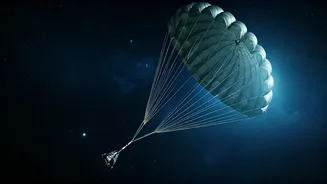
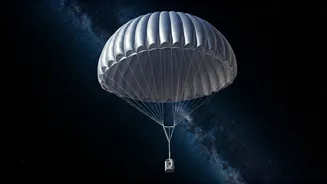
The test flights are part of a comprehensive validation process that leaves nothing to chance. Even before a rocket lifts off, ISRO has been rigorously testing crucial components on the ground. A key example is the Integrated Air Drop Test (IADT), where the crew module is dropped from a helicopter to verify the complex parachute system that will slow its descent back to Earth. These tests are designed to check performance in both normal and failure scenarios, ensuring the capsule can land safely even if a parachute fails to deploy correctly. Another vital element is the Crew Escape System, a mechanism designed to jettison the crew module to safety in case of an emergency on the launchpad or during ascent. Each successful test, whether in the sky or on the ground, builds confidence and brings the mission one step closer to its final, crewed phase.
The Deliberate Path to 2027
While the Gaganyaan project was announced in 2018 with an initial target of 2022, the timeline has been adjusted to ensure every technological challenge is met with a robust solution. The COVID-19 pandemic also contributed to delays in development and training. Now, ISRO is targeting 2027 for the first crewed launch. The path to that historic day is paved with these uncrewed missions. Following the first flight with Vyommitra, at least one more uncrewed test flight is planned for 2026 to further refine and validate all systems. This methodical, step-by-step approach is the hallmark of successful space programs worldwide. It ensures that when India’s astronauts finally look down on the Earth from orbit, they are doing so from one of the safest, most reliable spacecraft ever built.