




Meet the Real Planet
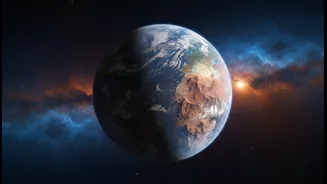
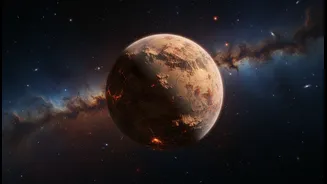
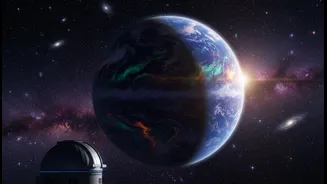
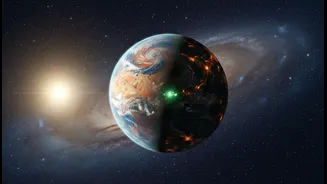
First, the exciting facts. Astronomers recently confirmed the existence of a planet named GJ 3378b, located just 25 light-years away. It’s what’s known as a “super-Earth,” a class of planet more massive than our own but lighter than ice giants like Neptune.
Initial estimates of its mass have been revised downward, suggesting it's about 2.3 times the mass of Earth, which makes it more likely to be a rocky world rather than one shrouded in a crushing gas atmosphere. It orbits its star every 21 days and sits within the “habitable zone”—the orbital distance where temperatures could potentially allow liquid water to exist on its surface. The planet receives about 90% of the radiation from its star that Earth gets from the sun, placing it in a temperate sweet spot. This makes it one of the most intriguing nearby worlds for further study.
Decoding the Buzzwords
This is where the language starts to matter. Terms like “super-Earth” and “habitable zone” have precise, and limited, scientific meanings. A “super-Earth” simply refers to a planet’s mass and size; it implies nothing about its surface conditions or suitability for life. Our own solar system doesn’t have one, making them a fascinating but alien type of planet. The “habitable zone” is even more frequently misunderstood. It is not a guarantee of habitability, but merely the region around a star where a planet could theoretically support liquid water on its surface. This possibility depends on a host of other factors, including the planet's mass, composition, and, most critically, whether it has an atmosphere. For GJ 3378b, the existence and composition of its atmosphere remain a complete mystery.
The 'Earth 2.0' Fallacy
Many headlines immediately jump to phrases like “potentially habitable” or “Earth-like.” While technically true in the narrowest sense, this language creates a powerful and often misleading impression. The public hears “habitable” and thinks “inhabited” or at least “inhabitable by humans.” This is the “Earth 2.0” fallacy. Scientists are searching for clues about how planets form and whether the conditions for life are common, but the media narrative often rushes toward the conclusion of finding a backup planet. We've seen this pattern before with other discoveries, like the planets of the TRAPPIST-1 system or K2-18b, where initial excitement in news reports outpaced the available evidence, leading to later corrections and public confusion. The truth is, a planet being in the habitable zone is just the first step on a very long checklist.
Why This Hype Is a Problem
The problem with this sensationalism is that it erodes trust. When the public is repeatedly sold a vision of “another Earth” that never quite materializes upon closer inspection, it can foster cynicism toward the scientific process itself. Science is a slow, incremental process of discovery, filled with caveats, unknowns, and careful-spoken probabilities. The pressure for clicks and engagement in the media business often clashes with this reality. Journalists and headline writers condense complex findings into bite-sized nuggets that are more dramatic but less accurate. This isn’t just about one planet; it’s about how we communicate the grand, patient search for our place in the cosmos. Overstating claims can make the public skeptical of real, hard-won breakthroughs when they occur.