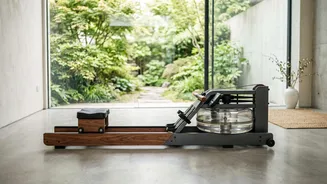






When you think of cardio, running or cycling might come to mind first. But the humble rowing machine offers a uniquely powerful, low-impact workout that engages up to 86% of your muscles in a single, fluid motion for a complete session.
More Than Just an Arm Workout
It’s one of the
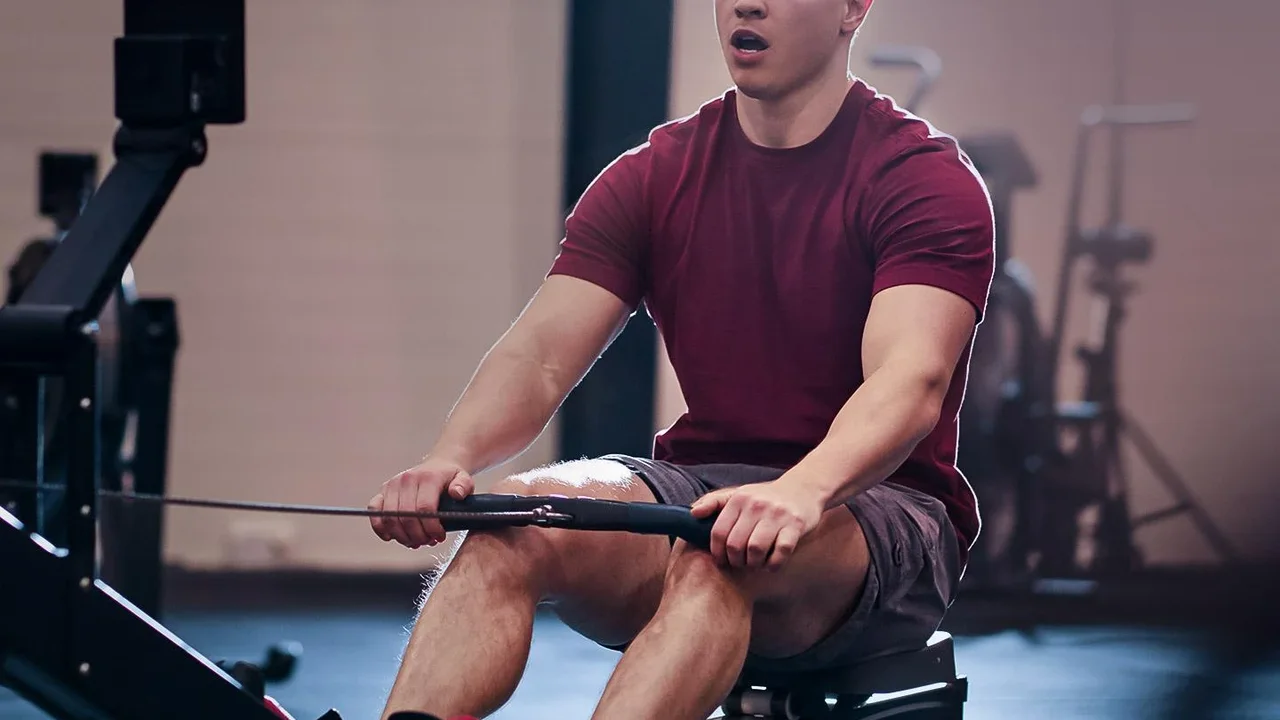
most common mistakes beginners make: assuming rowing is all about pulling with your arms. In reality, your arms play a supporting role in a movement dominated by your lower body and core. A proper rowing stroke is a coordinated sequence where power originates from the legs, is transferred through a rigid core, and is finished with the back and arms. This whole-body engagement is what makes it such an efficient and balanced exercise, building functional strength and endurance simultaneously.
The Anatomy of a Single Stroke
To understand rowing's power, you need to break down the stroke into its four distinct phases: the catch, the drive, the finish, and the recovery. At the 'catch', you are coiled forward with knees bent and arms extended, ready to unleash power. The 'drive' is the workhorse phase, initiated by a powerful push from your legs. Once your legs are nearly straight, your torso swings back, and finally, your arms pull the handle to your lower ribs to complete the 'finish'. The 'recovery' is a controlled reversal of this motion—arms extend, the torso pivots forward, and the knees bend to glide back to the catch position.
Legs: The Unsung Heroes of Rowing
Surprisingly, the legs are the primary engine of the rowing stroke, contributing around 60% of the total power. The explosive push during the drive phase heavily engages the quadriceps, hamstrings, and glutes. Your quads straighten the knees to propel your body backward, while your glutes fire to open up your hips. This makes rowing an incredible lower-body workout that builds strength and endurance in your largest muscle groups without the joint-jarring impact of exercises like running.
A Core and Back Powerhouse
While the legs provide the initial force, the core and back muscles are essential for transferring that power and maintaining stability. Your abdominal muscles, obliques, and lower back (erector spinae) work continuously to keep your torso solid and prevent energy from being lost. As you swing back during the drive and pull the handle toward your body, you engage the large muscles of your back, including the latissimus dorsi ('lats'), rhomboids, and trapezius. This consistent engagement is fantastic for building functional core strength and improving posture.
The Ultimate Cardio Conditioning Engine
By recruiting so many muscle groups at once, rowing elevates your heart rate efficiently and keeps it there, providing a superb cardiovascular workout. This high demand for oxygen strengthens the heart, improves its ability to pump blood, and increases your overall aerobic capacity (VO2 max). The rhythmic, continuous nature of the exercise improves circulation and can help lower resting heart rate and blood pressure over time. It's a low-impact activity, making it a sustainable and joint-friendly option for longterm heart health.