



A Journey to an Ocean World
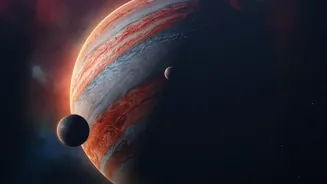
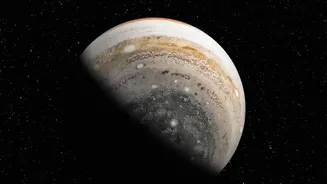
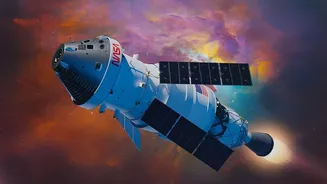
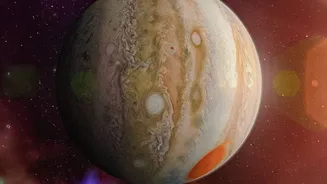
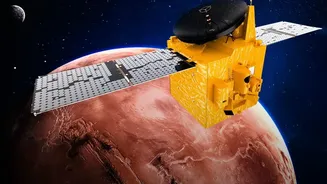
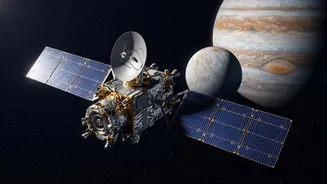
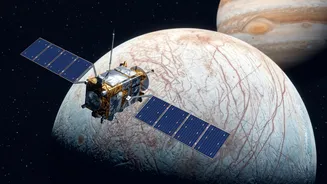
Launched in October 2024, the Europa Clipper is undertaking a remarkable 2.9-billion-kilometre journey to the Jupiter system. It's not a direct flight; the spacecraft is using a clever trajectory involving gravity assists from Mars in 2025 and Earth in December
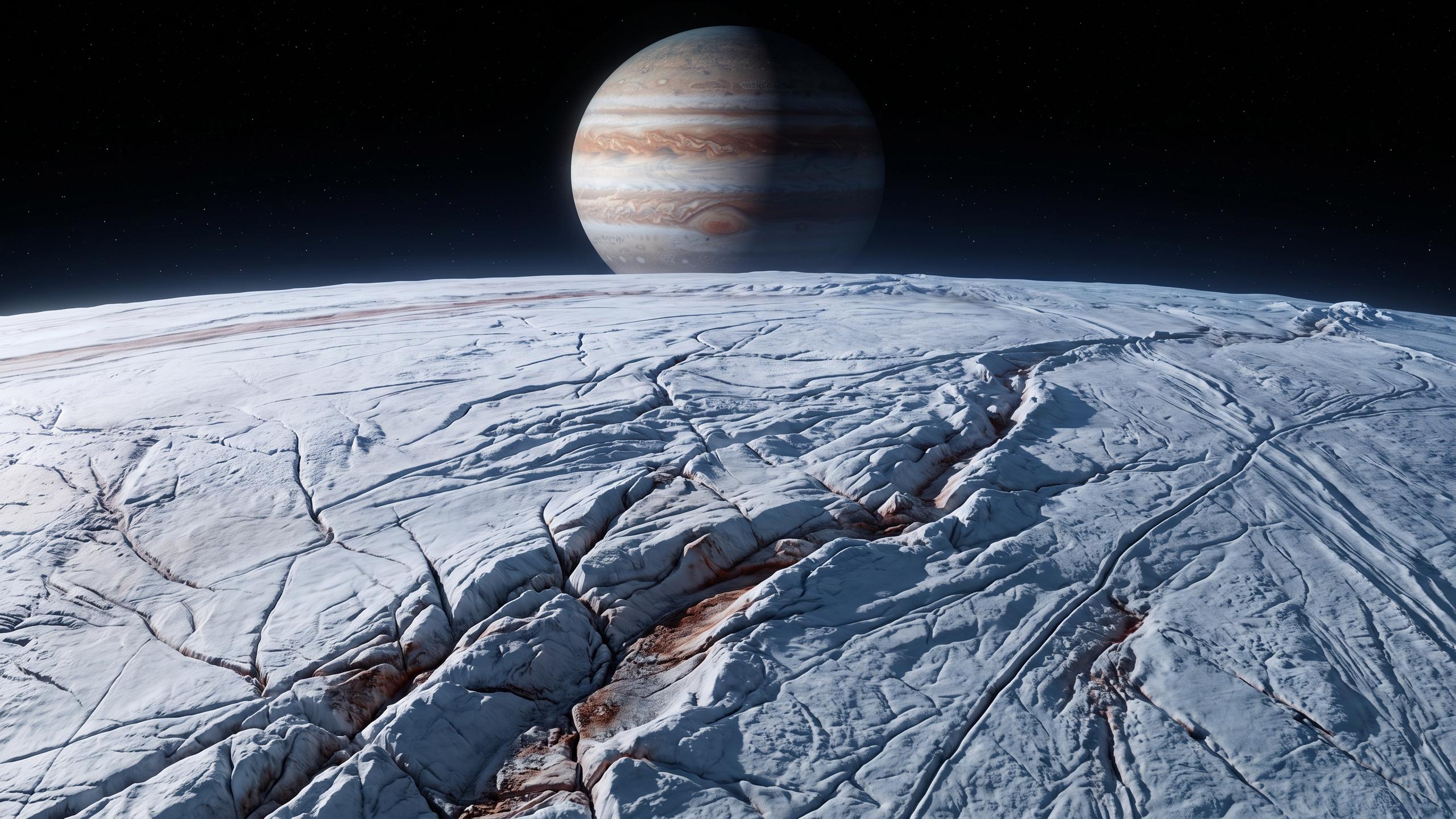
2026 to build up the necessary speed. Its arrival is slated for April 2030, when it will begin a series of nearly 50 close flybys of Europa. The mission's primary goal is to determine if this distant moon has conditions suitable for life. Scientists have strong evidence pointing to a global saltwater ocean beneath Europa's ice shell, possibly containing twice as much water as all of Earth's oceans combined, making it a prime candidate in the search for habitable environments beyond our own planet.
Seeing Through the Ice
So, how do you scan an ocean hidden under kilometres of ice from space? One of the key instruments for the job is the Radar for Europa Assessment and Sounding: Ocean to Near-surface, or REASON. Think of it as a powerful, deep-space version of ground-penetrating radar used by geologists on Earth. REASON will emit radio waves at two different frequencies that are designed to penetrate the ice shell to a depth of up to 30 kilometres. By analyzing the returning echoes, scientists can measure the thickness of the ice, map its internal structure, and, most importantly, detect the distinct signal of a transition from solid ice to liquid water, which would provide direct confirmation of the ocean's existence.
Tasting the Atmosphere for Clues
Another ingenious method for probing the ocean is to analyze what might be escaping from it. The MAss Spectrometer for Planetary EXploration, or MASPEX, is designed to "taste" the chemical composition of Europa's extremely thin atmosphere. Scientists theorize that plumes of water vapor could occasionally erupt from the ocean through cracks in the ice, venting its contents into space. MASPEX will fly through this tenuous gas, identifying the specific molecules present. This could provide crucial data on the chemistry of the hidden ocean, including whether it contains the organic compounds considered essential building blocks for life, without ever having to touch the surface.
A Suite of Complementary Detectives
REASON and MASPEX are not working alone. The Clipper is equipped with a full suite of nine science instruments designed to work together to build a comprehensive picture of Europa. The Europa Clipper Magnetometer (ECM) will measure the moon's magnetic field to help determine the ocean's depth and salinity. A thermal imager will search for warm spots on the surface that could indicate recent water eruptions, while high-resolution cameras will map the fractured landscape in unprecedented detail. Another instrument, the SUrface Dust Analyzer (SUDA), will collect tiny particles knocked off Europa's surface by micrometeorites, analyzing them for salts and other compounds that could originate from the ocean below. This multi-faceted approach ensures that even if one method provides ambiguous data, it can be cross-referenced with others to solve the riddles of this icy moon.