



A Digital Answer to a Stubborn Problem
Anyone who has undertaken a long-distance train journey in India is likely familiar with the unpredictability of onboard housekeeping. While the 'Clean My Coach' service and On-Board Housekeeping Services (OBHS) have existed for years, ensuring consistent
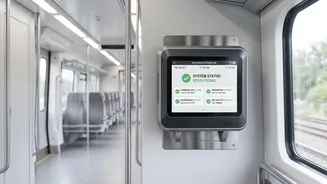
quality has been a persistent challenge. Complaints often revolve around unattended toilets, dirty coaches, and the difficulty of locating cleaning staff when needed. To tackle this, Indian Railways is now deploying a more robust, integrated digital system designed to monitor services in real time, making both staff and their contractors more accountable. This new approach combines staff tracking, a simplified passenger feedback mechanism, and a verification system to ensure tasks are actually completed.
How the New System Works
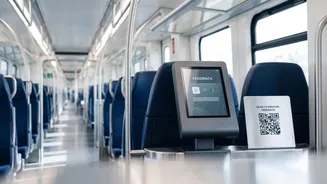
The upgraded system moves away from manual logs and unreliable paper feedback forms towards a more streamlined digital workflow. At its core, it is a platform that connects passengers, housekeeping staff, and railway officials. In many coaches, passengers can now find QR codes placed in prominent spots. Scanning this code with a smartphone opens a simple web-based portal, eliminating the need to download a dedicated app. Through this portal, a passenger can instantly log a request for cleaning or report an issue. This complaint is then automatically routed to the supervisor of the onboard housekeeping team for that specific train, ensuring the right people are notified immediately. This direct line of communication is a significant upgrade from previous systems, which often left passengers wondering if their complaints were ever received.
Tracking Staff for Better Service
A key feature of this modernisation is the ability to track the deployment and attendance of housekeeping staff. Contractors are now often required to use systems that include geo-tagged attendance, where staff must check in and out via a biometric or mobile application. This ensures that the designated number of staff members are physically present on the train throughout its journey. For railway authorities, this provides a clear, verifiable record of attendance, making it easier to enforce contract terms. For passengers, it means that a full complement of cleaning staff is more likely to be available to address needs as they arise, from routine cleaning schedules to specific service requests logged via the QR code system.
Closing the Loop with Photo Verification
Perhaps the most crucial part of the new system is how it verifies that a job has been done. After a cleaning request is addressed, the system requires the staff to 'close' the complaint. This often involves a crucial verification step. In many implementations, the housekeeping staff must take a photograph of the cleaned area, which is time-stamped and geo-tagged, and upload it to the system as proof of completion. An even more robust method being used involves getting a one-time password (OTP) from the passenger who made the complaint to officially close the ticket. This prevents the age-old problem of complaints being marked as resolved without any action being taken. This digital trail creates a transparent record of service, from request to resolution, which can be monitored by railway officials in real time.
The Bigger Picture and the Road Ahead
This initiative is part of a broader push by Indian Railways to leverage technology for improved passenger experience and operational efficiency. By integrating these On-Board Housekeeping Services with central monitoring platforms like RailMadad, the railways can analyse performance, identify recurring issues on specific routes, and assess the effectiveness of its service contractors based on concrete data. The system is being rolled out across various zones and long-distance trains, including important services like Rajdhani and Shatabdi Express. While the initial feedback has been positive, the ultimate success of this upgrade will depend on its widespread and consistent implementation across the entire network. The goal is to move from a reactive, complaint-based model to a proactive system where high standards of cleanliness and service become the norm.