


The Problem: A Flood of Artificial Light
Our cities and towns are filled with artificial lights—streetlights, office buildings, and illuminated signs. This light scatters in the atmosphere, creating a phenomenon called 'skyglow' that blankets the night sky. Historically, much of this light came
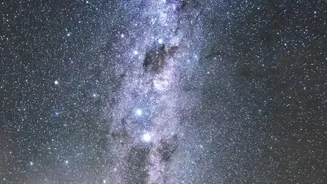
from sodium-vapour and mercury-vapour lamps, which primarily emit a very specific yellow-orange glow. This artificial brightness dramatically reduces the contrast between faint celestial objects and the sky itself, making it nearly impossible to see, let alone photograph, distant galaxies and nebulae from urban areas. For an astrophotographer, this means their camera sensor is flooded with unwanted light, drowning out the subtle details of the cosmos.
The Solution: A Filter's Magic Trick
This is where specialized light pollution filters come in. Think of them not as sunglasses for your telescope, but as highly specific gatekeepers. Their job is to block the precise wavelengths of light produced by common sources of light pollution while allowing the light from celestial objects to pass through to the camera's sensor. By selectively cutting out the yellow-orange glow from old streetlights, these filters darken the background sky in an image. This doesn't make the nebula or galaxy brighter; instead, it dramatically improves the contrast, making the faint object 'pop' against a darker backdrop. The result is a clearer, more natural-looking image with far more detail than would otherwise be possible.
Narrowband vs. Broadband Filters
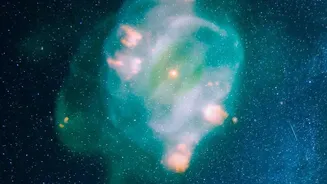
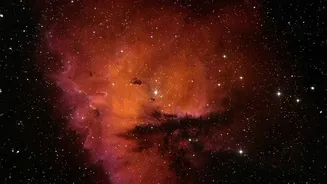
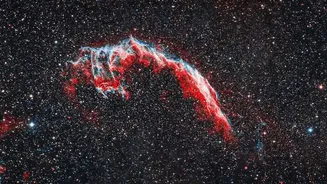
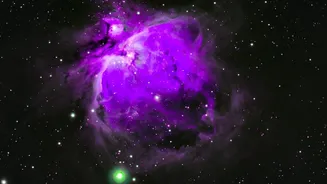
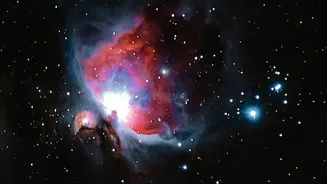
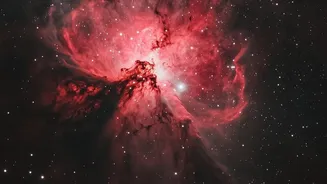
Not all filters are created equal; they fall into two main categories: broadband and narrowband. Broadband filters, also known as light pollution reduction (LPR) filters, are designed to block the most common light pollution sources while letting a wide range of 'good' light through. They are great for improving images of objects like galaxies and star clusters, which emit light across the entire visible spectrum. Narrowband filters are far more restrictive. They isolate extremely small slices of the light spectrum, targeting specific wavelengths emitted by nebulae—clouds of glowing gas. The most common targets are Hydrogen-alpha (a shade of red), Oxygen-III (blue-green), and Sulphur-II (a deeper red). By capturing only these specific emissions, an astrophotographer can completely ignore the vast majority of light pollution, allowing them to capture incredibly detailed images of nebulae even from the heart of a city.
Capturing the Colours of the Cosmos
For photographers using monochrome (black and white) astronomy cameras, narrowband filters are a game-changer. They take separate long-exposure images using each filter (for example, one set for Hydrogen, one for Oxygen, and one for Sulphur). In post-processing, these individual black and white images are assigned a colour—red, green, or blue—and combined to create a single, stunning full-colour image. This is the same technique used to create the famous 'Hubble Palette' images from the Hubble Space Telescope, where colours are assigned to different chemical elements to highlight the structure of nebulae like the Pillars of Creation or the Bubble Nebula. The result is a vibrant, scientific, and artistically beautiful representation of what's happening deep in space.
The Future in an LED World
While traditional filters are excellent at blocking the narrow wavelengths of sodium and mercury lamps, the widespread adoption of modern LED lighting presents a new challenge. White LEDs emit light across the entire visible spectrum, much like stars and galaxies do. This makes it harder for simple broadband filters to distinguish between bad light and good light. However, the power of narrowband imaging remains. Since nebulae emit light only at very specific frequencies, narrowband filters can still effectively isolate that signal, cutting through the wash of LED light pollution. This ensures that even as our cities get brighter, dedicated astronomers can continue to peel back the curtain of skyglow and reveal the breathtaking wonders hidden beyond.