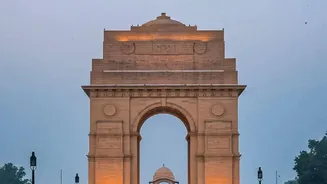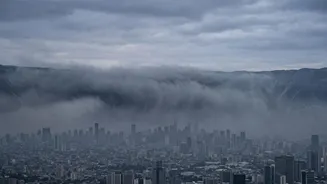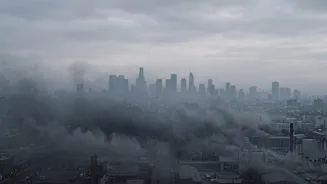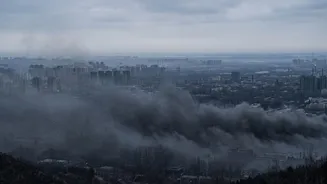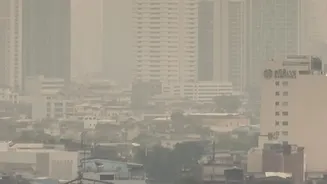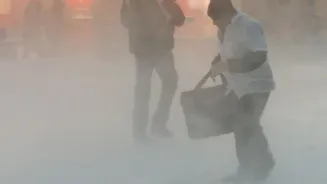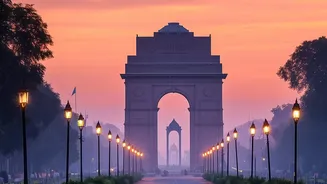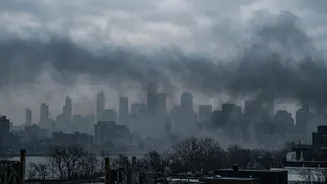





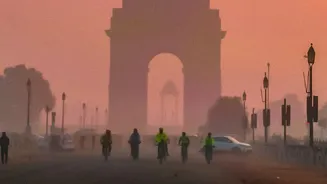
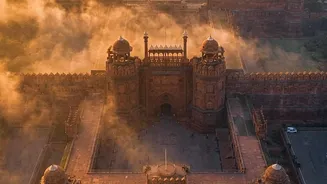
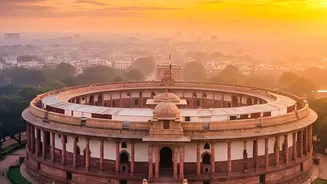
As November arrives, a familiar, unwelcome haze descends upon Delhi. The crisp autumn air is replaced by a thick, hazardous smog. This isn't a random event; it's a predictable crisis born from a perfect storm of environmental and human factors.
The Agricultural Factor: Stubble Burning
One of
the most significant contributors to Delhi's November pollution is stubble burning in the neighbouring states of Punjab and Haryana. After the rice harvest, farmers have a very short window to clear their fields to sow the next crop, wheat. Burning the leftover crop residue, or 'parali', is the fastest and cheapest method. North-westerly winds then carry this vast plume of smoke, laden with particulate matter, directly over the National Capital Region. Studies estimate that stubble burning can contribute significantly to the concentration of PM2.5 and PM10 particles in Delhi's air during October and November, with its impact rising and falling with the number of farm fires.
The Weather Trap: Temperature Inversion
Compounding the problem is a meteorological phenomenon called temperature inversion. Normally, air is warmer near the ground and gets cooler with altitude, allowing pollutants to rise and disperse. In winter, this pattern flips. Cooler, denser air gets trapped near the ground beneath a layer of warmer air, which acts like a lid on a pot. This inversion prevents the vertical mixing of air. As a result, all the pollutants—from stubble smoke, vehicles, and industry—are trapped in the shallow layer of air that people breathe, leading to a rapid spike in pollution concentrations, especially during the cool nights and early mornings.
Slowing Winds and Geography
The post-monsoon season sees a significant drop in wind speed. While summer winds help ventilate the city, the calm conditions of late autumn mean there's no force to blow the polluted air away. Pollutants linger and accumulate day after day. Delhi's geography further exacerbates this issue. The city is located in the Indo-Gangetic plains, a natural basin with the Himalayas to the north. This topography can hinder the dispersal of air masses, effectively trapping the pollution-filled air over the entire region.
Local Pollutants with Nowhere to Go
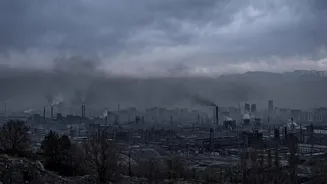
While smoke from farm fires is a major external factor, Delhi's own pollution sources form the toxic baseline. These include emissions from a massive number of vehicles, industrial activities, dust from widespread construction, and the burning of waste. On a normal day, these pollutants might disperse to a degree. But when the temperature inversion and low winds arrive in November, these local emissions are trapped along with the smoke from outside. This combination is what turns 'poor' air days into 'severe' or 'hazardous' ones, as the city chokes on its own fumes as well as those from its neighbours.
The Festive Factor
The timing of festivals can also play a role. The bursting of firecrackers during Diwali, which often falls in October or November, can lead to a sudden and dramatic increase in air pollution. These fireworks release a high concentration of harmful metal particles and toxic chemicals in a very short period. While the impact is temporary, it adds another intense pollution episode to an already deteriorating situation, pushing the air quality index to alarming levels for a few days following the festival.