



The Choke Point at the Top
India’s aviation growth story has a familiar bottleneck: its two busiest airports. Delhi’s Indira Gandhi International (IGIA) and Mumbai’s Chhatrapati Shivaji Maharaj International (CSMIA) are victims of their own success. Operating at or near full capacity,
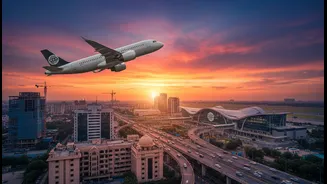
these airports face a constant struggle for landing slots, parking bays, and terminal space. While they remain resilient hubs, recording significant passenger traffic, the physical constraints are undeniable. This congestion doesn't just mean longer queues for passengers; it stifles growth for airlines wanting to add flights and limits India’s potential to become a global aviation hub. The solution, for years, has been clear: India needs more gateways. Now, they are finally here.
Navi Mumbai: The Purpose-Built Relief Valve
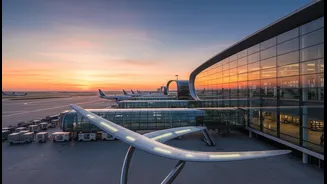
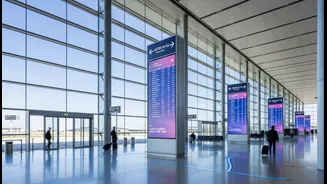
Enter Navi Mumbai International Airport (NMIA), the most significant addition to India’s aviation landscape in years. After beginning domestic operations in late 2025, NMIA is set to launch its first international flights on July 15, 2026, starting with an Air India Express service to Abu Dhabi. Developed to supplement the saturated CSMIA, NMIA is more than just an overflow facility; it's a massive, greenfield airport designed for the future. Its initial phase alone is built to handle millions of passengers, with plans for phased expansion. Airlines like IndiGo are also expected to start international services from here. Its strategic goal is to serve the sprawling Mumbai Metropolitan Region (MMR), offering a crucial second airport option, a model successful in major global cities like London and New York.
Indore's International Ascent
Hundreds of kilometers away, a different kind of aviation story is unfolding. Indore’s Devi Ahilyabai Holkar Airport is also resuming and expanding its international footprint. Coincidentally, a new direct flight to Abu Dhabi is scheduled to begin on July 15, 2026, reconnecting Madhya Pradesh to a major global transit hub after a previous service to Sharjah was suspended. Unlike Navi Mumbai, which serves a sprawling metro, Indore’s airport is a regional engine. Its ambition is to provide direct international connectivity for business travellers, students, and tourists from across Central India, allowing them to bypass the congested hubs of Delhi and Mumbai entirely. With a recently renovated terminal building and plans for further expansion, Indore is positioning itself as a key node in India's growing network of Tier-2 city airports.
Airports Propose, Airlines Dispose
Building a world-class terminal is one thing; filling it with flights is another. The long-term success of both Navi Mumbai and Indore hinges on airline strategy. Airports don't create routes, airlines do, and their decisions are based on hard economics. For Navi Mumbai, the catchment area is proven, and it will likely attract both full-service and low-cost carriers looking for slots unavailable at CSMIA. The Adani Group, which operates NMIA, is also planning massive commercial developments around the airport to create an integrated 'airport city,' making it a destination in itself. For Indore, the challenge is different. It needs to prove that there is sustainable point-to-point demand for international travel, a model that low-cost carriers excel at. The government's push to develop Tier-2 and Tier-3 airports and even establish new hubs is a critical enabler.
Beyond Launch Day Excitement
The launch of a new flight is always met with fanfare, but the true test is sustainability. The headline question—whether these airports can drive growth beyond the legacy hubs—requires looking past launch-week assumptions. Navi Mumbai's role seems clearly defined as a parallel hub for one of the world's biggest urban areas. Its success is almost a necessity to prevent the region's aviation growth from seizing up. Indore represents a more strategic bet on regional development. Its success will be a barometer for the government's broader vision of a decentralized aviation network. For both, factors like high-speed ground connectivity, streamlined customs processes, and the ability to attract not just passenger traffic but also cargo will be decisive. Real growth is not just about moving people from A to B, but about creating an ecosystem.