

Your Phone is Your Planetarium
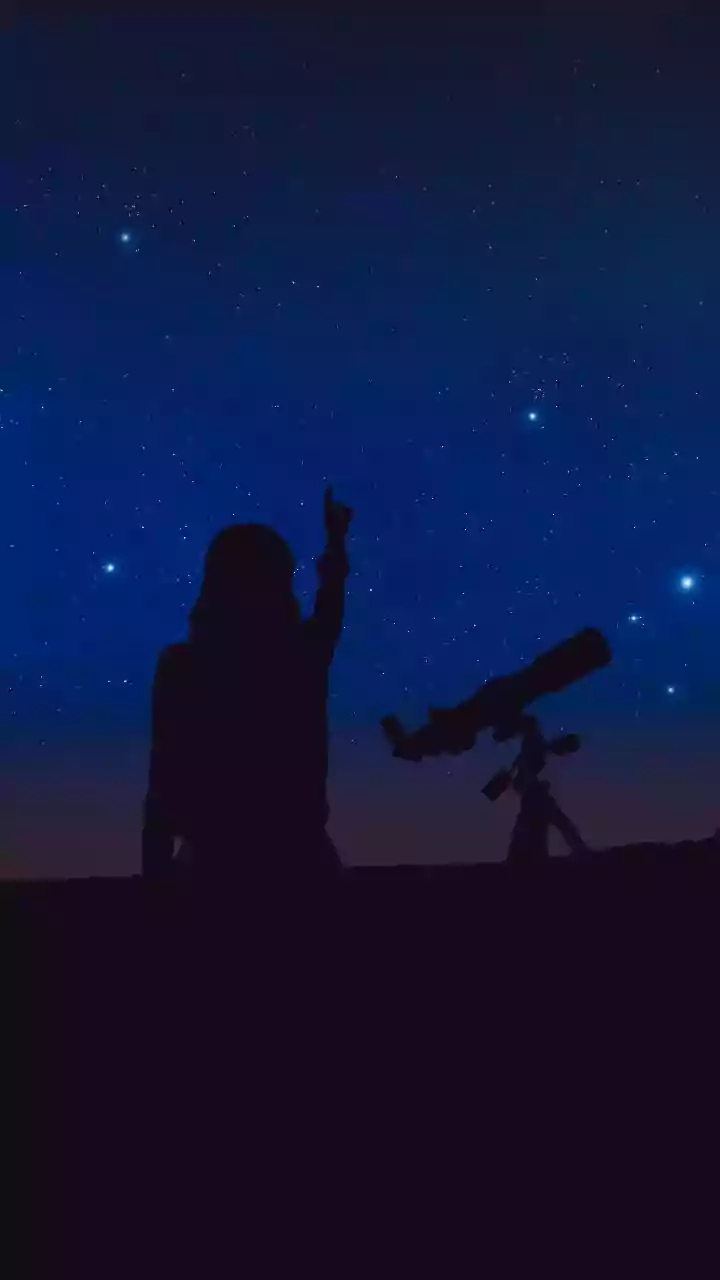
The first step into amateur astronomy is downloading a stargazing app. These powerful applications use your phone's GPS and compass to create a real-time map of the sky above you. Simply point your device towards a bright dot, and the app will identify
it, whether it's a distant star, a neighbouring planet, or the International Space Station flying by. For beginners, apps like Star Walk 2 and SkyView Lite are fantastic choices. They offer user-friendly interfaces and augmented reality (AR) overlays that make identifying constellations intuitive and fun. Many apps have generous free versions, giving you a powerful tool without any cost. More advanced options like Stellarium Mobile provide incredibly detailed star charts and information, perfect for when your curiosity deepens. Most of these apps also feature a red-light mode, which helps preserve your night vision while you observe.
Escape the City Glow
To truly appreciate the stars, you need to get away from light pollution. City lights create a bright haze that washes out all but the brightest celestial objects. Finding a dark spot is crucial. Use online tools like Dark Site Finder or the maps from DarkSky.org to locate areas with minimal light pollution, such as parks or rural locations away from urban centres. Even a short drive can make a significant difference. Once you arrive at your spot, give your eyes about 20-30 minutes to fully adjust to the darkness. During this time, avoid looking at your bright phone screen; this is where the red-light mode on your stargazing app becomes essential. The goal is to let your pupils dilate so you can catch the faint light from distant galaxies and nebulae.
Know What to Look For
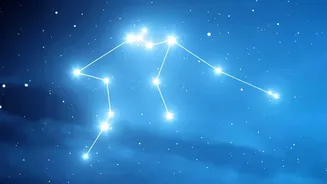
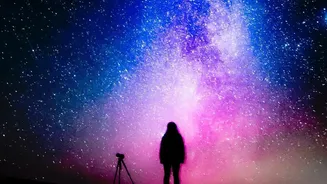
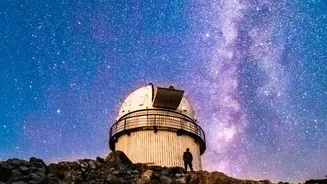
With your app in hand and your eyes adjusted, what can you expect to see? The Moon is always a spectacular starting point. Your app can tell you its current phase and highlight interesting features. Five planets are often visible to the naked eye: Mercury, Venus, Mars, Jupiter, and Saturn. They typically shine with a steadier light than twinkling stars. For August 2026, Venus will be a brilliant object in the western sky after sunset, while Mars and Saturn will be visible in the east. Beyond planets, your app will help you trace the patterns of constellations. Start with easy-to-find ones like Ursa Major (containing the Big Dipper) or Orion. In darker skies, you might even spot the faint, milky band of our own galaxy, the Milky Way, or the fuzzy patch of the Andromeda Galaxy.
Become a Night Sky Photographer
You don't need a professional camera to start with astrophotography. Modern smartphones are surprisingly capable of capturing the night sky. The key is stability and a long exposure. First, secure your phone. A small, inexpensive tripod is ideal, but propping your phone against a rock or bag will also work. Use your camera's timer function (2-5 seconds) to avoid the shake that comes from tapping the shutter button. Next, dive into your phone's 'Pro' or 'Night' mode. If you can manually adjust settings, aim for a long shutter speed (10-30 seconds) and a high ISO (800-3200) to gather as much light as possible. Lock your focus on a distant, bright star. Don't be discouraged if the first few shots aren't perfect. Experimenting with settings is part of the fun, and you might be stunned by the cosmic beauty your phone can capture.