





A New Kind of Watchdog
For decades, earthquake detection relied on traditional, highly sensitive seismographs. While incredibly accurate, these instruments are expensive, costing thousands of dollars each, which limits how many can be deployed. This creates gaps in detection networks,
particularly in developing nations. Enter the low-cost IoT seismic sensor. These modern devices use inexpensive components, like the micro-electro-mechanical systems (MEMS) accelerometers found in every smartphone, to detect ground motion. While a single sensor might not be as sophisticated as its traditional counterpart, their low cost—sometimes just a few hundred dollars—means they can be installed in vast numbers, creating a dense, powerful network. Companies like Grillo have deployed these sensors in Mexico, Chile, and Haiti, placing them in schools, fire stations, and other buildings to create a wide net of coverage.
From Tremor to Your Telephone
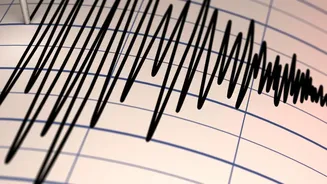
The magic of an early warning system lies in the speed of information versus the speed of an earthquake. An earthquake generates different types of waves. The first, called the P-wave, is faster and less destructive. The second, the S-wave, is slower but causes the violent shaking that does the most damage. Low-cost sensor networks are designed to detect the initial P-wave. Immediately, the sensor transmits its data to a central cloud server. Sophisticated algorithms analyse the data from multiple sensors in seconds to confirm a quake, estimate its location and magnitude, and predict the areas that will be affected. Because this information travels at the speed of light over the internet, an alert can be pushed to smartphones in a target area before the slower, more destructive S-waves arrive. This can give residents anywhere from a few seconds to over a minute of warning—enough time to take protective action.
The Power of the Crowd
Beyond dedicated sensor boxes, the most powerful tool in this new era of earthquake detection may already be in your pocket. The billions of smartphones in use worldwide form a massive, crowdsourced seismic network. In 2023, Google, in partnership with the National Disaster Management Authority (NDMA) and the National Centre for Seismology (NCS), launched its Android Earthquake Alerts System in India. This system uses the tiny accelerometers built into Android phones (version 5.0 and later) to act as mini-seismometers. When a phone is stationary, it can detect the initial shaking of a quake. If a large number of phones in one area detect this shaking simultaneously, Google's servers can confirm an earthquake is happening and issue an alert to users in the vicinity. This innovative approach requires no special app and leverages existing infrastructure to supplement official government warning systems.
Real-World Impact and Future Potential
These systems are already proving their worth. The MyShake app, developed at UC Berkeley, has given users in California up to 15 seconds of warning before major shaking began. In Mexico, the Grillo network has successfully detected 100% of recent earthquakes in its coverage area, sending out alerts through social media and dedicated apps. For a country like India, with significant seismic zones and some of the world's most densely populated cities, this technology holds immense promise. The Android system is already active, offering two types of notifications: a 'Be Aware Alert' for light shaking and a loud, screen-overriding 'Take Action Alert' for more severe events. The alerts, available in regional languages, provide crucial seconds for people to drop, cover, and hold on, a simple action that can reduce injuries by over 50%.