
The Old Way vs. The New Magic
For decades, astrophotography was a niche, complex hobby. It involved bulky DSLR cameras, heavy tripods, star-tracking mounts to counteract Earth's rotation, and hours spent in post-production software. The goal was always to solve one fundamental problem:
gathering enough light from faint, distant stars without turning the image into a blurry, noisy mess. Traditional cameras do this with a long exposure, leaving the shutter open for seconds or even minutes. But mobile phone sensors are tiny; a long exposure would just create a bright, grainy blob. This is where computational photography steps in. Instead of one long exposure, your phone takes many short ones and then, using sophisticated software, stitches them together into a single, brilliant image.
How Your Phone Sees in the Dark
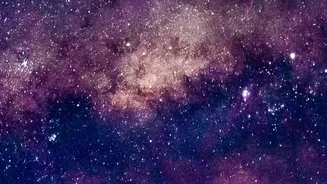
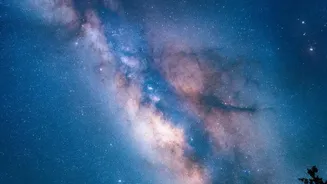
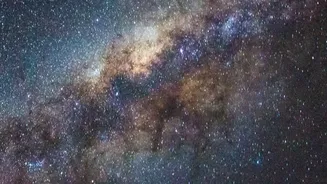
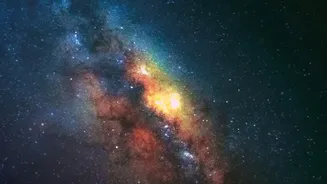
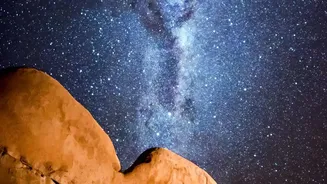
So what happens when you point your phone at the sky and activate its astrophotography mode? It’s a multi-step digital dance. First, the phone takes a series of short-exposure shots over several minutes. On its own, each of these frames is dark and noisy. But the software then aligns all of these images, a process called stacking. Because the stars are in the same place in each frame but the digital 'noise' is random, the algorithm can identify and remove the noise, leaving only the clean light from the stars behind. An AI then gets to work, identifying the sky and enhancing its features, boosting the contrast of the Milky Way, and ensuring colours look natural. It’s like a team of photo editors working inside your phone, completing a task in minutes that used to take photographers hours.
The Tech Giants Racing for the Stars
Google was a major pioneer in this space, introducing its Astrophotography mode with the Pixel line of phones. When placed on a tripod, a Pixel phone automatically detects the stable, dark conditions and enables the special mode, capturing exposures for up to four minutes to produce a single, detailed shot. Other manufacturers like Samsung and Honor have also developed powerful night and astrophotography modes, often leveraging their high-resolution sensors and giving users more manual control. While Apple's iPhones have excellent low-light capabilities and a Night Mode that can take long exposures of up to 30 seconds, they currently lack a dedicated, automated astrophotography mode like their competitors, requiring a bit more user intervention for similar results.
Not Quite Effortless, But Close
The headline's claim of 'effortlessly' capturing starlight is mostly true, but there are a few things you need to do to get those jaw-dropping results. First and foremost, you need stability; you cannot do this handheld. A tripod is essential to keep the phone perfectly still during the multi-minute exposure. Second, you need to escape light pollution. The darker the sky, the more stars your phone will be able to see. Using a timer to trigger the shutter is also a good idea, as even the small vibration from tapping the screen can blur the final image. While the phone does all the complex computational work, you still need to provide it with the right conditions to work its magic.
The Future of Your Pocket Telescope
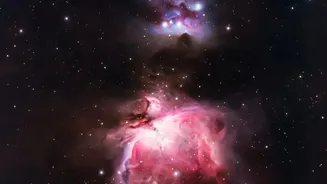
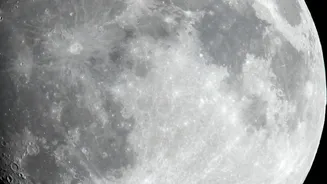
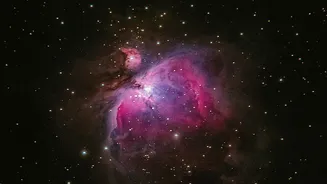
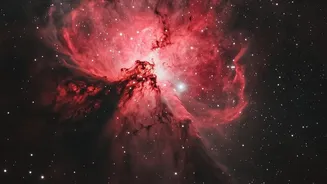
The market for computational photography is booming, projected to grow significantly by the early 2030s, with smartphone cameras being the dominant driver. This means the technology is only going to get better. We're already seeing phones create short time-lapse videos of the stars moving across the sky, automatically generated from the photo-stacking process. The software is getting smarter, distinguishing between stars, planes, and satellites, and improving noise reduction. The next frontier could be moving beyond wide shots of the sky. As camera zoom technology improves, we may see phones that can not only capture the Milky Way but also take clear, detailed photos of the moon, planets, or even distant nebulae, all with the tap of a button. Your smartphone isn't just a communication device anymore; it's becoming an increasingly powerful tool for exploring the universe.