



India's First Dark Sky Reserve
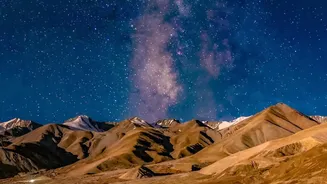
Deep within Ladakh's Changthang Wildlife Sanctuary lies Hanle, a village now at the heart of a pioneering conservation effort. In December 2022, a region with a radius of approximately 22 kilometres around Hanle was officially designated as India's first
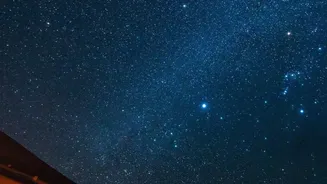
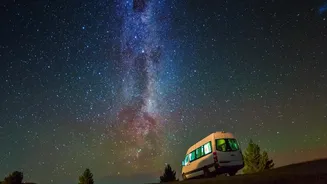
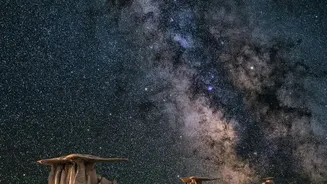
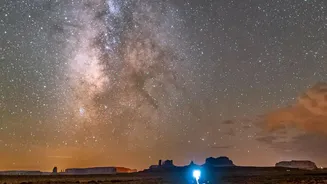
Dark Sky Reserve. This designation is more than just a title; it's a formal commitment, born from a partnership between the UT Ladakh administration, the Ladakh Autonomous Hill Development Council (LAHDC), and the Indian Institute of Astrophysics (IIA). The goal is to protect the area’s naturally dark skies from the increasing threat of light pollution, ensuring it remains one of the best places on Earth to view the cosmos. Hanle’s sky boasts a Bortle Class 1 rating, the darkest level on the scale, meaning the Milky Way can be so bright it casts shadows on the ground.
A Haven for Science
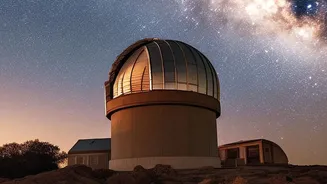
The darkness in Hanle is not just for tourists; it is a critical scientific resource. The region is home to the Indian Astronomical Observatory (IAO), perched at a breathtaking altitude of 4,500 metres. Operated by the IIA, the IAO is one of the highest observatories in the world for optical, infrared, and gamma-ray astronomy. Its strategic location was chosen after extensive surveys, identifying Hanle for its thin, dry air, minimal atmospheric disturbance, and, most importantly, its near-total absence of light pollution. These conditions allow powerful instruments like the Himalayan Chandra Telescope to peer deep into the universe, contributing to global astronomical research. Protecting the night sky is therefore essential for safeguarding the future of Indian astronomy and maintaining the observatory's status as a world-class scientific facility.
A Community-Powered Cosmos
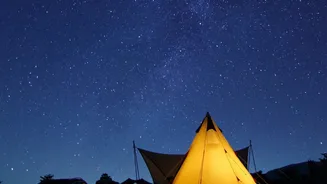
The true innovation of the Hanle project lies in its integration with the local community. The 'sanctuaries' protecting the sky are not just rules, but the homes and livelihoods of the Ladakhi people. A network of community-run homestays forms the backbone of a burgeoning astro-tourism economy. The IIA has been instrumental in training local villagers, turning them into 'astro-ambassadors' and 'astropreneurs'. Equipped with telescopes and knowledge, these local guides now lead stargazing sessions for visitors, offering an authentic and personal connection to the night sky. This initiative has seen the number of homestays in the area grow from just a handful to over 40 since 2021, providing a vital and sustainable source of income that is directly tied to the preservation of the dark sky.
The Practical Rules of Darkness
Safeguarding a dark sky reserve requires a conscious effort from everyone involved. It's a delicate balance between enabling tourism and preventing the very light pollution it can bring. To manage this, clear regulations have been put in place. Local households and homestays are adopting simple but effective measures, such as using shielded light fixtures that direct light downwards, installing heavy curtains to prevent light from spilling outdoors, and switching to warm-coloured bulbs that are less disruptive to the night sky. There are even guidelines for vehicle headlights passing through the reserve at night. This collective discipline ensures that as Hanle welcomes more visitors, its most precious asset—the pristine darkness—remains untarnished for scientists, tourists, and future generations.