
The Celestial Main Event
While Saturn is a constant presence in our solar system, its visibility from Earth changes throughout the year. This August, the planet is steadily brightening as it approaches its annual 'opposition' in early October. Opposition is a key astronomical
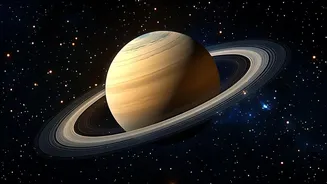
event for any outer planet. It occurs when Earth passes directly between that planet and the Sun. Think of it like a celestial alignment where we get a front-row seat. This alignment means Saturn is at its closest point to Earth for the year, making it appear bigger and brighter in our sky. Because it's opposite the Sun, it rises in the east around sunset and stays visible all night long, setting in the west near sunrise.
Why August is Prime Time
Although the official opposition date is October 4, 2026, the weeks leading up to it are a fantastic window for observation. Throughout August, Saturn will be rising earlier each night, moving from a late-night object to one that's conveniently placed in the evening sky by the end of the month. Its brightness will also steadily increase during this time. This period is like the pre-show for the main event, offering excellent and increasingly better views night after night. For stargazers, this is the perfect time to start tracking the planet and watch it grow in prominence before it reaches its peak brilliance.
Finding the Ringed Planet
You don't need to be an expert to find Saturn. During August 2026, it will be located in the constellation Pisces. A good way to find it is to look towards the eastern sky later in the evening. Saturn will appear as a bright, steady point of light with a distinct yellowish hue. Unlike stars, which twinkle, planets tend to shine with a more constant light. As the month progresses, Saturn will be visible rising in the east around 11 p.m. at the start of August, and as early as 9 p.m. by the end of the month. Using a stargazing app on your smartphone can also be an incredibly helpful tool to point you in the right direction.
What You Can See: Naked Eye and Binoculars
Even without any special equipment, Saturn is a rewarding sight. To the naked eye, it will look like one of the brightest stars in its patch of sky. Its steady, golden glow makes it stand out. If you have a pair of binoculars, you'll get an even better view. While binoculars won't be powerful enough to resolve the famous rings, they will reveal the planet as a distinct, non-point-like object, clearly showing it as an oval-shaped disc rather than a simple star. This simple observation can be a thrilling experience, connecting you directly with the vastness of our solar system.
Through a Telescope: Unlocking the Rings
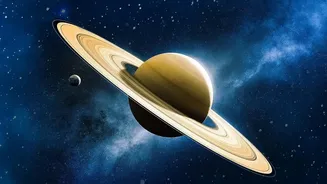
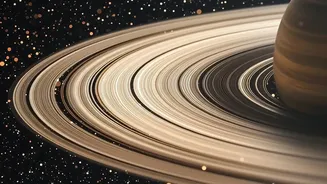
If you have access to a telescope, this is where the real magic happens. Even a small beginner's telescope is powerful enough to reveal Saturn's most famous feature: its stunning ring system. After being nearly edge-on to our view in 2025, the rings are now tilting back towards us, making them more visible and spectacular. With a telescope, you will be able to see the rings clearly separated from the planet itself. Depending on the power of your telescope and the clarity of the sky, you may also be able to spot Titan, Saturn's largest moon, which appears as a tiny star-like point of light very close to the planet. Observing the rings firsthand is an unforgettable experience that turns a dot of light into a complex, beautiful world.