






The Cardiovascular Challenge
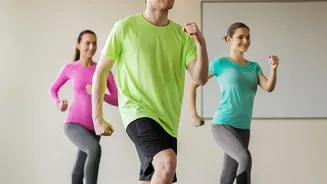
Both aerobics and trampolining, also known as rebounding, are excellent for cardiovascular health. Traditional aerobics, especially high-impact variations, involves choreographed sequences of steps, jumps, and kicks that steadily increase your heart rate.
A lively step aerobics class can burn a significant number of calories, around 9.6 per minute, while improving aerobic capacity and helping to reduce blood pressure. Trampolining offers a surprisingly intense cardio workout as well. The simple act of bouncing elevates your heart rate into the moderate-to-vigorous intensity zone. Some studies suggest that just 10 minutes of rebounding can offer similar cardiovascular benefits to a 30-minute run, making it a highly efficient option.
Impact on Joints and Bones
This is where the two activities diverge significantly. High-impact aerobics, by its nature, involves jumping and landing on a hard surface, which can put considerable stress on your ankles, knees, and hips. While this impact can help improve bone density, it’s a risk for those with pre-existing joint issues. Trampolining, on the other hand, is celebrated for being a low-impact exercise. The trampoline mat absorbs a majority of the force when you land, protecting your joints from jarring stress. This makes it an ideal choice for people recovering from injuries or anyone seeking an intense workout without the associated strain. Interestingly, despite being low-impact, rebounding is still a weight-bearing exercise that helps build bone density, a benefit famously highlighted in a 1980 NASA study.
Muscle Engagement and Toning
Aerobics, particularly step aerobics, is fantastic for building lower-body strength. The constant stepping, lunging, and lifting works the quadriceps, hamstrings, glutes, and calves. Trampolining offers a more comprehensive, full-body workout. While your legs and glutes do the heavy lifting to push off the mat, your core, back, and deep stabilizing muscles must constantly fire to maintain balance on the unstable surface. This means you are strengthening your entire core and improving coordination without even thinking about it.
The Lymphatic System Bonus
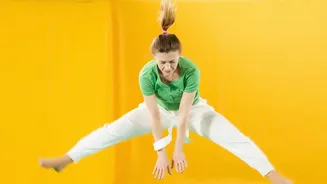
One unique benefit of trampolining is its profound effect on the lymphatic system. This system is crucial for removing toxins and waste from your body but lacks its own pump, relying on body movement to circulate fluid. The vertical bouncing motion of rebounding creates a powerful pumping action that can increase lymphatic flow by up to 15 to 30 times. This enhanced circulation can help boost your immune system and reduce inflammation. While any form of exercise aids lymphatic flow, the specific up-and-down motion of rebounding is considered exceptionally effective.
Fun Factor and Accessibility
The 'best' workout is the one you will actually do. Aerobics classes offer a social, high-energy environment with motivating music and an instructor to guide you, which many people find helps with consistency. Trampolining has a unique fun factor that can make exercise feel less like a chore and more like play. Bouncing can release endorphins, reduce stress, and improve your mood. In terms of accessibility, aerobics can be done at home with minimal equipment or in a gym class. Rebounding requires a mini-trampoline, which is an initial investment and requires some storage space, but it offers the convenience of a highly effective workout at home.