






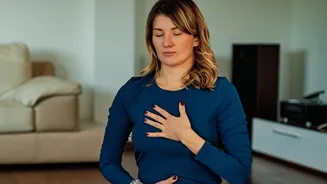
What Is Breath Awareness?
Breath awareness is the practice of simply paying attention to your natural breathing pattern without trying to change it. It’s a form of mindfulness where the goal isn't to control, but to observe. Think of it as checking in with your body. Is your breath shallow
and located in your chest, or is it deep and expanding your belly? Is it fast or slow? This simple act of noticing grounds you in the present moment and can be profoundly calming. Many people go through their day taking shallow chest breaths, which can contribute to feelings of tension. Breath awareness helps you notice this and gently encourages a more relaxed, efficient way of breathing.
The Gentle Power of Your Breath
Practicing mindful breathing techniques activates the parasympathetic nervous system, often called the 'rest and digest' system. This has a powerful calming effect, helping to lower your heart rate, reduce blood pressure, and ease muscle tension. The benefits extend beyond immediate relaxation. Regularly engaging in breathwork can lead to improved focus, better management of difficult emotions, and even enhanced physical well-being by improving lung function and oxygen levels in the body. It’s a tool you have with you at all times to help regulate your body's response to stress.
Two Safe Exercises to Start With
1. Diaphragmatic (Belly) Breathing: This technique focuses on engaging your diaphragm, the primary muscle of respiration located below your lungs. Lie comfortably on your back with your knees bent. Place one hand on your upper chest and the other on your belly. Breathe in slowly through your nose, focusing on letting your stomach rise as you inhale. The hand on your chest should remain relatively still. Exhale slowly through your mouth, allowing your belly to fall. This deep breathing ensures a full oxygen exchange, which helps stabilize blood pressure and heart rate.2. Box Breathing: Also known as 'square breathing', this technique is excellent for calming your nerves and improving focus. Sit upright in a comfortable chair. Slowly inhale through your nose for a count of four. Gently hold your breath for a count of four. Then, slowly exhale through your mouth for a count of four. Pause again for a count of four before repeating the cycle. The steady, even rhythm is easy for your mind to follow and helps regulate your nervous system.
The Risks of Forced Breath-Holding
While gentle pauses are part of some techniques like box breathing, 'forced' breath-holding is different and dangerous. This involves pushing past your body's natural urge to breathe, often in an attempt to achieve a longer hold time. When you hold your breath, carbon dioxide (CO2) builds up in your blood. This buildup is what triggers the uncomfortable sensation and the strong impulse to breathe. Forcing yourself to ignore these signals can lead to a state of low oxygen, known as hypoxia. This can cause dizziness, lightheadedness, muscle spasms, and even fainting. In the worst-case scenarios, particularly when holding breath underwater, this can lead to a 'shallow water blackout' and drowning. Incorrectly or aggressively practicing breathing exercises can also activate the 'fight-or-flight' response, leading to anxiety, panic, and an increased heart rate—the opposite of the intended effect.
Listen to Your Body's Signals
The key to safe and effective breathwork is to never force anything. Your body sends clear signals when it's under strain. Sensations like a burning in your lungs, pain, dizziness, or diaphragm contractions are all warnings to stop and return to normal breathing. The goal of these practices is not to set endurance records, but to cultivate a calm and balanced state. If a four-second hold in box breathing feels too long, start with two or three seconds. The most important rule is to stay within your comfort zone. If you have underlying health conditions, especially cardiovascular or respiratory issues, it's crucial to consult with a doctor before trying any new breathing exercises.