


What Exactly Are 'Little Red Dots'?
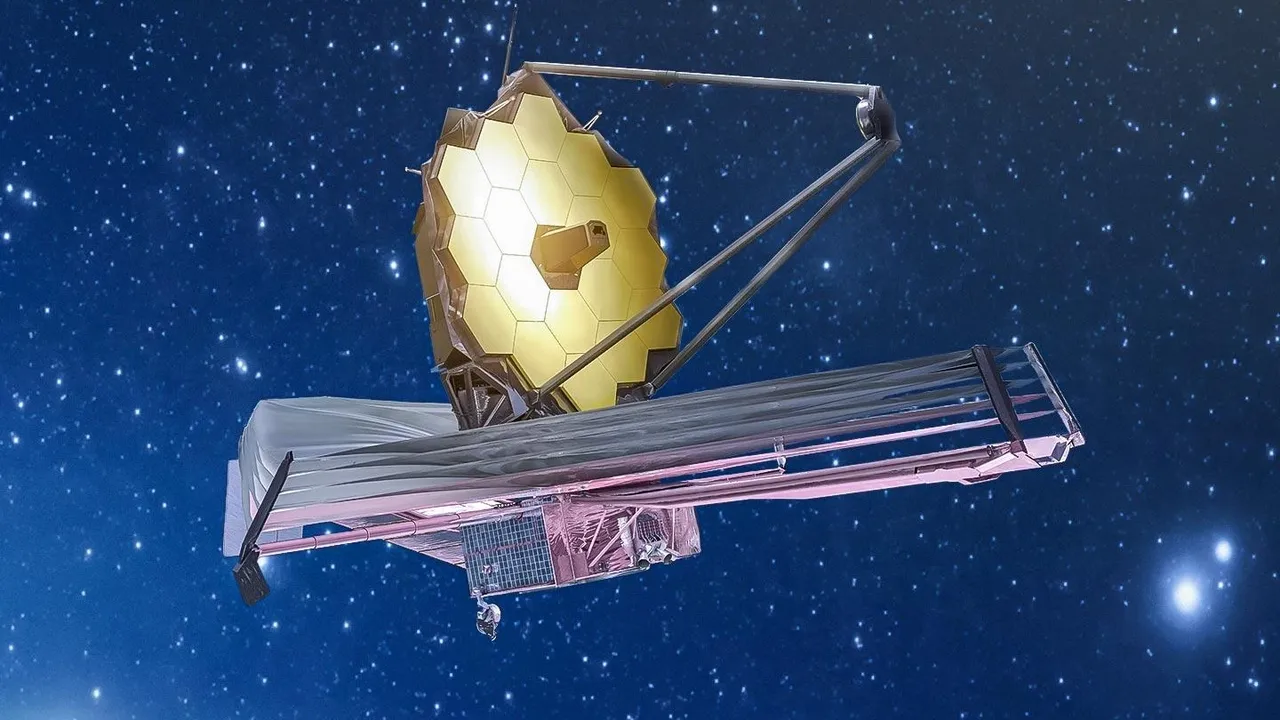
Ever since the James Webb Space Telescope started sending back its breathtaking images of the deep universe in 2022, astronomers have been captivated by a new mystery: tiny, crimson specks of light scattered across the cosmic dark. Nicknamed 'little red dots'
(LRDs), these objects are incredibly distant and therefore are seen as they were in the universe's infancy, emerging in large numbers around 600 million years after the Big Bang. Their colour is a key clue. In cosmology, red often means 'far away.' As light travels across the expanding universe, its wavelength gets stretched, shifting it toward the red end of the spectrum in a process called redshift. The redder the object, the farther away and further back in time it is. The debate began almost immediately: were these simply very early, compact galaxies full of stars, or something far more exotic?
Confirming the Extreme Distance
The headline-making check is the confirmation of their immense distance. Various studies, including those from the Cosmic Evolution Early Release Science (CEERS) survey, have used Webb’s powerful spectroscopic tools to analyze the light from these dots. Spectroscopy breaks light down into its component colours, revealing chemical fingerprints and, crucially, providing a precise measurement of redshift. This data has confirmed that many of these LRDs are indeed located in the very early universe. One of the most distant active supermassive black holes found, for example, resides in a galaxy called CEERS 1019, which existed just 570 million years after the Big Bang. This isn't just a matter of breaking records; confirming these distances is vital because it places these objects in a specific, poorly understood era of cosmic history.
The Leading Theory: Supermassive Black Holes
While a few theories are still being debated, the leading explanation is that many 'little red dots' are active galactic nuclei (AGN)—in other words, furiously feeding supermassive black holes. More specifically, some are thought to be a theoretical type of object called a 'black hole star' (or quasi-star), which consists of a huge supermassive black hole cloaked in a dense, hot cocoon of gas. As the black hole consumes this gas, the material heats up and glows intensely, creating the bright 'dot' that Webb observes. Recent, incredibly detailed spectral data from an LRD named GLIMPSE-17775 has provided the strongest evidence yet for this model, showing multiple chemical signs consistent with a gas-enshrouded, growing black hole.
A 'Problem' for Cosmic Timelines
Here's why this is so revolutionary. According to our established models of the universe, black holes need time to grow. They start from the collapse of a massive star and slowly accumulate mass. Finding supermassive black holes—some weighing millions or even billions of times the mass of our sun—so early in the universe is a major puzzle. They appear to be far too big, far too soon. Some of these early black holes rival or even exceed the total mass of all the stars in their host galaxies, a complete inversion of the ratio we see in the nearby universe. This discovery forces scientists to reconsider how these cosmic giants form, suggesting that they might grow much faster than previously thought or that they form from the direct collapse of massive gas clouds in the primordial universe.
What Happens to the Little Red Dots?
Another perplexing aspect of the LRDs is that they seem to be abundant in the first billion years of the universe but then rapidly decline in number. Where do they go? One recent study suggests they don't disappear but simply evolve. By simulating what a more recent, lower-redshift galaxy nicknamed the 'Saguaro' would look like if it were in the early universe, researchers found it would appear as an LRD. This implies that LRDs may simply be a temporary, highly active growth phase for supermassive black holes. As the black hole consumes the surrounding gas or blows it away, its appearance changes, and it evolves into the kind of active galaxy we see in the more mature universe. The 'dots' don't vanish; they just grow up.