




Why a New Plan Was Needed
The decision to rethink the Mars Sample Return (MSR) mission was not made lightly. The original plan, a highly complex, multi-launch architecture, came under heavy scrutiny. An Independent Review Board (IRB) report raised serious concerns about its feasibility,
citing an 'unrealistic budget and schedule'. With cost estimates ballooning towards $11 billion, NASA was facing the prospect of a mission that was too expensive to fly and too complicated to succeed. The agency concluded that a fundamental change was necessary to save one of its most anticipated scientific endeavors of the century. This led to a top-to-bottom review, culminating in the new strategy.
Inside the 'PSRA' Strategy
The new blueprint is the result of a Programmatic Systems Review Assessment (PSRA), NASA's formal process for redesigning the mission. The core directive was to create a 'leaner, faster, and cheaper' pathway for returning the samples. While specific technical details are still being finalized, the overarching theme is simplification. A key element of this revised approach involves reducing the mission's complexity, potentially by consolidating what were previously separate launches. The original concept involved multiple spacecraft and a complex series of robotic handoffs on and above Mars. The PSRA plan aims to streamline this intricate dance, reducing the number of potential failure points and, crucially, bringing the budget back to a manageable level.
The Toughest Delivery Mission Imaginable
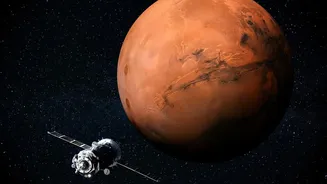
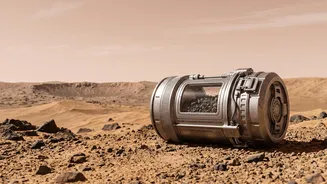
Even in its simplified form, the Mars Sample Return remains one of the most challenging robotic missions ever conceived. The plan still involves several key components working in perfect harmony millions of miles from home. A Sample Retrieval Lander will touch down near the Perseverance rover's location. This lander will deploy its own systems to collect the sample tubes left by Perseverance. Those samples will then be loaded into a Mars Ascent Vehicle (MAV), essentially a small rocket that must launch from the surface of another planet—a feat never before attempted. Once in orbit around Mars, the MAV will release the sample container, which must then be captured by the Earth Return Orbiter, a spacecraft being developed by the European Space Agency (ESA). This orbiter will then make the long journey back to Earth, carrying its precious cargo.
Precious Cargo Is Ready for Pickup
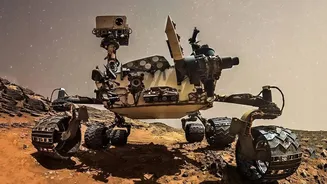
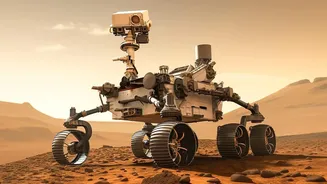
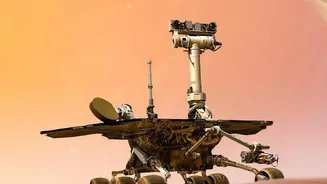
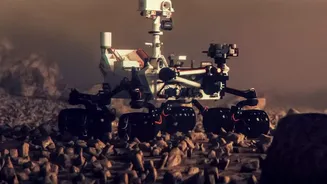
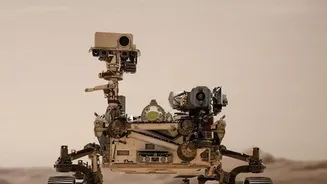
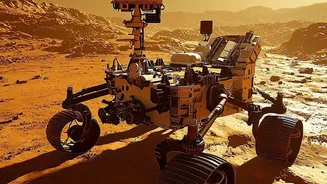
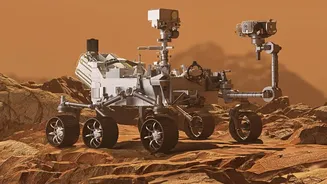
The urgency behind this planning is driven by the remarkable success of the Perseverance rover. Since landing in Jezero Crater in 2021, the rover has been diligently drilling and collecting a scientifically priceless set of rock and atmospheric samples. These samples have been chosen specifically for their potential to hold clues about whether microbial life ever existed on Mars. In a prudent move, Perseverance has also created a backup depot, carefully placing a collection of 10 sample tubes at a flat location nicknamed 'Three Forks'. This cache serves as an insurance policy, ensuring that the retrieval mission has a target to aim for even if it cannot directly link up with the rover itself. The science is ready; the samples are waiting. The challenge is purely logistical.
A New Timeline and Enduring Challenges
Under the new PSRA plan, NASA is targeting a return of the Mars samples in the early to mid-2030s. This revised timeline reflects the more pragmatic and streamlined approach. However, significant challenges remain. Beyond the sheer mechanical complexity, the mission must adhere to strict planetary protection protocols. This is a twoway street : NASA must ensure that the lander does not contaminate Mars with Earthly microbes , and it must also have a foolproof plan to contain the Martian samples upon their return to Earth , just in case they harbor ancient , non - terrestrial life . Successfully navigating these technical and safety hurdles will be the final test for this redesigned , high - stakes mission.