





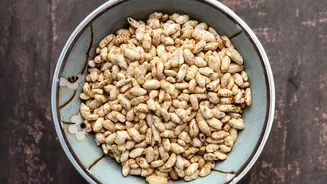
The Nutritional Showdown
At a glance, quinoa puffs pack a stronger nutritional punch. Quinoa is one of the few plant-based foods that provides a complete protein, containing all nine essential amino acids necessary for muscle repair and bodily function. Puffed rice, on the other
hand, has minimal protein. Quinoa puffs also lead in dietary fibre, which aids digestion and promotes a feeling of fullness. Furthermore, they are richer in essential minerals like iron and magnesium. Puffed rice is primarily a source of simple carbohydrates, offering quick energy but fewer micronutrients.
The Calorie Question
When it comes to calorie counting, puffed rice often has the edge. Because it's so light and airy, a cup of puffed rice typically contains fewer calories than a cup of the denser quinoa puffs. For example, a standard serving of plain puffed rice might be around 50-60 calories, while a similar volume of quinoa puffs can be closer to 110-120 calories. This makes puffed rice an attractive option for those seeking a high-volume, low-calorie snack to satisfy cravings without a significant energy intake.
For the Weight Watchers
The 'better' choice for weight management depends on your strategy. If your goal is purely to reduce calorie intake, puffed rice is a clear winner. It allows you to eat a larger, more satisfying volume for fewer calories. However, if your focus is on satiety—feeling full for longer—quinoa puffs are superior. The higher protein and fibre content in quinoa puffs helps to curb hunger for longer periods, which can prevent overeating later on. This sustained fullness can be more effective for overall calorie control throughout the day.
For the Fitness Enthusiasts
For those focused on fitness and muscle building, quinoa puffs are the more logical choice. The complete amino acid profile makes them a valuable tool for muscle repair, especially as part of a post-workout snack. While not as protein-dense as a dedicated protein shake, they contribute usefully to your daily protein goals. Puffed rice, lacking significant protein, primarily serves to replenish glycogen stores (the energy depleted during exercise) but offers little for muscle recovery.
Glycemic Index and Blood Sugar
The glycemic index (GI) measures how quickly a food raises blood sugar levels. Quinoa generally has a low-to-moderate GI, around 53, meaning it provides a more sustained release of energy. This is due to its fibre and protein content, which slows down digestion. The GI of puffed rice can be much higher, similar to other refined carbohydrates, potentially causing a quicker spike and subsequent crash in blood sugar. For individuals managing blood sugar levels, such as those with prediabetes, quinoa puffs are the safer bet.
Digestibility and Gluten Concerns
Both quinoa and rice are naturally gluten-free, making their puffed versions suitable for people with celiac disease or gluten sensitivity. However, it's always crucial to check labels for potential cross-contamination if the product was made in a facility that also processes wheat. In terms of digestion, puffed rice is known for being extremely light and easy on the stomach. While quinoa is also easily digestible for most, the puffing process can make it even more so by breaking down complex starches.