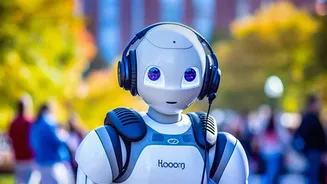







Beyond Answers: What Are AI Study Modes?
Forget the idea of an AI that just spits out a finished essay. The new generation of AI tools has introduced 'study modes' designed to function less like a simple search engine and more like a personal tutor. Platforms like ChatGPT and Khan Academy's
Khanmigo now offer features that guide students through problems instead of just solving them. This Socratic method of teaching involves the AI asking probing questions, providing hints, and encouraging students to think critically and arrive at the solution themselves. A student can upload their course materials and ask the AI to quiz them, create flashcards, or explain a complex concept in simpler terms, fostering a more interactive and engaging learning process that is available 24/7.
The Student Advantage: A Personalised Learning Coach
For students, the primary benefit of AI study modes is profound personalisation. An AI tutor can adapt to an individual's pace, offering extra support in subjects they find difficult while challenging them in areas where they excel. This eliminates the one-size-fits-all approach of traditional classroom learning. If a student is stuck on a math problem at 10 p.m., they can get immediate, step-by-step guidance without waiting for the next day's class. This not only helps in mastering academic subjects but also builds confidence and encourages independent, curiosity-driven learning. Tools can help with everything from writing an essay to understanding historical figures by simulating conversations, making learning more dynamic and memorable.
The Teacher's New Role: From Lecturer to Facilitator
While some fear AI will replace teachers, these tools are designed to augment their role, not make it obsolete. AI can be a powerful assistant, automating time-consuming administrative tasks like creating lesson plans, drafting quiz questions, and generating rubrics. One survey found that many teachers feel AI helps reduce time spent on administrative work. This frees up educators to focus on what truly matters: direct interaction with students, addressing individual needs, and fostering a supportive classroom environment. The teacher’s role is shifting from being the main source of information to a facilitator who guides students on how to use these powerful tools effectively and ethically, fostering critical thinking rather than rote memorisation.
Navigating the Risks: Cheating, Bias, and Accuracy
Despite the promise, AI in education comes with significant challenges. The most obvious concern is academic dishonesty, as the line between assistance and plagiarism can become blurry. Beyond that, AI models can sometimes provide incorrect information or 'hallucinate' facts, making critical evaluation by the user essential. These systems can also inherit and perpetuate biases present in their training data, which requires careful oversight. There is an urgent need for educational institutions across India to develop clear and comprehensive policies on AI use. As highlighted by a recent court case in the country involving a student failed for AI use, the absence of clear rules creates confusion and conflict for both students and faculty.
A Framework for Responsible and Ethical Use
The goal isn't to ban AI, but to integrate it wisely. For students, this means using AI as a thinking partner, not a replacement for their own brain. They should check facts, question the AI's output, and use it to understand concepts, not just complete assignments. For teachers, it involves designing assignments that require critical thinking that AI cannot easily replicate. This could mean asking for personal reflections, in-class presentations, or analysis of current events. Establishing clear classroom guidelines on when and how AI can be used is paramount. Organizations like UNESCO have urged the Indian government to prioritise establishing a regulatory and ethical framework for AI in education to build trust and ensure it is used to promote equity and quality learning.