
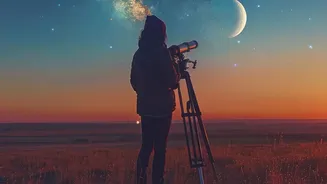
When and Where to See the Alignment
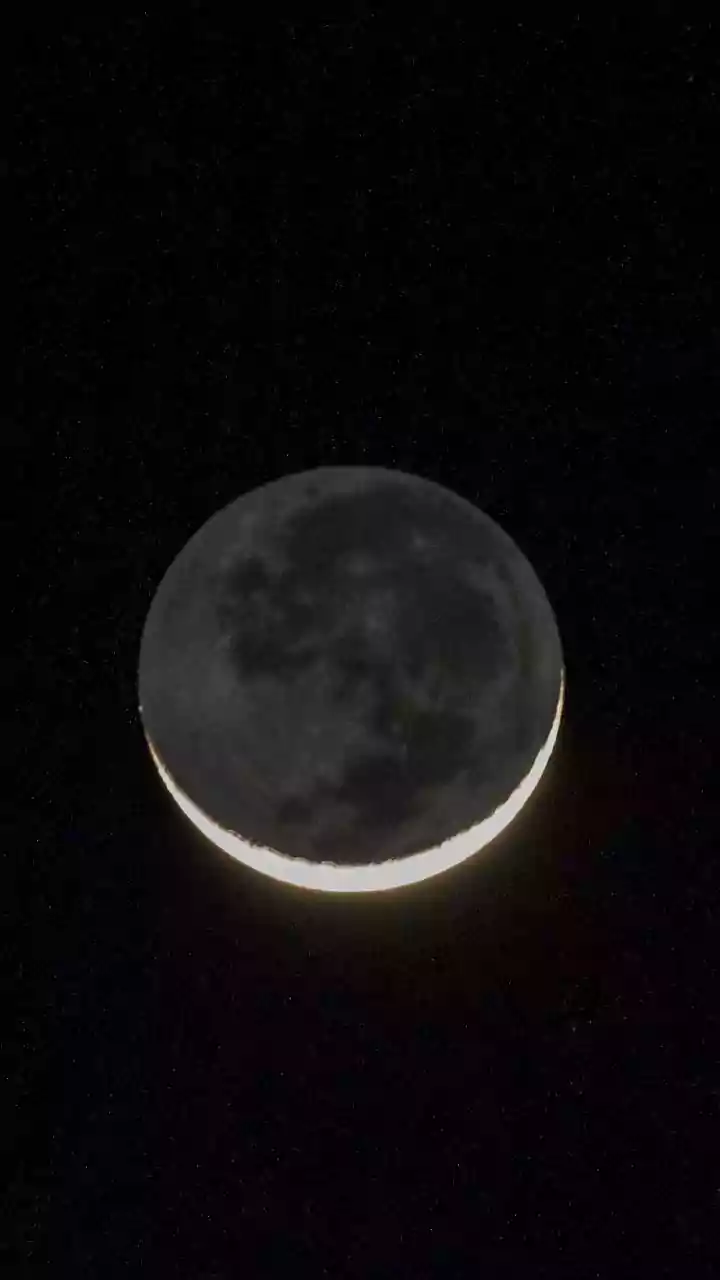
The key to any great astronomical photo is knowing when and where to look. This October, the Moon and Saturn will have a close approach from October 24th to 25th. The pair will be visible for most of the night, making it accessible for photographers.
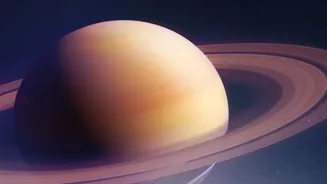
Specifically on the evening of October 24th, you can spot the nearly-full Moon to the left of Saturn after sunset. A few days prior, from October 21st, you can watch the waxing gibbous Moon approach the ringed planet each evening. Using a night sky app on your smartphone can help you pinpoint their exact location from your vantage point, ensuring you're ready when they appear.
Choosing Your Photography Gear
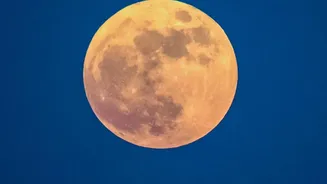
You have options when it comes to equipment, from smartphones to dedicated DSLR or mirrorless cameras. Modern smartphones are surprisingly capable of capturing bright celestial objects like the Moon and planets. For the best results with a phone, you'll need a tripod to keep it steady and a smartphone adapter to mount it securely. If you're using a DSLR or mirrorless camera, a lens with a long focal length (200mm or more) is ideal for making the celestial bodies appear larger in your frame. A longer lens will help you resolve not just the Moon's craters but potentially even the shape of Saturn's rings.
The Essential Toolkit for Stability
Regardless of your camera, the single most important accessory for night sky photography is a sturdy tripod. It eliminates camera shake, which is crucial for the long exposures required to capture faint light. Even a slight movement can turn stars and planets into blurry streaks. To further minimize vibrations, use a remote shutter release or your camera’s built-in self-timer (a 2- or 10-second delay works well). This prevents you from jostling the camera when you press the shutter button. Also, pack extra batteries, as cold night air can drain them faster than usual.
DSLR and Mirrorless Camera Settings
Getting your settings right is key. Start by switching your camera to Manual (M) mode. Because the Moon is so bright, you'll need a faster shutter speed than you might for other types of astrophotography. A good starting point is an aperture of f/8 to f/11, a shutter speed of around 1/125 to 1/400 of a second, and an ISO of 200 to 800. For focus, switch to manual focus and use your camera’s live view screen. Zoom in digitally on the Moon or Saturn and carefully adjust the focus ring until the details are as sharp as possible. Since the Moon and Saturn have different brightness levels, you might need to take separate exposures and combine them later—a technique known as compositing.
Tips for Smartphone Photography
If you're using a smartphone, your main challenge will be controlling the exposure to avoid a bright, blown-out Moon. Use a camera app that allows for manual controls. Set your ISO between 800 and 1600 and your shutter speed to a few seconds. Tap on the Moon on your screen to set the focus and exposure, then slide the exposure level down until you can see surface details. Avoid using the digital zoom, as it will degrade your image quality. Instead, shoot as wide as you can and crop the photo later. For a truly impressive shot of Saturn's rings, you may need to attach your phone to a telescope eyepiece using a special adapter.
Framing a More Interesting Shot
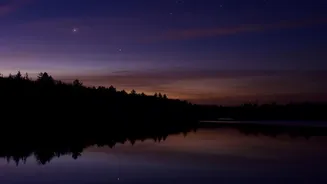
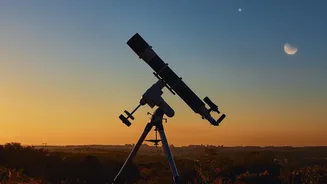
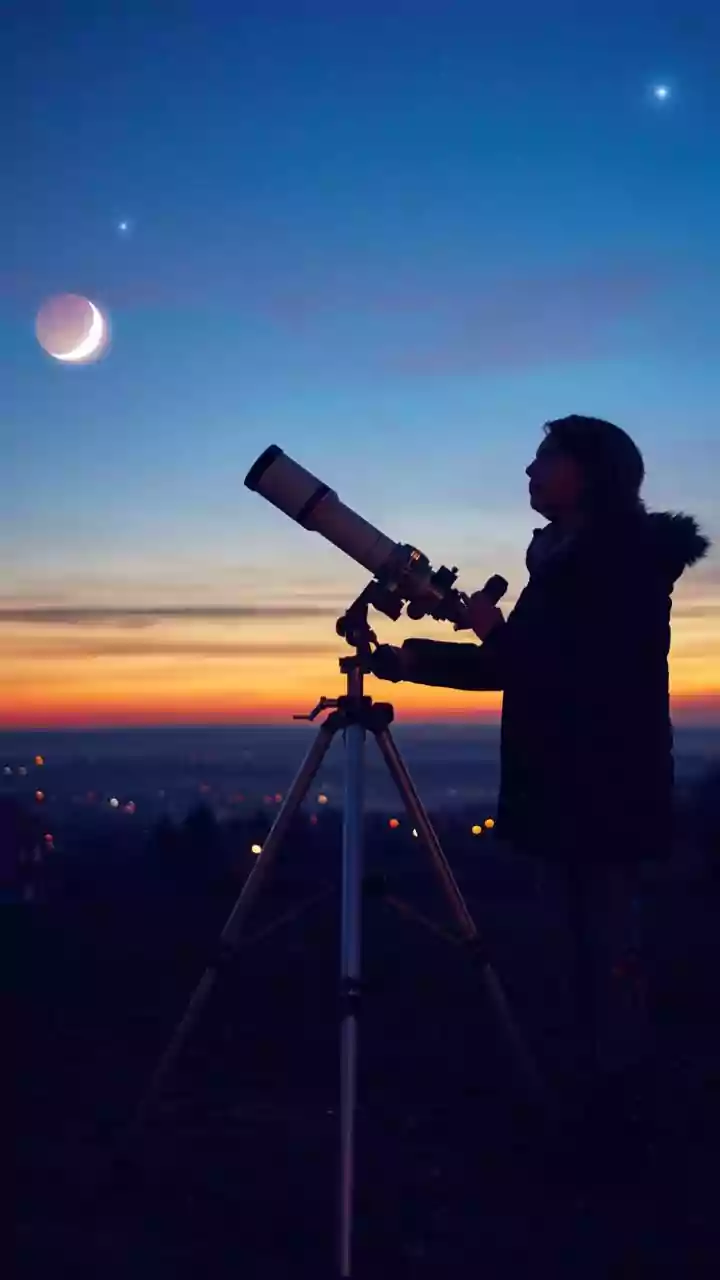
A picture of just the Moon and Saturn against a black sky can be beautiful, but adding context can make it captivating. Think about composition. Try to frame the alignment with an interesting foreground element, like the silhouette of a tree, a distant hill, or a unique building. This adds a sense of scale and place to your photograph. Arrive at your location before it gets completely dark. The post-sunset 'blue hour' provides a beautifully colored sky that can add a dramatic backdrop to your celestial subjects. Experiment with different compositions to find a shot that tells a story.