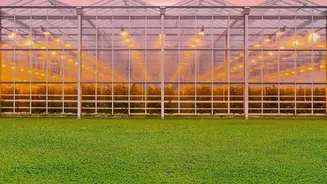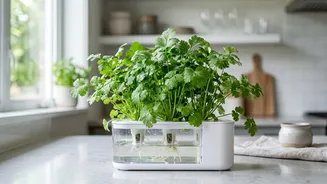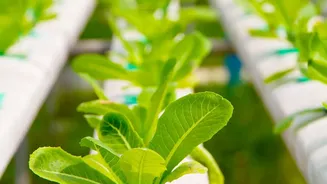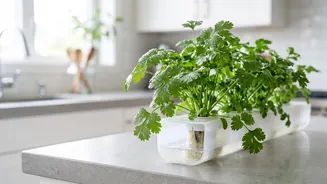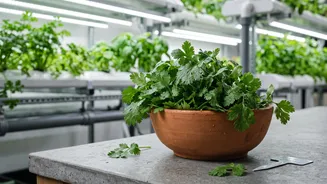



Imagine snipping fresh, aromatic coriander for your curries and chutneys any day of the year. With a hydroponic system and LED grow lights, this is entirely possible, even in a small flat with limited access to natural daylight.
Why Grow Coriander Hydroponically?
Growing coriander in soil
can be tricky; the plant is notorious for 'bolting'—flowering prematurely in response to heat or stress, which turns the leaves bitter. Hydroponics, a method of growing plants in a nutrient-rich water solution without soil, gives you complete control over the environment. This means you can keep the conditions stable to prevent bolting, resulting in faster growth, a more intense flavour, and a consistent, year-round harvest free from soil-borne pests.
Your First Hydroponic Setup
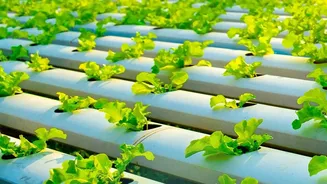
For beginners, a Deep Water Culture (DWC) system is one of the simplest and most effective choices for herbs. In a DWC setup, the plant's roots are suspended in an oxygenated nutrient solution. You'll need a food-grade bucket or reservoir, net pots to hold the plants, a growing medium like rockwool or clay pellets, and an air pump with an air stone to oxygenate the water. Many all-in-one kits are available that include everything you need, making the initial setup even easier.
The Power of LED Grow Lights
When daylight is scarce, LED grow lights are the perfect substitute. They are energy-efficient, produce very little heat (which helps prevent bolting), and can be tailored to provide the exact light spectrum plants need for photosynthesis. For herbs like coriander, a full-spectrum LED light is a convenient choice as it supports all stages of growth. Look for a model that provides 12 to 16 hours of light per day, which is ideal for leafy growth without stressing the plant.
Getting Nutrients and pH Right
This is where the magic of hydroponics happens. Instead of getting nutrients from soil, your coriander will get them directly from the water. You will need a balanced hydroponic nutrient solution, which is readily available at gardening stores. For coriander, the goal is steady leaf development. Maintain an Electrical Conductivity (EC) between 1.2 and 1.8 mS/cm. Equally important is the pH of the water, which should be kept between 5.5 and 6.5 to ensure your plants can absorb the nutrients efficiently. You will need a simple pH and EC meter to monitor these levels.
From Seed to Harvest
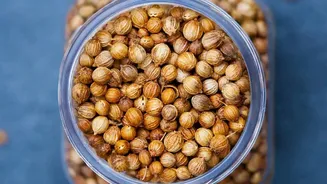
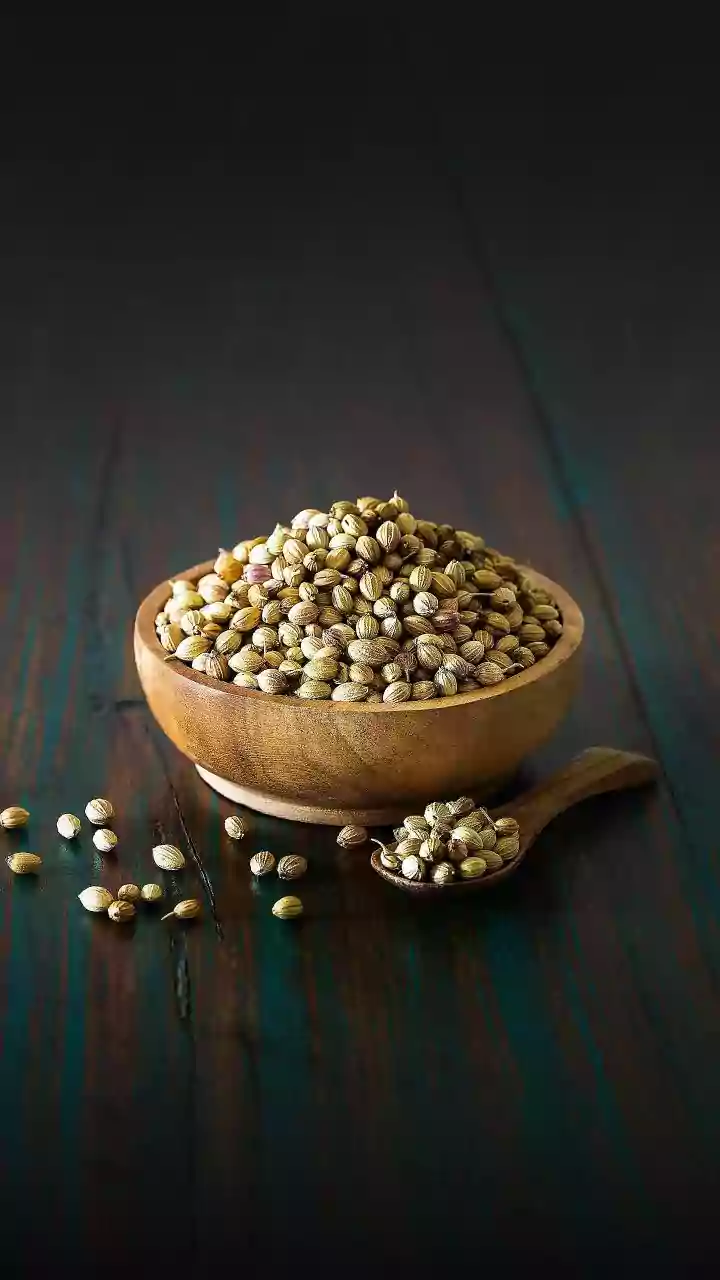
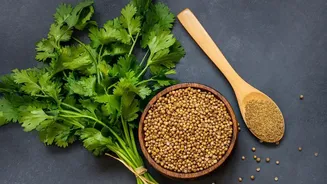
Coriander seeds are actually a fruit containing two seeds. To improve your success rate, gently crack the outer husk before planting. A reliable method is to presprout the seeds on a damp paper towel before moving them into rockwool or coir starter plugs. Once seedlings have developed their first true leaves and roots are poking through the plug, you can transfer them into your hydroponic system. You can typically start harvesting leaves in about four to six weeks. Snip the outer leaves first, taking no more than a third of the plant at a time to encourage continuous production.
Avoiding Common Problems
The main challenge with coriander is preventing it from bolting. Keeping the air and water temperature cool, ideally between 18°C and 24°C, is crucial. A shorter light cycle of around 12 hours can also help delay flowering. Another potential issue in DWC systems is root rot, which is caused by insufficient oxygen in the water. Ensure your air pump is powerful enough for your reservoir and is running continuously to keep the roots healthy and white.