





The Monsoon's Wellness Ritual
Every year, from mid-July to mid-August, the Malayalam month of Karkidakam ushers in the peak of the monsoon. Traditionally, this is a time when the body's immunity is considered to be at its lowest, and digestion is sluggish. In response, Ayurvedic tradition
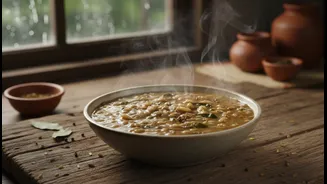
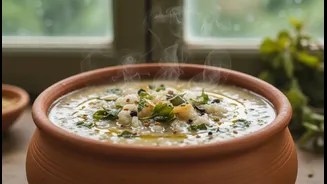
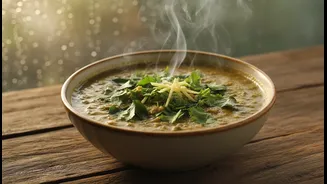
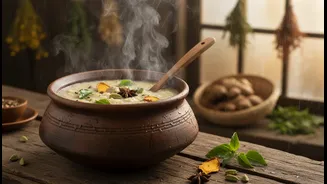
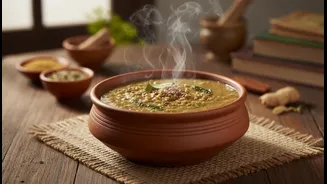
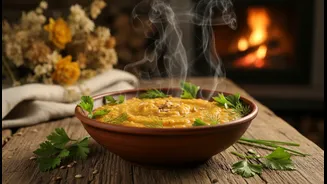
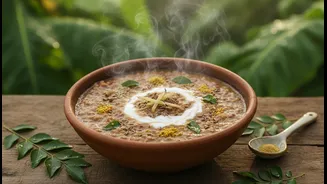
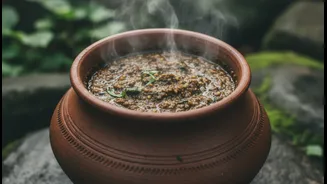
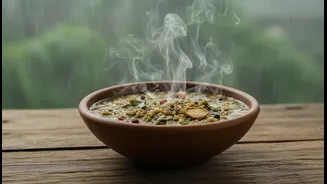
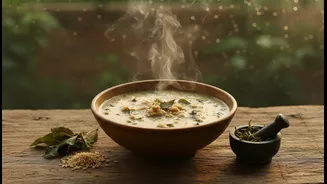
prescribed a special regimen known as Karkidaka Chikitsa, or monsoon treatment. At the heart of this practice is a warm, nourishing bowl of Karkidaka Kanji, also called Oushadha Kanji, which translates to 'medicinal porridge'. It's a time-honoured ritual designed to cleanse, rejuvenate, and fortify the body against seasonal ailments.
A Potent Blend of Ingredients
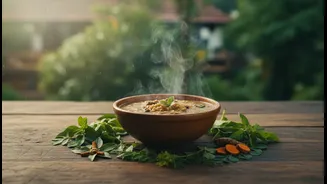
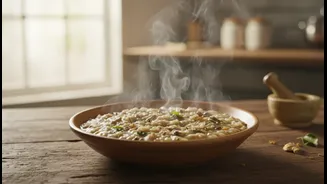
This is no ordinary gruel. The base is often Njavara rice, a medicinal variety native to Kerala known for being easy to digest and highly nourishing. To this, a powerful blend of herbs and spices is added, each with a specific purpose. Common ingredients include fenugreek, cumin, dry ginger, and black pepper, all chosen to kindle the digestive fire, or 'Agni', according to Ayurveda. More complex versions include a mix of potent herbal powders like Dashamoola (a blend of ten roots) and Dashapushpam (a group of ten flowers), which are believed to have anti-inflammatory and immunity-boosting properties.
More Than a Meal, It's Medicine
The philosophy behind Karkidaka Kanji is that food is medicine. During the monsoon, the body is thought to be more receptive to herbal treatments, making it the ideal time for this form of nourishment. The porridge is designed to support detoxification, reduce inflammation that can cause joint pain, and bolster the body's natural defenses. Traditionally consumed once a day, often as an evening meal, for a period of seven days or more, the practice is seen as a reset for the entire system. It's a holistic approach to wellness, addressing everything from digestion to energy levels.
A Tradition Adapting to Modern Life
In the past, families would forage for the required herbs and prepare the mixture from scratch, a ritual that passed knowledge down through generations. While that practice continues in many homes, the tradition has also adapted to the demands of modern life. Today, it's easy to find 'Karkidaka Kanji Kits' in stores and online. These ready-to-cook packets contain the Njavara rice and pre-portioned sachets of herbal powders, making the ancient wellness practice accessible to busy individuals and urban dwellers who still wish to connect with this seasonal ritual. This convenience ensures that the tradition not only survives but thrives, bridging the gap between ancestral wisdom and contemporary lifestyles.