




The Salt in the Machine
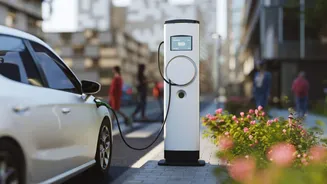
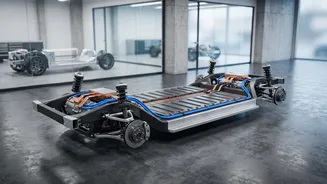
At the heart of every electric car is its battery, and for years, lithium-ion has been the undisputed king. However, the core ingredients—lithium and cobalt—are expensive and come with complex supply chains. This is where sodium-ion (Na-ion) technology
enters the picture. As the name suggests, these batteries use sodium ions as their charge carriers. Sodium is over 1,000 times more abundant in the Earth's crust than lithium and can be easily sourced from common salt. This incredible availability is the main driver behind the promise of cheaper EVs. Estimates suggest the total material cost for Na-ion batteries can be 30% to 40% lower than for their lithium-iron-phosphate (LFP) counterparts, which are already considered a cost-effective lithium-ion chemistry. Furthermore, the manufacturing process is so similar to lithium-ion that existing factories can be adapted, avoiding the need to build an entirely new industrial ecosystem from scratch.
A Cooler, More Stable Chemistry
Cost is only part of the equation; safety is non-negotiable. Here, sodium-ion technology presents some compelling advantages. One of the biggest concerns with lithium-ion batteries is a phenomenon called thermal runaway, where damage or overheating can cause a dangerous and self-sustaining fire. Some sodium-ion designs exhibit greater thermal stability, meaning they are less prone to this type of event. They generate less internal heat and the electrolytes used can be less flammable. A significant logistical and safety benefit is the ability to transport and store sodium-ion cells at zero volts. Lithium-ion batteries must be shipped with a partial charge, creating a potential hazard. The ability to fully discharge Na-ion cells without damaging them drastically reduces risk during shipping and handling. While no battery is completely fireproof, the inherent chemical stability of sodium-ion provides an added layer of safety for daily use.
Performance: A Question of Density
So, if sodium-ion is cheaper and safer, why isn't it in every EV already? The primary trade-off is energy density. In simple terms, current Na-ion batteries can't store as much energy in the same amount of weight compared to their lithium-ion counterparts. The latest mass-produced Na-ion cells from industry leader CATL reach an energy density of up to 175 watt-hours per kilogram (Wh/kg). This is impressive but still below the 200+ Wh/kg for LFP and 250+ Wh/kg for high-performance NMC lithium-ion cells. For an EV, this translates to a shorter driving range. However, this doesn't make them unsuitable. It makes them ideal for smaller, more affordable city cars where a 300-400 km range is more than sufficient for daily commuting. Moreover, Na-ion batteries have a distinct advantage in cold weather, retaining over 90% of their capacity at very low temperatures where lithium-ion performance typically suffers.
From the Lab to the Road
This technology is no longer just a laboratory experiment. Major battery manufacturers and automakers, particularly in China, are already rolling out sodium-ion-powered vehicles. In early 2026, CATL and automaker Changan unveiled what they described as the world's first mass-production passenger EV equipped with Na-ion batteries, slated for a market launch later in the year. Companies like BYD are also investing heavily, aiming to become a major supplier for smaller EVs. This move into mass production signals that the technology has matured enough to be a credible, mainstream solution. While a European or Indian launch hasn't been confirmed, the rapid industrialization shows that the era of sodium-ion is arriving much faster than many experts predicted.