


A New Line in the Red Sand
In a significant move for future human spaceflight, NASA has established the first formal exposure limit for Martian dust inside astronaut habitats. A working group of scientists and toxicologists has recommended that astronauts not be exposed to a concentration
of fine dust particles greater than 0.1 milligrams per cubic meter over a 24-hour period. This standard is designed for short-stay missions of up to 30 days. The decision provides engineers with a crucial target for designing life support systems, airlocks, and spacesuits for the first crewed missions. It’s a necessary, practical step that turns a theoretical problem into a concrete engineering challenge, acknowledging that keeping habitats completely free of the pervasive dust will be impossible. The focus is on managing, not eliminating, the risk.
Not Your Average Household Dust
The reason for such caution lies in the alien nature of Martian dust, also known as regolith. Unlike the mostly organic dust on Earth, Mars is covered in a fine powder of crushed rock that is both physically and chemically hazardous. The particles are microscopic—often just 3 micrometres across—allowing them to bypass the body's natural respiratory filters and lodge deep within the lungs or even enter the bloodstream. Chemically, the dust is a toxic cocktail. It contains silicates, which are known to cause lung diseases like silicosis on Earth, and is laced with compounds called perchlorates. Perchlorates are rare on our planet but common on Mars, and they can interfere with the human thyroid gland. Furthermore, the dust is electrostatically charged, meaning it clings to everything, from spacesuits to sensitive equipment, making it incredibly difficult to contain.
The Known Unknowns
The new limit, while essential, is based on a foundation of significant uncertainty. No samples of Martian dust have ever been returned to Earth, so all analysis is based on data from rovers, meteorites, and studies of simulated dust. The 0.1 mg/m³ figure was derived from the existing standard for lunar dust, but with an added uncertainty factor to account for the unique and less-understood properties of Martian regolith. Scientists simply do not know the long-term health effects of chronic, low-dose exposure to these toxic particles. How will this dust interact with human biology in the partial gravity of Mars? What are the combined effects of dust exposure and the high-radiation environment of space? These are critical questions that can't be fully answered without sending humans there, creating a classic chicken-and-egg problem for mission planners.
A Challenge for Global Ambitions
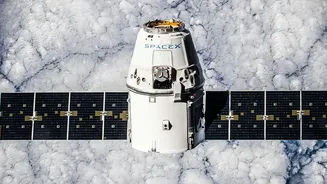
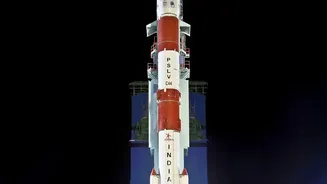
This challenge is not NASA's alone. With India’s ISRO planning future missions to Mars, including ambitious lander and rover concepts, these findings are critical for the safety of future Indian astronauts. The Mangalyaan-2 mission and long-term plans for human exploration mean that India, along with China, the UAE, and private companies like SpaceX, will be watching these developments closely. Any nation or entity with Martian ambitions must solve the dust problem. The new NASA standard will likely serve as a global benchmark, influencing the design of spacecraft and habitats for an entire generation of explorers. It highlights how international collaboration and data sharing will be essential to overcoming these shared risks.
Mitigation is the Mission
Since the dust itself can't be changed, the focus is on robust mitigation strategies. This involves a multi-layered defence. Future Mars habitats will need advanced air filtration systems far more capable than those on the International Space Station. Astronauts returning from spacewalks will likely go through a multi-stage cleaning process in a specialized airlock to remove as much dust as possible from their suits before they re-enter the main habitat. Technologies like electrostatic repulsion, where an electric charge is used to push dust away from surfaces, are also being developed. Every aspect of the mission, from the weave of a spacesuit's fabric to the design of door seals, must be reconsidered with this fine, toxic, and inescapable dust in mind.