







A Sudden, Unprecedented Brightening
In the constellation Virgo, about 300 million light-years away, sits a galaxy with the designation SDSS1335+0728. For years, it was just another unremarkable galaxy among billions. Then, in late 2019, something extraordinary happened. The Zwicky Transient
Facility, a California-based observatory that scans the skies for sudden changes, flagged a dramatic spike in the galaxy's brightness. Unlike fleeting events like a supernova, which fades after a few months, this galaxy just kept getting brighter. For over four years now, its core has been shining with increasing intensity, an event astronomers have called “unprecedented.”
What It Means for a Black Hole to 'Awaken'
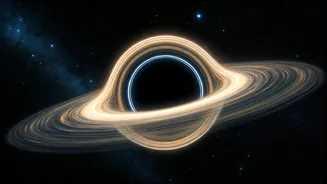
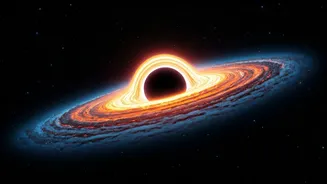
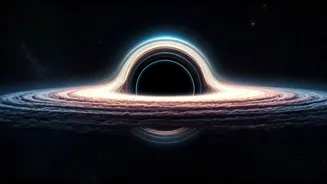
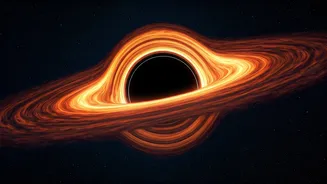
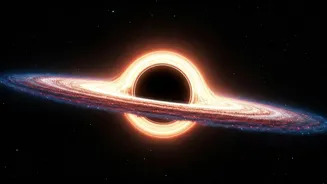
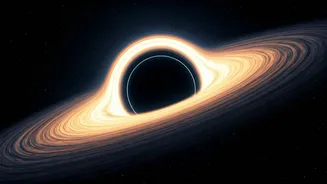
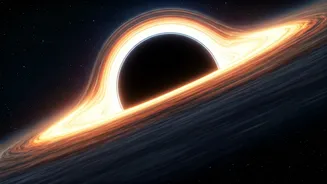
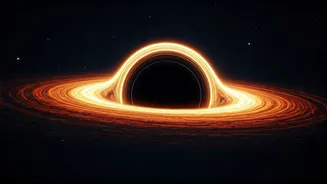
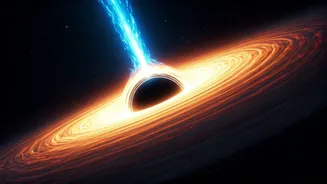
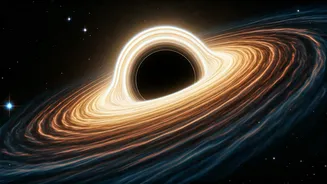
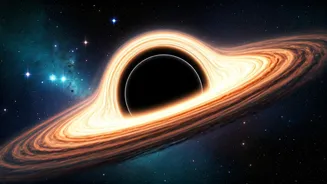
Most large galaxies, including our own Milky Way, have a supermassive black hole at their center. These cosmic monsters are millions to billions of times the mass of our sun. For the most part, they are dormant, or “sleeping,” meaning there isn't much material nearby for them to consume. An “awakening” occurs when a black hole starts actively feeding on a large supply of gas and dust from its surroundings. As this material spirals into the black hole, it forms an incredibly hot and bright structure called an accretion disk. The immense energy released makes the galaxy's core—now called an Active Galactic Nucleus (AGN)—outshine billions of stars.
Piecing Together the Cosmic Clues
To solve the mystery of SDSS1335+0728, an international team of scientists led by the European Southern Observatory (ESO) became cosmic detectives. They used a combination of new observations from powerful instruments like the Very Large Telescope (VLT) in Chile and dug through two decades of archival data from multiple observatories. By comparing the “before” and “after” pictures, they mapped the changes. They found the galaxy is now four times brighter in ultraviolet light, twice as bright in the mid-infrared, and, as of February 2024, has begun to emit X-rays for the first time in recent history. This multi-wavelength data allowed them to rule out other causes and point to the most likely explanation: the birth of an Active Galactic Nucleus.
A New Window into Galaxy Evolution
This discovery is monumental because it's the first time scientists have caught the activation process in real time. Previously, our understanding of how dormant black holes become active was based on theories and snapshots of different galaxies at various stages. Observing the entire process from the start provides a complete data set. It’s like the difference between seeing a photo of a butterfly and watching the whole transformation from caterpillar to chrysalis to butterfly. This real-time observation provides invaluable information on how these behemoths grow and how their activity shapes the evolution of their host galaxies.
What Happens Next?
The scientific community will be keeping a close eye on SDSS1335+0728 for years to come. One lingering question is whether this is truly the long-term awakening of an AGN or an extremely unusual and slow-moving version of a “tidal disruption event,” where a star gets shredded by a black hole. Such events are usually much shorter. Continued monitoring across all wavelengths will be crucial to confirm the black hole’s new active status. The answer will help refine our models of one of the most powerful and fundamental processes in the cosmos.