





Beyond the Buzz of Apollo
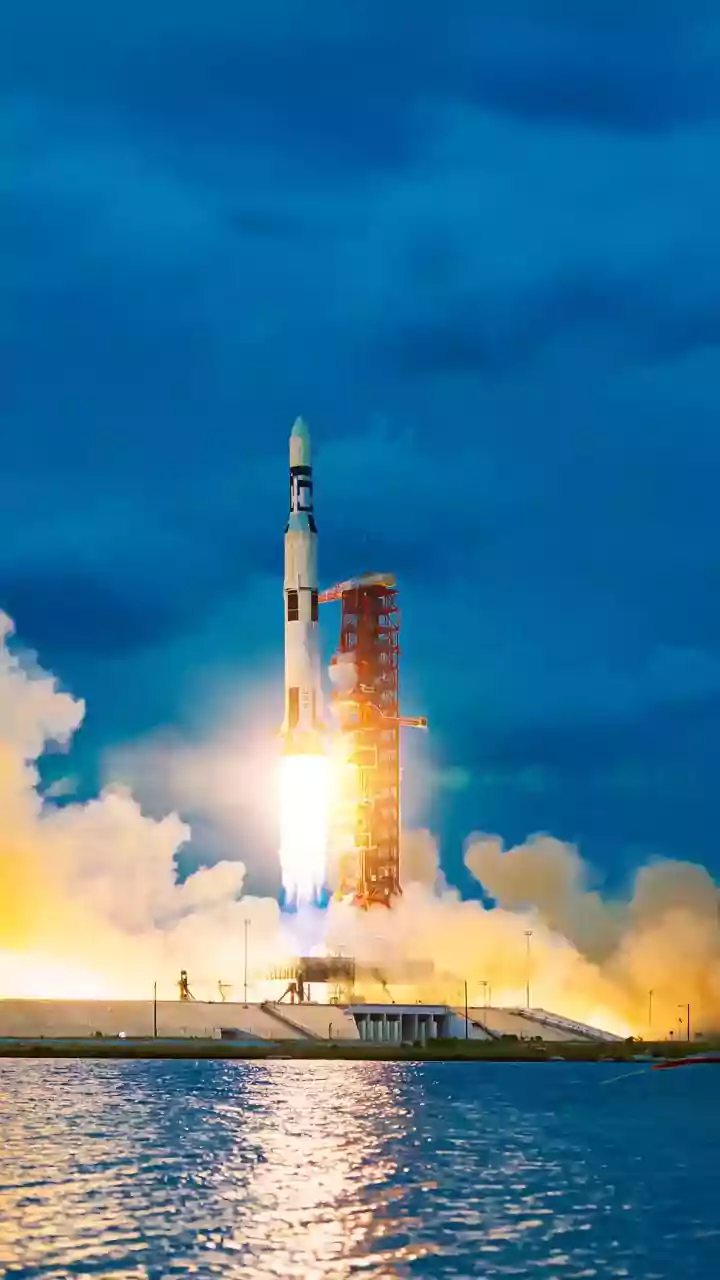
During the Apollo missions, communication was a marvel of its time, but fundamentally limited. Astronauts relied on radio waves relayed through the Manned Space Flight Network and NASA's Deep Space Network (DSN) — a global array of giant antennas in the US,
Spain, and Australia. This system was effective for voice and essential data, but it couldn't handle the massive data loads required for modern science and high-definition video. Furthermore, every mission needed to schedule dedicated time on these heavily used networks. With dozens of missions planned for the Moon in the coming decade from various nations and companies, this old model simply won't scale. A more robust, internet-like system is needed.
LunaNet: An Internet for the Moon
Enter LunaNet, NASA's ambitious plan to create a flexible and scalable communications and navigation architecture for the Moon. Think of it less like a single, direct link to Earth and more like a local lunar internet. Instead of every rover, lander, and astronaut having to establish its own direct-to-Earth connection, they will connect to nearby network nodes, similar to how we use Wi-Fi hotspots and mobile towers. This system will provide networking, navigation, and timing services, allowing assets to know their precise location and communicate with each other and with Earth seamlessly. A key technology behind this is Delay/Disruption Tolerant Networking (DTN), which cleverly manages data by storing and forwarding it to overcome signal interruptions, a common issue in space.
The Gateway: A Lunar Comms Hub
A central piece of this new infrastructure will be the Lunar Gateway, an outpost orbiting the Moon that will serve as a staging point for missions. Critically, the Gateway will also function as a powerful communications relay. From its unique orbit, it will have a continuous line of sight to Earth and long periods of visibility over key areas like the lunar South Pole. This allows it to relay multiple high-definition video streams and other data between lunar surface assets and mission control back on Earth, even from the Moon's far side, which is permanently blocked from direct radio contact.
Lasers Beaming Data Home
Perhaps the most significant upgrade is the shift from radio waves to laser communications. While radio has been reliable, it's limited in bandwidth. Laser, or optical, communications use infrared light, which has a much higher frequency than radio waves. This means it can pack 10 to 100 times more data into a single transmission. NASA has already been testing this technology, with the Orion Artemis II mission demonstrating the ability to send real-time, 4K ultra-high-definition video from lunar distances. These laser systems are also smaller, lighter, and require less power than comparable radio equipment—all crucial advantages when you're launching hardware into space.
An Astronaut’s Daily Connection
So, what does this all mean for an astronaut living in a lunar habitat? Their experience would be surprisingly familiar. They could make high-quality video calls to family, consult with doctors on Earth in real-time, and stream mission data without significant delays. On the surface, wireless systems similar to 4G/LTE would connect astronauts and rovers. Within the base itself, ruggedized Ethernet cables would ensure a stable internal network. They would also receive real-time alerts for events like dangerous solar activity directly through LunaNet, enhancing their safety and autonomy without waiting for a warning from Earth. This constant, high-bandwidth connection transforms lunar exploration from a series of disconnected expeditions into a sustained, interactive human presence.