





Why Your Desk Is a Pain Hotspot
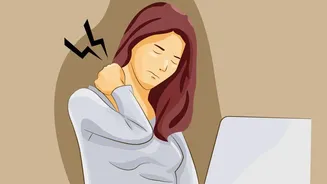
Prolonged sitting is an unnatural state for the human body, which is built to move. When you remain seated for hours, several negative effects begin to accumulate. Your hip flexors shorten and tighten, contributing to lower back pain. The large gluteal
and leg muscles, crucial for stability and walking, become inactive and can weaken over time. This inactivity also slows circulation, especially in the legs. Meanwhile, the posture many adopt at a desk—shoulders rounded, head forward—strains the neck and upper back. This can lead to stiffness, reduced mobility in the thoracic spine (mid-back), and chronic discomfort.
The Seated Spinal Twist
This movement targets the thoracic spine, an area that often becomes rigid from hunching over a keyboard. Restoring rotation here can alleviate strain on both the lower back and neck. Sit tall in your chair with your feet flat on the floor. Cross your arms over your chest or place your left hand on the outside of your right thigh. Gently rotate your upper body to the right, keeping your hips facing forward. Focus on twisting from your mid-back, not just your neck. Hold the stretch for 15 to 30 seconds, breathing steadily, before slowly returning to the center and repeating on the left side. Perform two to three repetitions on each side.
The Seated Figure-Four Stretch
Tight hips are a hallmark of a desk-bound life. The figure-four stretch is excellent for opening up the hip rotators and glutes, which can relieve pressure on the lower back. While sitting upright, cross your right ankle over your left knee. Keep your back straight and gently hinge forward from your hips until you feel a comfortable stretch in your right glute and hip. Avoid rounding your spine. Hold this position for 30 to 60 seconds, focusing on deep breaths to relax into the stretch. Then, switch legs and repeat.
The Chest Opener
Hours spent reaching for a keyboard cause the pectoral muscles in your chest to tighten, pulling your shoulders forward into a rounded posture. This stretch directly counters that motion. Sit or stand tall. Interlace your fingers behind your back, or if that's not accessible, simply reach both arms behind you and grab the back of your chair. Straighten your arms as much as possible, squeeze your shoulder blades together, and push your chest forward. You should feel a stretch across your chest and the front of your shoulders. Hold for 30 seconds, release, and repeat a few times throughout the day.
The Neck Side-Bend
Holding your head in a fixed position to stare at a screen creates significant tension in the neck and upper shoulders. To release this, sit tall and let your shoulders relax downward. Gently tilt your right ear toward your right shoulder, stopping when you feel a light stretch along the left side of your neck. Be careful not to shrug your shoulder up to meet your ear. For a slightly deeper stretch, you can apply gentle pressure on your head with your right hand. Hold for 15-30 seconds, then slowly return to the center and repeat on the other side.
The Standing Hip Flexor Stretch
This is one of the most critical movements to counteract sitting, as it lengthens the muscles at the front of your hips that become short and tight. Stand up and step one foot back into a shallow lunge position. Tuck your pelvis slightly and squeeze the glute of your back leg. You should feel a stretch in the front of that hip. To deepen it, gently bend your front knee further, shifting your weight forward while keeping your torso upright. Hold for 30 seconds per side. Using your desk for balance can help you focus on the stretch.