
Reading Light from a Distance
The primary challenge in studying exoplanets is their immense distance and the overwhelming glare of their parent stars. Directly seeing an exoplanet’s atmosphere is nearly impossible. Instead, astronomers become detectives, analysing the faint whispers
of information hidden within starlight. The main tool for this is a technique called spectroscopy, which involves splitting light into its component wavelengths, much like a prism creates a rainbow. This method allows scientists to see what's happening to starlight as it interacts with a planet.
A Planet's Chemical Barcode
One of the most powerful techniques is called transit spectroscopy. It works when a planet passes in front of its star from our point of view, causing a mini-eclipse or 'transit'. As the planet crosses, a tiny fraction of the star's light filters through the planet's atmosphere. Different gases and chemicals in that atmosphere absorb light at very specific wavelengths. By capturing the star’s light before and during the transit, astronomers can see which wavelengths are missing. These missing slivers, called absorption lines, act like a unique chemical barcode, revealing the presence of water, methane, carbon dioxide, or even vaporised metals.
Catching Supersonic Winds
Measuring wind on a world light-years away sounds like science fiction, but it's done using the Doppler effect—the same principle that makes an ambulance siren change pitch as it passes you. As an exoplanet’s atmosphere whips around, the part moving towards us will slightly compress the light waves, shifting them towards the blue end of the spectrum (a blueshift). The part moving away will stretch the light waves, shifting them towards the red end (a redshift). By measuring these tiny shifts in the absorption lines within the planet's spectrum, scientists can calculate the wind speed. This requires incredibly high-resolution instruments, but it allows astronomers to create weather maps for these distant worlds.
Worlds with Wild Weather
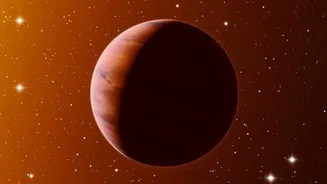
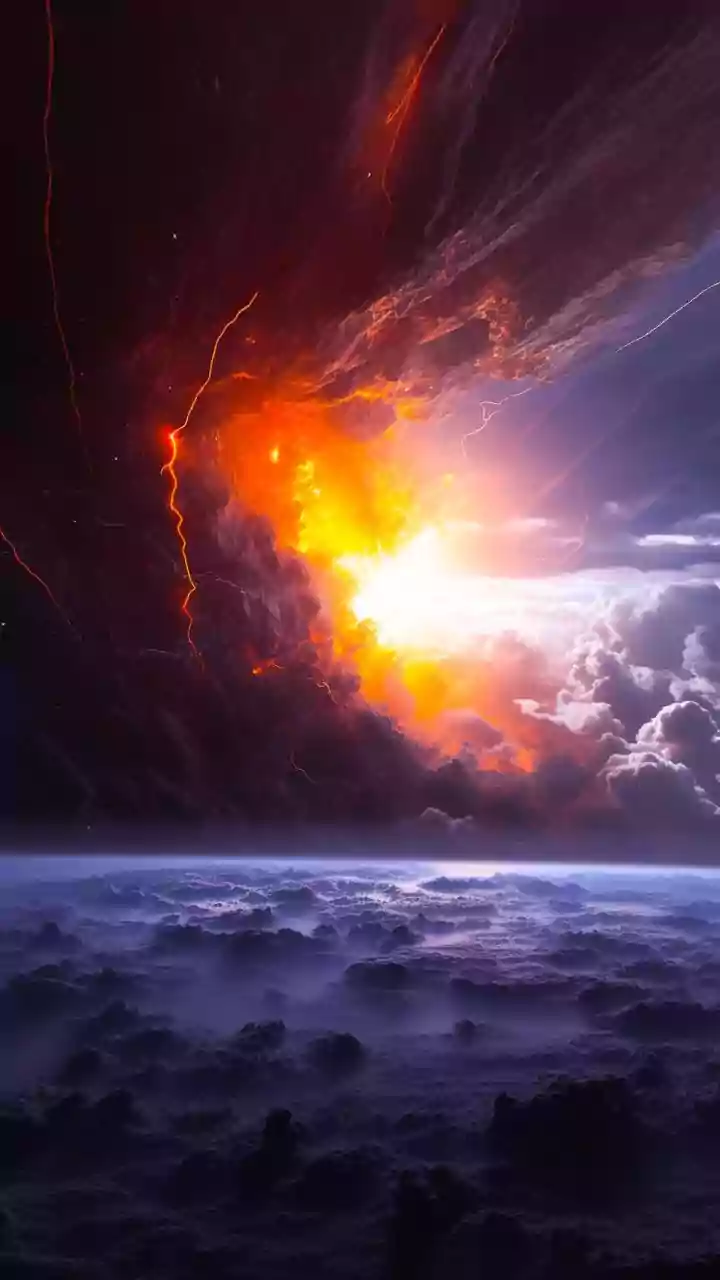
These techniques have unveiled some truly extreme environments. On WASP-76b, an ultra-hot gas giant, temperatures on the star-facing side soar high enough to vaporise iron. Astronomers have detected this iron vapour being carried by powerful winds to the cooler night side, where it condenses and falls as liquid iron rain. Another famous example is HD 189733b, a deep blue planet where winds are estimated to blow at over 8,700 km/h, more than twenty times faster than the strongest winds recorded on Earth. It’s believed that the atmosphere is rich in silicate particles, meaning it likely rains molten glass—sideways.
The New Era of Exploration
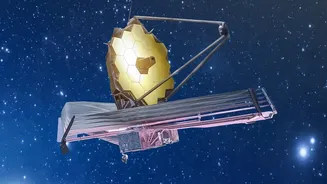
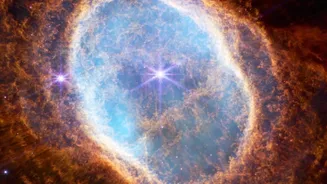
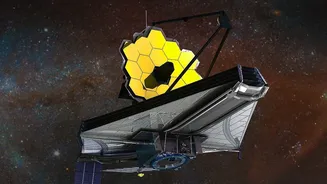
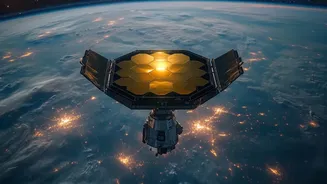
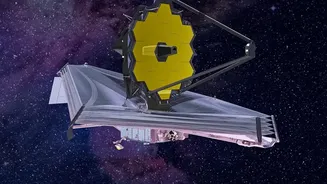
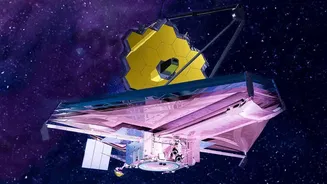
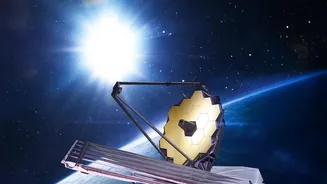
The arrival of the James Webb Space Telescope (JWST) has revolutionised the field, providing unprecedented sensitivity, especially in the infrared spectrum. JWST can detect fainter signals with greater detail, allowing for the study of atmospheres on smaller, rocky planets that were previously out of reach. It has already delivered a full menu of atoms, molecules, and signs of active chemistry on planets like WASP-39b, including the first-ever detection of sulphur dioxide in an exoplanet's atmosphere. These powerful new tools are not just confirming what we thought we knew; they are revealing the complex and dynamic nature of alien skies, rewriting our understanding of how planets work.