

First, Find a 'Super-Earth'
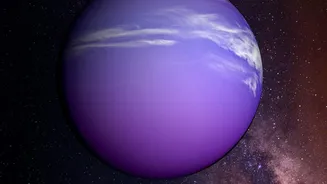
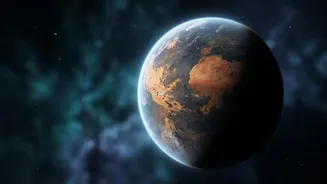
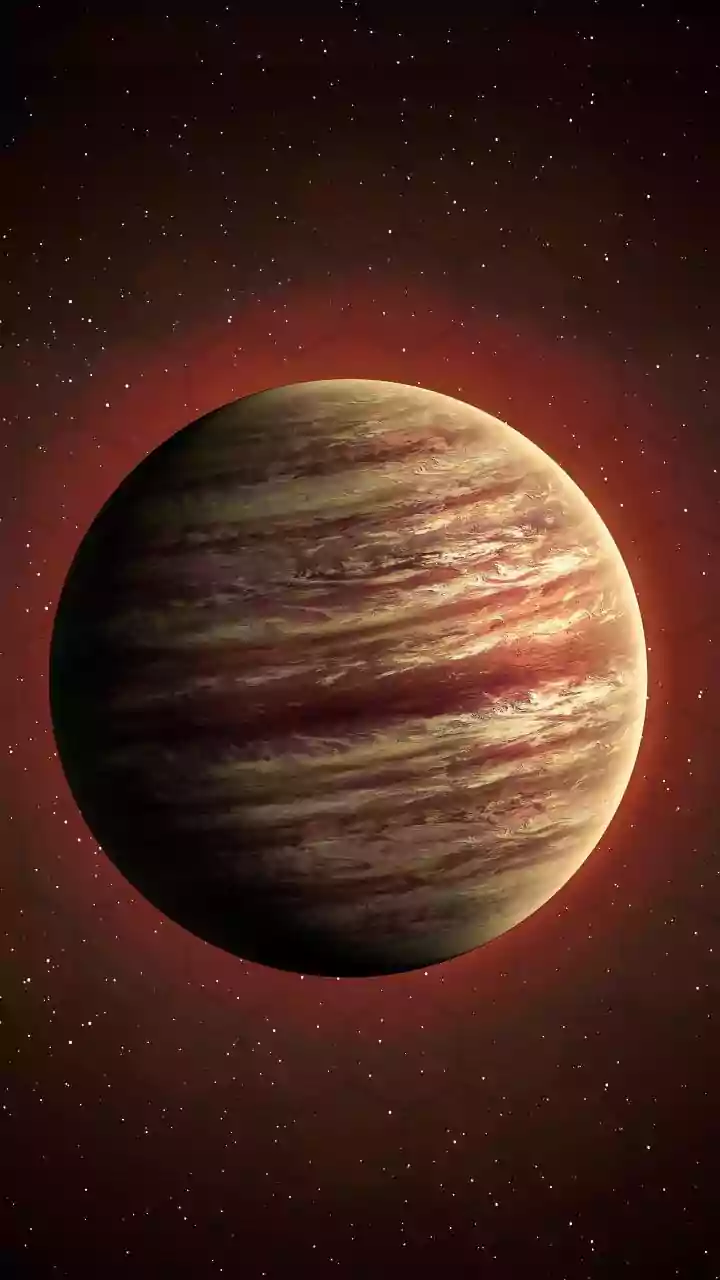
The term "Super-Earth" might conjure images of a bigger, better version of our world, but it's purely a size category. These are exoplanets—planets outside our solar system—with a mass greater than Earth's but less than that of Neptune. They can be rocky,
gaseous, or a mix of both. Interestingly, while our solar system doesn't have a super-Earth, they appear to be one of the most common types of planets in the galaxy, making them prime targets for study.
The Key: A Planetary Transit
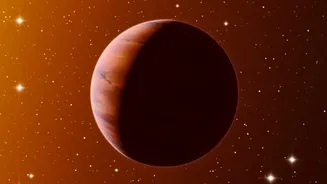
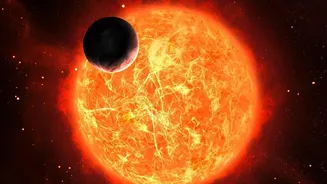
The primary technique relies on a celestial alignment called a transit. This happens when, from our viewpoint, an exoplanet passes directly in front of its host star. As the planet crosses, it blocks a tiny fraction of the starlight, causing a minuscule dip in the star's brightness. This transit method is not only crucial for discovering exoplanets but also provides the perfect opportunity to study their atmospheres. For a brief moment, the starlight is filtered through the planet's atmospheric gases before it continues its journey toward Webb's mirrors.
Reading a Chemical Fingerprint in Light
This is where the magic of spectroscopy comes in. Starlight isn't just one color; it's a spectrum made of many different wavelengths of light. When this light passes through an exoplanet's atmosphere, the gases in that atmosphere absorb very specific wavelengths. Every chemical element and molecule, including water (H2O), has a unique 'absorption fingerprint'—a pattern of light that it soaks up. The James Webb telescope is exquisitely sensitive to infrared light, a range of the spectrum where molecules like water, methane, and carbon dioxide leave very distinct and detectable signatures.
Webb's Powerful Infrared Eyes
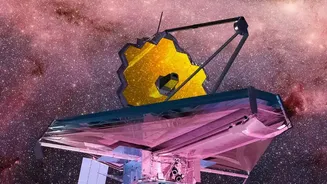
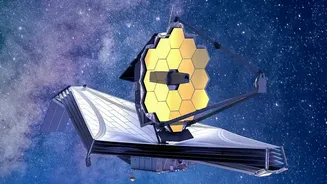
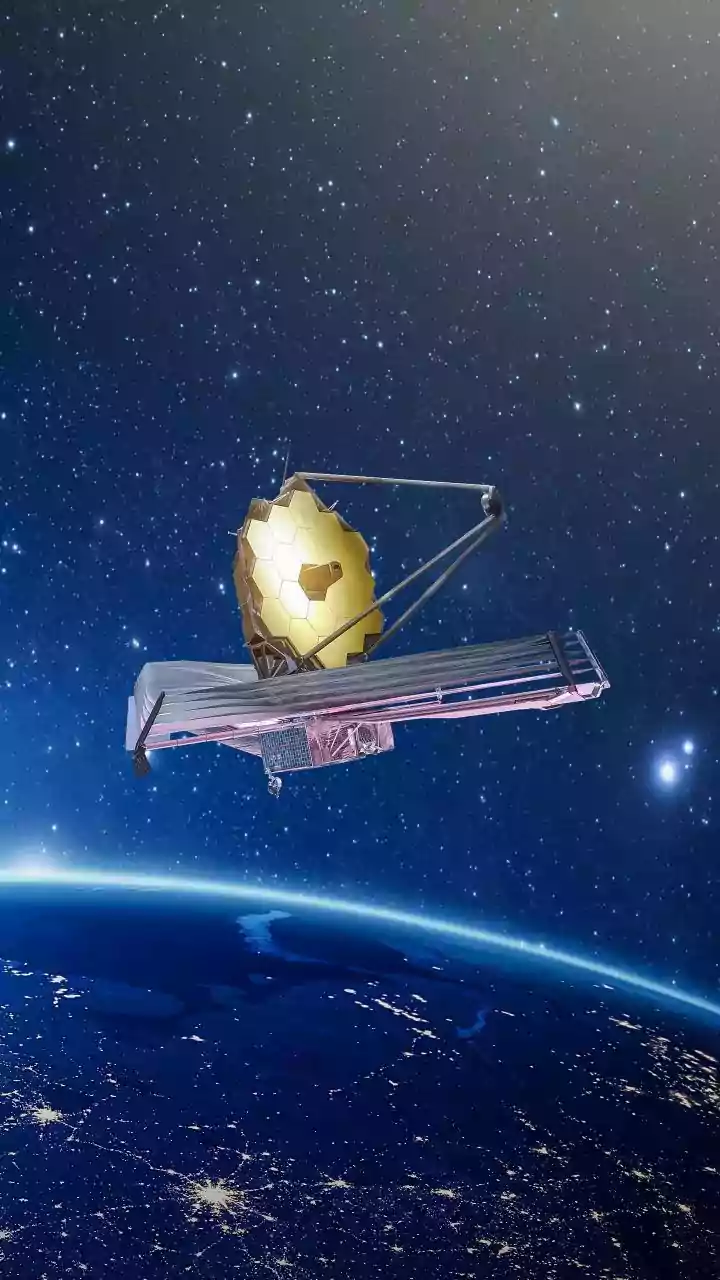
Webb is equipped with incredibly advanced instruments called spectrographs, specifically the Near-Infrared Spectrograph (NIRSpec) and the Mid-Infrared Instrument (MIRI). These act like cosmic prisms, taking the starlight that has passed through the exoplanet's atmosphere and splitting it into its thousands of component wavelengths. The result is a detailed spectrum—a sort of barcode of light. To find water, scientists compare the spectrum of the star when the planet is in front of it to the spectrum when it's not. The difference between the two reveals the absorption barcode left behind by the planet's atmosphere.
Decoding the Dips and Lines
In the spectrum gathered by Webb, water vapour will appear as specific 'dips' or dark lines at precise infrared wavelengths. These dips correspond to the energy absorbed by water molecules in the planet's atmosphere. By analyzing the location and depth of these absorption lines, astronomers can confirm the presence of water vapour and even estimate its abundance. It's a painstaking process of data analysis, but it's this method—known as transmission spectroscopy—that allows us to probe the chemistry of worlds that are impossibly far away. This technique has been used to detect water on several exoplanets, opening a new chapter in the search for potentially habitable worlds.