


The EV Price Hurdle
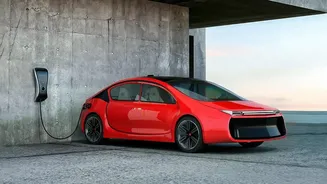
For the average Indian consumer, the dream of owning an electric car or scooter is often stalled by one significant factor: the cost. The battery pack is the single most expensive component in an EV, often accounting for 40-50% of the vehicle's total
price. Currently, the industry relies on lithium-ion batteries. While their costs have decreased over the years, the raw materials, particularly lithium and cobalt, are expensive, geographically concentrated, and subject to volatile pricing and geopolitical supply chain risks. This reliance on imported materials, especially from China, creates a strategic vulnerability for India's burgeoning EV market.
Enter the Sodium-Ion Solution
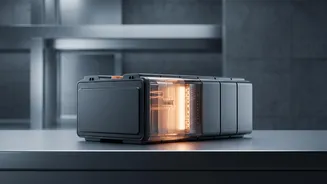
Sodium-ion batteries (SIBs) work on a similar principle to their lithium-ion counterparts, but they use sodium ions as charge carriers. The primary appeal lies in the raw materials. Sodium is one of the most abundant and cheapest elements on Earth, found readily in sea salt. Unlike lithium, whose reserves are limited and controlled by a few nations, sodium is available everywhere, including India. This simple fact has profound implications, offering a pathway to dramatically lower battery costs and increase India's self-reliance in the energy storage sector, a key goal of the Atmanirbhar Bharat mission.
The Cost Advantage Explained
The economic case for sodium-ion is compelling. By substituting expensive lithium and cobalt with inexpensive sodium, and using aluminium instead of copper for certain components, the raw material costs can be slashed. Projections suggest that once produced at scale, sodium-ion batteries could be 20-40% cheaper than equivalent lithium-ion packs. While some reports noted in early 2026 that SIBs were still at price parity with some lithium chemistries due to a lack of scale, the consensus is that mass production will unlock significant savings. Indian companies are betting big on this, with some using innovative methods like converting agricultural waste into hard carbon for anodes, further driving down costs and promoting a circular economy.
Performance, Safety, and Practicality
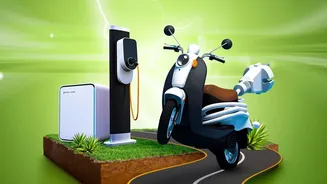
Of course, cost isn't everything. Early criticisms of sodium-ion technology pointed to its lower energy density, meaning a heavier, bulkier battery for the same range compared to lithium-ion. This would make it less ideal for high-performance, long-range cars. However, for a large segment of the Indian market—two-wheelers, three-wheelers, and budget-friendly city cars—this is a manageable trade-off. Furthermore, the technology is rapidly improving. Indian innovators like KPIT Technologies and researchers at JNCASR have developed SIBs with improved energy density, excellent cycle life (3000-6000 cycles), and significantly faster charging capabilities. SIBs also boast a better safety profile, with superior thermal stability and a lower risk of fire, a crucial factor for India's varied and often hot climate.
A Strategic Win for 'Make in India'
The shift to sodium-ion is not just about cheaper EVs; it's a strategic move. It aligns perfectly with the 'Make in India' initiative by reducing the country's heavy import dependence on lithium and other critical minerals largely controlled by China. This pivot allows India to build a resilient, domestic supply chain from the ground up, using its own abundant resources. Several Indian companies are already making strides. Reliance Industries, through its acquisition of UK-based Faradion, plans to build a giga-factory in Jamnagar to produce sodium-ion cells. Meanwhile, Pune-based KPIT has developed its own indigenous SIB technology and is partnering for commercialisation. Startups like Indi Energy and Sodion Energy are also entering the fray, indicating a vibrant and growing domestic ecosystem.
The Road Ahead
The transition won't happen overnight. While the technology is maturing rapidly—with researchers achieving Technology Readiness Level (TRL) 7, indicating a prototype has been demonstrated in an operational environment—widespread commercial production is still a few years away. Experts predict that sodium-ion batteries will see significant deployment between 2026 and 2028, initially targeting stationary energy storage, two-wheelers, and commercial vehicles before potentially moving into passenger cars. As manufacturing scales up, the cost benefits will become more pronounced, finally putting the price of electric vehicles within reach for millions more Indians.