

The Old Way vs. The New Space
For decades, the blueprint for a space mission was built around a single, massive satellite. These were bespoke, exquisitely engineered marvels costing hundreds of millions, or even billions, of dollars and taking years or decades to develop. A failure
during launch or in orbit could be catastrophic, setting a program back years. Today, the model has been flipped on its head. The rise of small satellites, or 'smallsats,' has introduced a new philosophy: instead of putting all your eggs in one very expensive basket, launch dozens of smaller, cheaper ones. These satellites can range from minisatellites weighing a few hundred kilograms down to 'CubeSats,' modular units as small as 10x10x10 cm. This shift dramatically lowers the financial barrier to entry, making space accessible not just to government agencies, but to universities, startups, and private companies.
It's All About Cost and Speed
The single biggest driver behind the smallsat boom is economics. They are significantly cheaper to build and launch than their traditional counterparts. This is largely due to two factors: standardization and miniaturization. The CubeSat, for instance, is a standardized format that has created an entire ecosystem of off-the-shelf components, much like the PC industry. This modular approach slashes development times from decades to months. Furthermore, advances in microelectronics mean that incredible computing power, sensors, and cameras can be packed into a tiny, energy-efficient package. This combination of lower manufacturing costs and shorter development cycles means organizations can iterate quickly, test new technologies in orbit with less financial risk, and deploy capabilities faster than ever before.
A Ride to Space Is Now Easier to Find
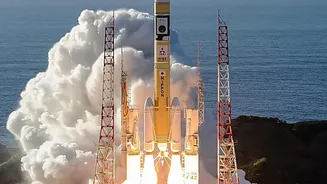
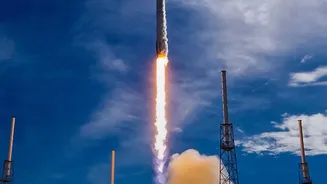
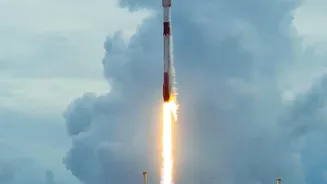
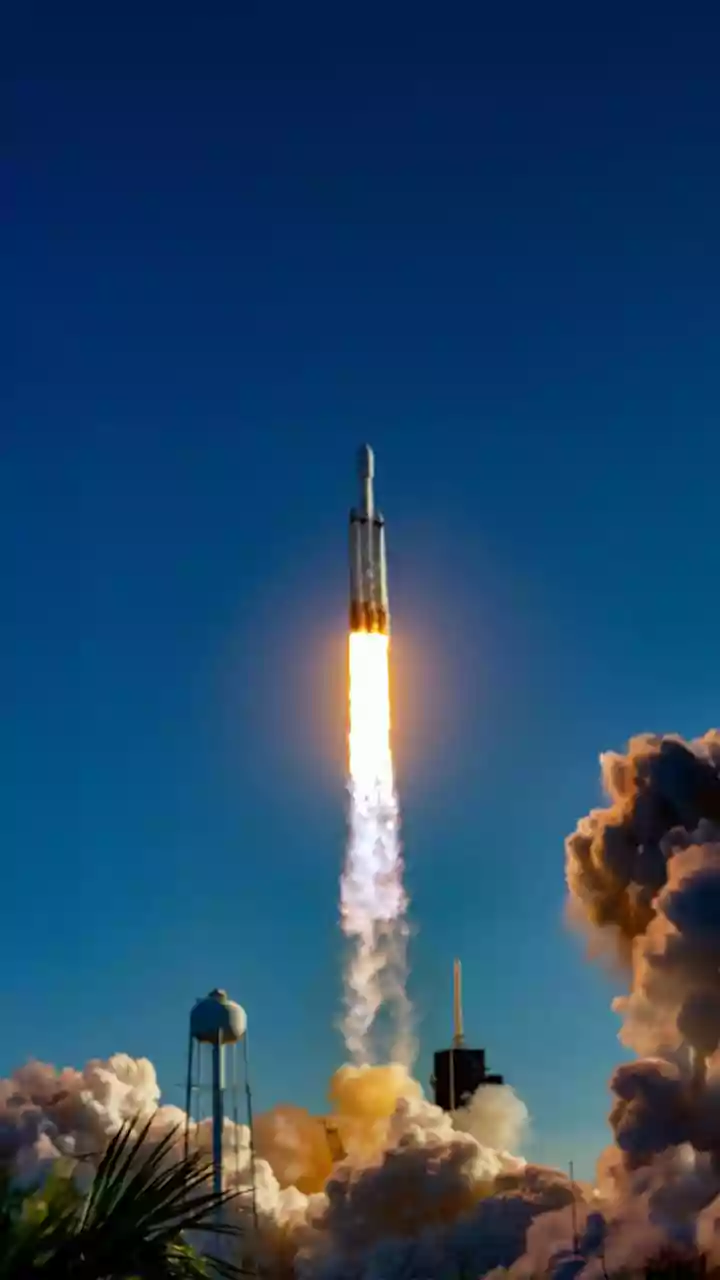
Building a cheaper satellite is only half the battle; you still have to get it into orbit. The rise of commercial launch providers has been a crucial enabler of the smallsat revolution. Companies now offer 'rideshare' missions, where dozens of small satellites from various customers can be packed onto a single rocket, splitting the cost of the launch. This is the space equivalent of carpooling, and it has made getting into orbit more affordable and routine. What once required a dedicated, multi-million dollar launch can now be accomplished by booking a slot as a secondary payload. This has democratized access to space, allowing smaller organizations and even student projects to send experiments into orbit.
Unlocking New Powers with Constellations
While a single smallsat is useful, their true power is unlocked when they work together in large, coordinated groups called constellations. By spreading hundreds or even thousands of satellites across low Earth orbit (LEO), companies can provide services that would be impossible with a single, large satellite. These constellations offer high-revisit capabilities, meaning they can image or communicate with the same point on Earth multiple times a day. This has been transformative for industries like Earth observation, where it enables near real-time monitoring of everything from agricultural health and deforestation to disaster response after floods or wildfires. It also powers global internet services that aim to connect remote and underserved areas.
Challenges on the Crowded Frontier
The proliferation of small satellites is not without its challenges. The dramatic increase in the number of objects in low Earth orbit has raised serious concerns about space debris and the potential for collisions. Managing this orbital traffic is a growing problem that requires international cooperation and new technologies for tracking and de-orbiting defunct satellites. Furthermore, while smallsats are incredibly capable, they still face limitations in power, propulsion, and the size of instruments they can carry compared to their larger predecessors. Despite these hurdles, the trend is clear. The industry is focused on overcoming these challenges, with ongoing advancements in on-orbit processing, more efficient propulsion, and better power systems.