


A New Look at a Galactic Neighbor
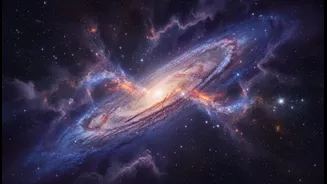
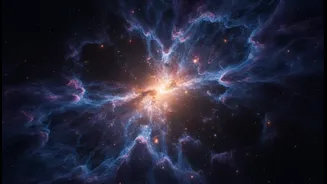
To mark the fourth anniversary of the James Webb Space Telescope's (JWST) science operations in July 2026, the agencies released a spectacular new view of Centaurus A. Located a relatively close 11 million light-years away, this galaxy is a hotbed of scientific
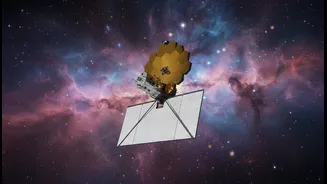
debate. Its peculiar shape is the result of a collision between two galaxies billions of years ago. While the Hubble Space Telescope has studied it before, its visible-light cameras couldn't pierce the thick dust obscuring the galaxy's core. JWST, with its powerful infrared instruments, cuts through that dust to reveal a densely packed tapestry of millions of individual stars. This unprecedented clarity provides new clues about how galaxies and the supermassive black holes at their centers grow and evolve together.
The Crimson Clouds of a Stellar Nursery
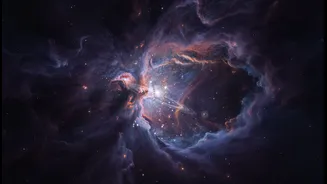
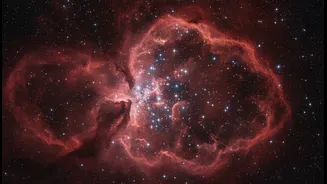
In another recent release, the venerable Hubble Space Telescope, a long-standing collaboration between NASA and the ESA, captured a breathtaking image of LH 95. This is a vast star-forming region in the Large Magellanic Cloud, a dwarf galaxy that orbits our own Milky Way. The image is a celestial fireworks show, with brilliant blue and white stars sparkling against glowing crimson clouds of hydrogen gas. It showcases about 2,500 young, developing stars, giving scientists a front-row seat to one of the universe's busiest stellar nurseries. By studying this massive population of baby stars, astronomers have gained new insights into how stars mature, confirming that they can continue gathering gas and dust for millions of years—longer than some previous theories suggested.
Unveiling the 'Impossible' Light
Sometimes the most breathtaking views are the ones that shouldn't be possible. Using a combination of data from Hubble, JWST, and other observatories, researchers recently detected ultraviolet light from a galaxy called MXDFz4.4 as it existed just 1.4 billion years after the Big Bang. This was an unexpected discovery because the early universe was thought to be filled with an opaque fog of neutral gas that would block such light. The galaxy is small but packs a punch, forming stars about 10 times faster than our Milky Way. This intense activity seems to have been powerful enough to punch clear channels through the surrounding gas, allowing its light to escape and giving us a glimpse into the cosmic era when the universe first became transparent.
A Cosmic Spiderweb of Dust
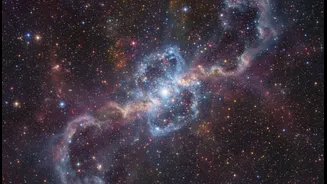
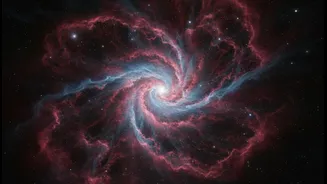
The Red Spider Nebula, also known as NGC 6537, is the stunning remnant of a sun-like star reaching the end of its life. As the star shed its outer layers, it cast them into space, creating the intricate, web-like structure we see today. Recent images from the James Webb Space Telescope have revealed this planetary nebula in never-before-seen detail. Webb’s Near-InfraRed Camera (NIRCam) peered through the cosmic dust to highlight the complex structures within the nebula's lobes and the white-hot core of the dying star at its center. These observations help astronomers understand the final, dramatic stages of stellar evolution and the chemical elements that are cast back into the cosmos to form new stars and planets.
Peering Back Through Time
Every image from these powerful telescopes is a form of time travel. The light from Centaurus A has been traveling for 11 million years to reach us. For more distant objects, like the early galaxy MXDFz4.4, we are seeing light that is over 12 billion years old. The Hubble and Webb telescopes are not just taking pictures; they are capturing photons that have journeyed across the expanding universe for eons. This allows astronomers to piece together the history of the cosmos, from the chaotic era of the first galaxies to the intricate life cycles of stars in our own galactic neighborhood. The collaboration between NASA and ESA ensures that these cosmic time machines continue to push the boundaries of human knowledge, offering views that are not only beautiful but fundamentally change our understanding of our place in the universe.