
The Science of Spotting the Station
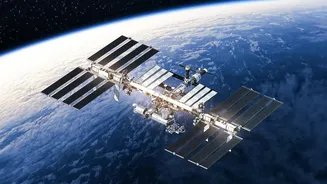
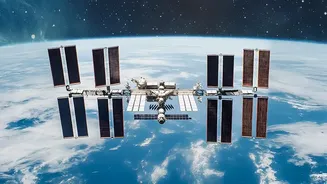
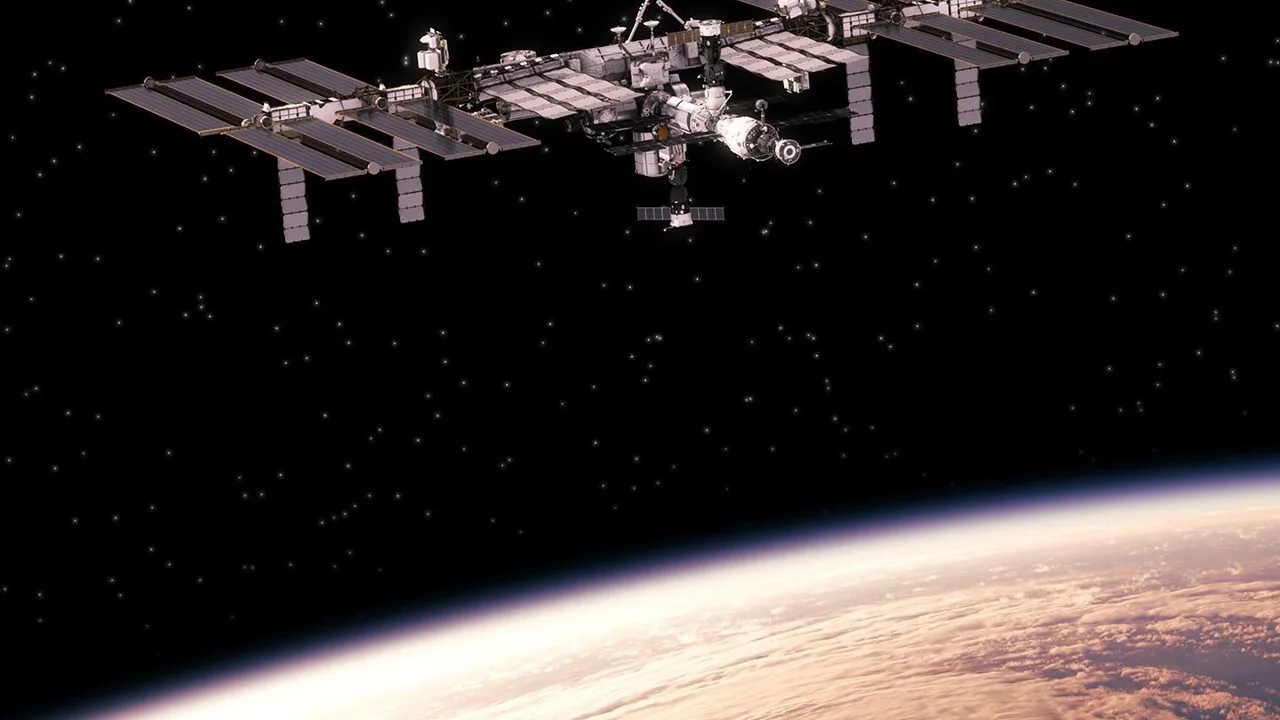
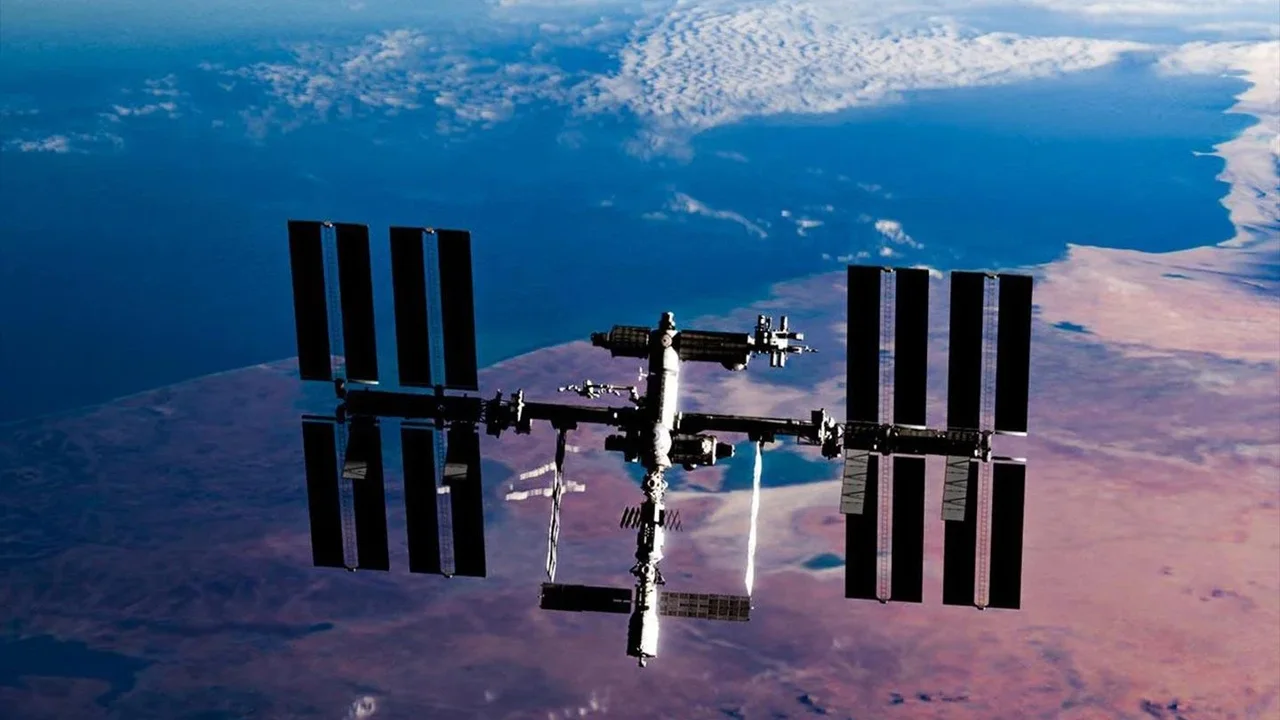
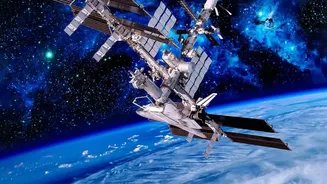
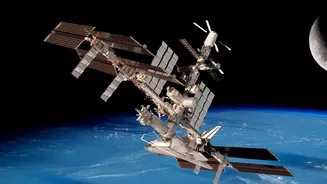
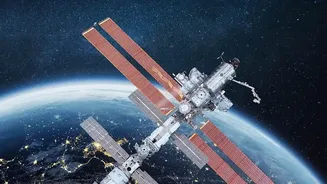
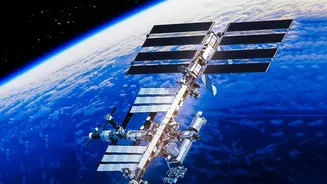
The International Space Station (ISS) is a massive structure, roughly the size of a football field, orbiting about 400 kilometres above Earth. It's not visible because of its own lights, but because its large solar panels and modules reflect sunlight.
This is why the best time to see it is during dawn or dusk. At these times, you are in darkness on the ground, but the sun is still hitting the high-flying station, making it shine brightly against the twilight sky. The ISS travels at an incredible speed of about 28,000 km/h, completing an orbit of Earth roughly every 93 minutes. To a viewer on the ground, it appears as a very bright, steady point of light moving silently and swiftly across the sky. Unlike an airplane, it doesn't have flashing lights.
Your Digital Guide to the Cosmos
This is where skywatching applications come in. These powerful tools use your phone's GPS to know your exact location and pull in real-time orbital data for thousands of satellites, including the ISS. They calculate precisely when and where the station will be visible from your neighbourhood. The apps can tell you the exact time a pass will start, the direction it will appear from (usually in the west), how high it will get in the sky, and where it will disappear. This removes all the guesswork, turning what seems like a difficult astronomical challenge into a simple and rewarding activity for anyone.
Top Apps for Tracking the ISS
Several excellent apps can turn you into an expert station spotter. NASA's official Spot The Station app (available for iOS and Android) is a fantastic starting point. It provides a list of upcoming sighting opportunities and can send you alerts so you don't miss a pass. Another highly popular option is ISS Detector, which not only tracks the ISS but can also be expanded to include Starlink satellite trains and other bright objects. It even has a weather integration feature to let you know if clouds will spoil the view. Other great choices include Heavens-Above and Satellite Tracker, both of which provide precise predictions for visible satellite passes. Many of these apps also feature an augmented reality (AR) view, allowing you to point your phone at the sky to see exactly where the station will travel.
A Step-by-Step Guide to Your First Sighting
Ready to give it a try? First, download one of the recommended apps and grant it location access. Open the app and look for the next visible pass in your area. The app will likely give it a rating based on how bright and high it will be; aim for a high-rated pass for your first attempt. Next, set a notification for about 10-15 minutes before the pass begins. When you get the alert, head outside to a spot with a clear view of the sky, away from tall buildings and bright city lights if possible. Open your app's compass or AR feature to see the predicted path. A pass at 90 degrees maximum height means it will go directly overhead. At the designated time, look towards the direction where the app says the ISS will appear and watch for a bright, star-like object moving steadily across the sky. A typical pass lasts for just a few minutes, so be ready.