






Meet Your New Galactic Neighbor
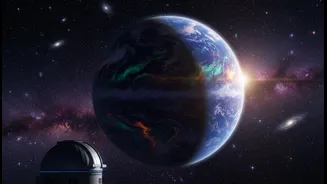
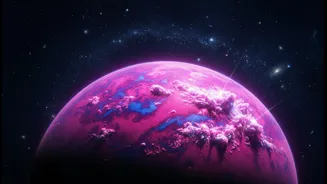
Just 25 light-years away, in the direction of the constellation Camelopardalis, lies a world that has astronomers buzzing with excitement. This isn't just another distant pinprick of light; it's GJ 3378b, a newly confirmed exoplanet that represents one
of our closest cosmic neighbors with the potential for habitability. The planet orbits a red dwarf star—the most common type of star in our Milky Way galaxy—and completes a full 'year' in just over 21 days. Its relative proximity and compelling characteristics have immediately elevated it to the top of the list for worlds that demand a closer look in our timeless quest to find life beyond Earth.
What Makes a 'Super' Earth?
The term 'Super-Earth' might conjure images of a planet with capes, but the classification is a bit more scientific. It refers to a class of planets more massive than Earth but lighter than ice giants like Neptune. GJ 3378b fits this profile perfectly, with a mass about 2.3 times that of our home world. This detail, refined by recent analysis, is crucial. Early estimates suggested a much heavier planet, which would likely mean it was a 'mini-Neptune' with a thick, crushing gas atmosphere hostile to life. The revised, lower mass makes it far more likely that GJ 3378b is a rocky, terrestrial world like Earth or Mars, providing a solid surface where life, as we know it, could theoretically gain a foothold.
The 'Goldilocks' Promise
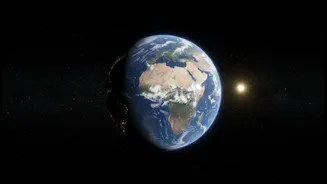
Every promising exoplanet story needs a 'Goldilocks' zone—the region around a star where conditions are not too hot and not too cold for liquid water to exist on a planet's surface. GJ 3378b orbits squarely within this habitable zone. It receives about 90% of the energy that Earth gets from our Sun, placing it in a temperate sweet spot that has captured the scientific community's imagination. This Earth-like level of stellar radiation is a major reason for the excitement, as it provides the right amount of energy to potentially sustain liquid water, which is considered the single most critical ingredient for life.
The Atmosphere Question
Despite the promising signs, there's a significant catch: does GJ 3378b even have an atmosphere? This remains the single biggest mystery. The planet is described as sitting on the edge of a 'cosmic shoreline'—a theoretical boundary where a star's intense radiation can strip away a planet's atmosphere over billions of years. Its host star, a red dwarf, is smaller and cooler than our sun, but these stars are also known for being violently active, especially in their youth, blasting nearby worlds with powerful flares. Without a sufficiently thick atmosphere to protect it and maintain surface pressure, any liquid water would boil away into space, rendering the planet barren. Whether GJ 3378b managed to hold onto its gaseous envelope is the critical question that will determine its true potential for life.
A Glimpse into the Future
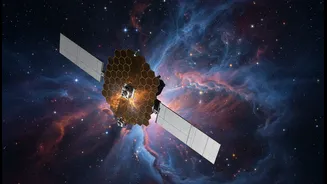
So, how do we solve the mystery of GJ 3378b's atmosphere? The planet was discovered using the radial velocity method, which detects the gravitational 'wobble' a planet induces on its star. This method is powerful for finding planets but doesn't tell us if the planet transits, or passes in front of, its star—a key event that allows telescopes to analyze the composition of an atmosphere. For now, the answer lies with the next generation of observatories. Astronomers will have to wait for powerful future instruments, like NASA's planned Habitable Worlds Observatory, which is slated to launch in the 2040s. Such telescopes may be able to directly image planets like GJ 3378b, finally confirming if it has an atmosphere and even searching it for biosignatures—the chemical traces of life.