





The Celestial Balancing Act
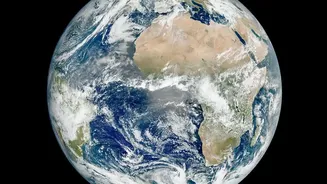
The September equinox, which in 2026 occurs on September 23, marks the official start of autumn in the Northern Hemisphere. The term 'equinox' comes from the Latin for "equal night," referring to the moment when the Sun crosses the celestial equator—an
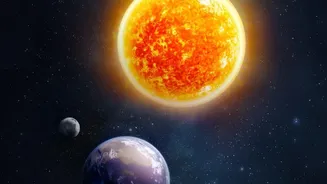
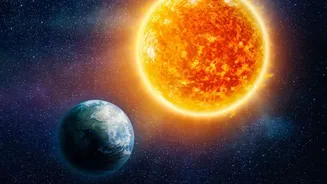
imaginary line in the sky directly above Earth's Equator. At this specific point in our planet's orbit, Earth's axis isn't tilted toward or away from the Sun. Instead, the tilt is perpendicular to the Sun's rays, meaning both the Northern and Southern Hemispheres receive sunlight almost equally for a brief period. This event is not about the Earth's distance from the Sun but is entirely due to our planet's 23.5-degree axial tilt as it journeys around the star.
The Great Daylight Shift Begins
Immediately following the September equinox, the balance of light tips. The Northern Hemisphere begins to tilt away from the Sun, while the Southern Hemisphere starts tilting towards it. This shift is the engine of our seasons. For those in the Northern Hemisphere, including all of India, this means the Sun's path across the sky will appear lower and shift further south each day. The direct consequence is that our days start getting shorter and the nights grow longer. This process will continue until the winter solstice in December, which marks the shortest day of the year. After the winter solstice, the cycle will slowly reverse, and daylight hours will begin to increase once more.
It’s Not Quite Equal
While the word 'equinox' suggests equal day and night, it's a common misconception that they are precisely 12 hours each on this day. In reality, on the day of the equinox, most places experience slightly more daylight than darkness. This happens for two main reasons. Firstly, sunrise is defined as the moment the upper edge of the Sun becomes visible over the horizon, and sunset is when its last edge disappears. This gives us a few extra minutes of light compared to measuring from the Sun's center. Secondly, Earth’s atmosphere bends sunlight, a phenomenon known as refraction. This allows us to see the Sun for several minutes before it has physically risen and after it has set. The day when daylight and nighttime are truly closest to 12 hours long is called the 'equilux', and it occurs a few days after the autumn equinox in the Northern Hemisphere.
Your Latitude Dictates The Pace
The rate at which you lose daylight depends significantly on your location, or more specifically, your latitude. The change is most dramatic around the time of the equinoxes. Cities at higher latitudes, farther from the equator, experience a much faster loss of daylight. For example, a city like London or Seattle might lose over 90 minutes of daylight during the month of September. In contrast, cities closer to the equator, like Mumbai or Chennai, see a much more gradual change. While the days are certainly getting shorter everywhere in the Northern Hemisphere, the difference is far less pronounced. This is why autumn can feel like it arrives very quickly in northern countries, while regions closer to the tropics retain a more summer-like feel for longer.
Astronomical Versus Meteorological Seasons
While the equinox marks the astronomical start of autumn, you may hear meteorologists and weather forecasters refer to September 1 as the first day of the season. This is because they use a different system. Meteorological seasons are based on the annual temperature cycle and align with the calendar months to make climate data easier to compare year after year. For them, autumn in the Northern Hemisphere consistently includes September, October, and November. So while astronomers look to the Earth's orbit for the exact moment of seasonal change, meteorologists prefer a tidier, three-month block. Both are valid ways of marking time, just with different purposes in mind.