



What is Child’s Pose (Balasana)?
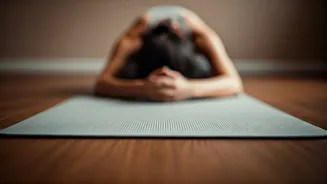
Child's Pose, or *Balasana* in Sanskrit, is a gentle, restorative yoga posture that resembles a child's natural resting position. [4] It is considered one of the most fundamental and accessible poses in yoga, often used as a moment to rest, reconnect
with the breath, and reset the body between more challenging sequences. [4, 10] But its simplicity is deceptive; this humble pose is a powerful tool for releasing tension throughout the body, particularly in the back, neck, and shoulders. [2, 3] It encourages a state of surrender and calm, making it popular not just with yogis, but also with desk workers and anyone seeking relief from physical and mental stress. [2]
Your Step-by-Step Guide to the Pose
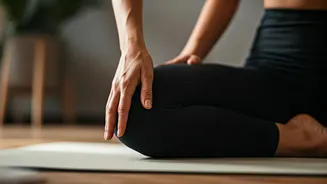
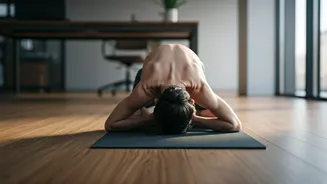
Performing Child's Pose correctly is key to unlocking its benefits. Follow these simple steps: 1. **Start on all fours:** Begin on a yoga mat or soft surface on your hands and knees, in a 'tabletop' position. [12] 2. **Sit back:** Bring your big toes together to touch and sit your hips back toward your heels. [9, 14] 3. **Fold forward:** As you exhale, gently lower your torso down, letting it rest between or on top of your thighs. [7] 4. **Rest your forehead:** Allow your forehead to rest softly on the floor. [14] Your neck should feel relaxed. If your head doesn't comfortably reach the mat, place a folded blanket or block underneath for support. [3, 7] 5. **Position your arms:** You have two main options here. You can extend your arms forward with palms facing down for a gentle shoulder and back stretch (Extended Child's Pose). [1, 4] Or, for deeper relaxation, you can rest your arms alongside your body with your palms facing up. [1, 5] 6. **Breathe and relax:** Stay in the pose for at least 30 seconds, or for several minutes if it feels good. [5] Focus on taking slow, deep breaths, imagining your breath expanding into your back. [3] To come out, use your hands to gently push yourself back up to a seated position. [3]
Key Benefits for a Stiff Spine
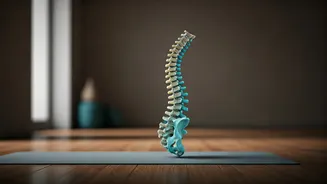
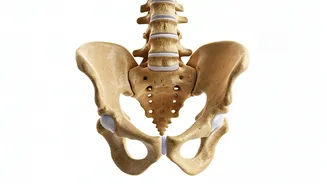
This pose is particularly therapeutic for the back. The forward-folding position creates a gentle flexion in the spine, allowing the muscles along your back to lengthen and release. [2, 8] It specifically targets the erector spinae muscles, which run along your spine and can become tight from poor posture or prolonged sitting. [10] This gentle stretch can help decompress the vertebrae, creating space and relieving pressure. [2] The posture also provides a mild stretch for the hips, thighs, and ankles, all of which are connected to spinal health. [3] By calming the nervous system, it further helps to reduce muscle tension that is often related to stress. [2, 8]
Variations for Every Body
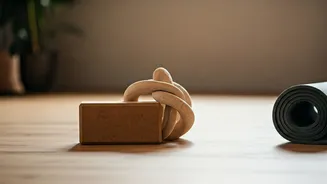
Child's Pose is meant to be restful, so it's important to make it comfortable for your body. [3] Don't hesitate to use props. [1] * **For tight hips:** Try the Wide-Knee Child's Pose by separating your knees as wide as your mat while keeping your big toes touching. This creates more space for your torso. [4, 12] * **For knee or ankle sensitivity:** Place a rolled-up blanket or towel under your ankles or in the crease behind your knees to reduce pressure. [3, 10] * **If your head doesn't reach the floor:** Rest your forehead on a yoga block, a cushion, or your stacked fists to keep your neck in a neutral and relaxed position. [3, 7] * **For extra support:** Place a bolster or large pillow lengthwise between your thighs and drape your torso over it. This is a very restorative variation. [1, 13]
When to Practice and When to Be Cautious
You can practice Child's Pose anytime you feel tension building in your back or shoulders, as a cool-down after exercise, or before bed to help release the day's stress. [5] While it is a very safe pose for most people, there are a few situations where you should be cautious. If you have a recent or acute knee injury, you should avoid the pose or modify it significantly. [7, 11] Those with high blood pressure or who are prone to migraines should also approach the pose with care, perhaps keeping the head elevated. [11, 14] Pregnant individuals can practice a modified version with knees wide apart to make space for the belly but should avoid any compression. [7, 14] If you experience any sharp pain, gently come out of the pose. [4]