








The Rise of the AI Travel Assistant
Artificial intelligence tools like ChatGPT, Gemini, and specialized travel apps are becoming the first stop for a growing number of travellers. Instead of juggling dozens of browser tabs, you can now ask a single bot to brainstorm a week-long family holiday,
find a beach destination with specific amenities, or build a day-by-day itinerary in seconds. These AI assistants analyze vast amounts of data to provide personalized recommendations for flights, hotels, and activities tailored to your interests and budget. The promise is a streamlined, efficient planning process that uncovers hidden gems and makes travel more accessible.
The 'Hallucination' Holiday: Where Bots Go Wrong
While AI is great for inspiration, it has a significant drawback: it can be confidently incorrect, a phenomenon known as “hallucinating.” AI models might invent non-existent restaurants, misrepresent a hotel’s location, suggest hiking trails with unrealistic timings, or provide outdated visa information. Because the AI presents this information with a polished, authoritative tone, it’s easy to accept it as fact. These errors stem from the AI’s method of recognizing patterns in data, rather than truly understanding the world. Relying solely on its output can lead to anything from minor inconvenience to a ruined trip.
Your Pre-Travel Verification Checklist
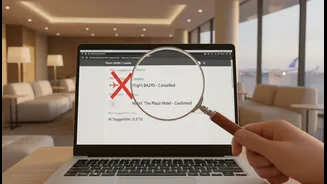
Treat every piece of AI-generated advice as a starting point, not a final answer. The most critical step is basic verification. Before booking anything, confirm the details with the primary source. For a flight, that means checking the flight number and time on the airline’s official website. For a hotel, it means calling them or using their site to confirm the reservation details. This simple habit is your best defense against both AI errors and sophisticated phishing scams that use AI to create fake booking sites.
Booking Flights and Hotels Safely
When it comes to high-stakes bookings, human oversight is non-negotiable. After getting a recommendation from an AI, go directly to the airline or hotel's official website to book. Be wary of links provided within the chat, as scammers can manipulate AI to surface fraudulent sites that look real. Check the website URL carefully before entering payment details; it should be the company's actual domain (e.g., booking.com), not a close imitation (e.g., booking-services.net). A host pushing you to pay off-platform to avoid fees is a major red flag for fraud.
Confirming Activities and Itineraries
AI itineraries can be overly ambitious, packing days with back-to-back activities and ignoring realistic travel times between locations. After your AI generates a plan, map the locations yourself using a tool like Google Maps. Check recent reviews for any recommended restaurants or attractions to ensure they are still in operation and that the hours are correct. For tours and activities, look for a confirmation email directly from the provider. Trusting a polished-looking itinerary without checking the underlying logistics is a common mistake that can lead to a frantic, stressful vacation.