


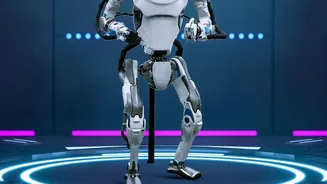
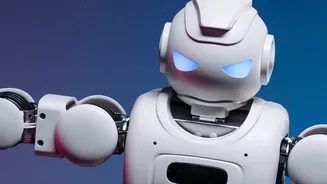
For years, humanoid robot projects have captivated the public with videos of backflips and dancing. But the era of the viral demo is ending, and a new, more demanding phase has begun: proving their worth on a balance sheet.
From Science Project to Spreadsheet Asset
The conversation around humanoid
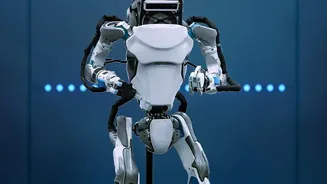
robots is shifting from technological marvel to financial metric. Companies like Figure AI, Boston Dynamics, and Tesla are no longer just building impressive machines; they are deploying them in real-world commercial pilots. Figure AI's robots have sorted packages and handled sheet metal at a BMW plant in South Carolina. Boston Dynamics, now part of Hyundai, is preparing its famously agile Atlas robot for work in automotive manufacturing facilities. And Tesla aims to deploy its Optimus bots not only in its own factories but also to begin external sales. The market is forecast to be substantial, with some estimates projecting it could reach tens of billions of dollars by the early 2030s. This transition marks a critical 'show me' phase where the central question is no longer 'Can it walk?' but 'Does it pay for itself?'.
The Hard Math of a Robotic Co-Worker
The business case for a humanoid robot boils down to a simple calculation: does the value it creates exceed its total cost of ownership?. This calculation, known as Return on Investment (ROI), is now the primary driver of adoption. Factors driving demand include persistent labor shortages, particularly for repetitive or physically demanding jobs. On the cost side, prices are falling faster than predicted. In just one year, manufacturing costs for a single unit dropped by as much as 40%, with some models now available for significantly less than their predecessors. This has brought operating costs down to a level where, in some high-utilization scenarios, a robot's hourly cost is becoming competitive with human labor. As a result, payback periods are shrinking, with some analyses suggesting ROI can be achieved in under two years for logistics and within 18 to 36 months for manufacturing.
The Reality Beyond the Hype
Despite the progress, significant hurdles remain between a successful pilot and mass deployment. Hardware, more than software, is the primary bottleneck. Key challenges include reliability and durability over long periods, with industrial customers expecting uptimes of 95-99%—a benchmark most humanoids are still working toward. Battery life is another major constraint; few robots can currently operate for a full eight-hour shift without needing to recharge or swap batteries. While a robot might autonomously navigate to a charging station, this downtime eats into its productive hours. Furthermore, while AI has made huge strides, robots can still struggle with unexpected situations or 'edge cases' that fall outside their training data. Safety is also a paramount concern, as these mobile, powerful machines must work alongside people in environments designed for humans.
The Search for a Killer Application
The first wave of commercial deployment is focused on highly structured environments where tasks are predictable. Logistics, warehousing, and automotive manufacturing are the primary markets. Here, robots are tasked with material handling, sorting, and performing repetitive assembly line work. Figure's trial at BMW involved moving over 90,000 components, while Agility Robotics has commercial agreements to place its Digit robot in logistics and warehousing facilities. Tesla's Optimus bots are being put to work sorting battery cells and handling parts in its own factories as a crucial data-gathering phase before wider commercialization. The promise of humanoids is their generality—the ability to perform multiple tasks in a human-centric space without extensive facility redesign. This flexibility is what separates them from traditional, fixed industrial robots and forms the core of their longterm value proposition.