





Why We Crave Comfort
There’s a scientific reason we reach for indulgent treats during the monsoon. The reduced sunlight can lead to a dip in serotonin, our 'happy hormone'. [10, 13, 14] Our bodies then crave carbohydrates and sugary foods to get a quick boost. [10] Beyond
the science, there’s a deep emotional connection. The cooler, damp weather makes us seek warmth and comfort, and what’s more comforting than a hot, sweet dish? [3, 15] These cravings are often tied to nostalgia—memories of childhood, family gatherings, and the simple joy of watching the rain with a delicious treat in hand. [3, 13] It's a season where food becomes intertwined with atmosphere and emotion.
Jalebi: The Golden Spiral of Happiness
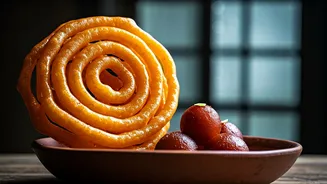
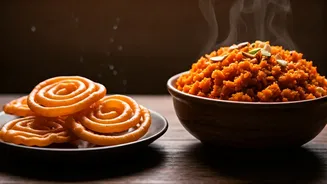
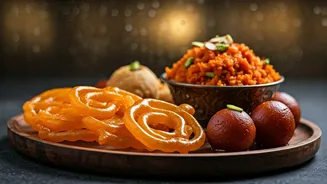
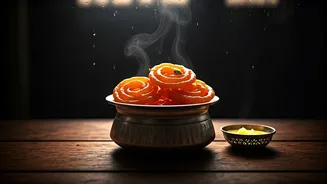
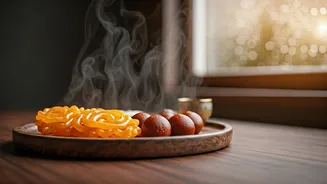
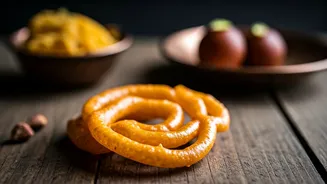
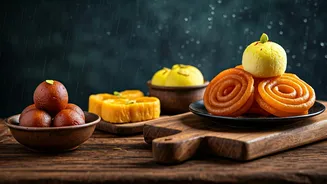
There's something magical about watching spirals of fermented batter being deep-fried and then dunked into glistening sugar syrup. [7, 21] Eaten hot, the jalebi offers a delightful contrast of a crispy exterior giving way to a chewy, syrup-filled centre. [21] This sweet is a quintessential monsoon indulgence across India, often paired with milk or rabri. [7, 28] While its origins may trace back to West Asia, where it is known as 'zalabia', India has made the jalebi its own, creating countless regional variations. [28, 30] In some parts of Rajasthan and Gujarat, it's a star during the monsoon festival of Teej. [5] The experience of eating a hot jalebi as the rain falls outside is a core monsoon memory for many. [7]
Gajar ka Halwa: A Hug in a Bowl
Though traditionally considered a winter dessert, Gajar ka Halwa's comforting warmth makes it a beloved treat during the monsoon as well. [7, 11] This rich pudding is made by slow-cooking grated carrots in milk with sugar and ghee until it reaches a soft, juicy texture. [20, 23, 25] The process is a labour of love, as the carrots and milk gently simmer, filling the kitchen with an irresistible aroma. [18] While traditionally made with the sweet, red carrots available in winter, it can be enjoyed year-round. [18, 25] Garnished with nuts like almonds and pistachios, every spoonful is a perfect blend of sweetness and richness, making it an ideal dessert to combat the monsoon chill. [20]
Moong Dal Halwa: The Rich & Roasty Delight
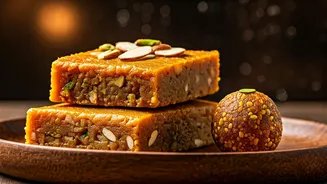
Known for its rich, melt-in-the-mouth texture and nutty aroma, Moong Dal Halwa is a luxurious dessert often prepared for special occasions. [7, 19] Made from yellow moong dal, ghee, sugar, and milk or khoya, its preparation is an art. [7, 16] The key lies in slowly roasting the ground lentils in ghee until they turn a beautiful golden brown and release a fragrant aroma. [16, 19] This process is time-consuming but essential for the halwa's signature grainy texture and flavour. [17, 22] The warmth and generous amount of ghee in this dessert provide a comforting energy boost on damp, chilly days, making it another perfect monsoon companion. [7]
Malpua with Rabri: The Classic Indulgence
Often described as an Indian pancake, malpua is a soft, fluffy dessert that is deep-fried and then soaked in fragrant sugar syrup. [7, 9] Made from a batter of flour, semolina, and sometimes banana or coconut, these are a favourite in states like Bihar, Odisha, and Uttar Pradesh. [6, 9] For the ultimate indulgence, warm malpuas are served with a generous topping of rabri—a thickened, sweetened milk. [4] This combination of the soft, syrup-soaked pancake with the creamy rabri is pure decadence, perfect for a cool, rainy evening. [4]
Gulab Jamun: The Ever-Popular Sweet Soaked in Syrup
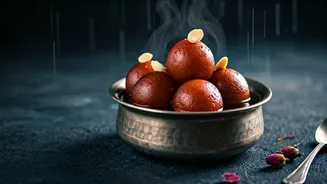
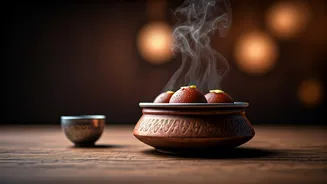
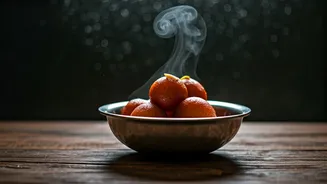
No list of Indian desserts is complete without the crowd-pleasing Gulab Jamun. [12] These soft, deep-fried balls are traditionally made from khoya (dried milk solids) and then soaked in a rose and cardamom-flavoured sugar syrup. [9] Enjoying them warm is considered heavenly, especially during the rainy season. [9, 11] The soft, spongy texture of the jamun soaking up the warm, sweet syrup provides a comforting sensation that is hard to beat on a gloomy day. [8, 11] It's a simple, timeless dessert that consistently delivers on its promise of sweet, milky satisfaction. [12]