



A New Kind of Habitat
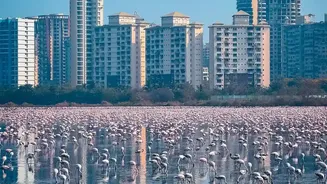
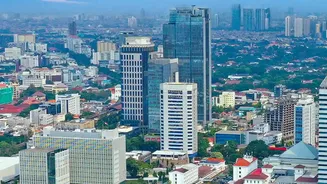
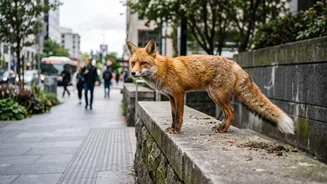
It seems counterintuitive: cities, with their noise, pollution, and endless concrete, should be the last place wildlife would flourish. Yet for a growing number of species, the urban landscape is a land of opportunity. Cities offer an abundance of resources
that are often more reliable than in the wild. Garbage bins and landfills provide a constant buffet, parks and gardens offer shelter, and the relative scarcity of large natural predators makes city life safer for many smaller animals. Species that are generalists—able to eat a wide variety of foods—and those that are naturally nocturnal have a distinct advantage. For them, a city isn't a barren wasteland; it's a complex and resource-rich ecosystem waiting to be exploited.
Mumbai's Leopards: Masters of Stealth
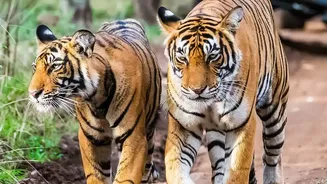
Perhaps no animal illustrates urban adaptation in India better than the leopards of Mumbai. Within the sprawling metropolis, Sanjay Gandhi National Park is an urban wilderness that hosts a dense population of these big cats. These leopards have learned to navigate the human-dominated landscape with incredible stealth. Primarily active at night, they use the city's corridors—overgrown drains and railway lines—to move unseen. Their diet has also shifted. While they still hunt natural prey within the park, they frequently prey on stray dogs, pigs, and other animals found at the city's edge, a testament to their adaptability. This has led to a unique, if sometimes tense, coexistence with Mumbai's human population, who are also learning to adapt their lives around their feline neighbours.
The Clever Monkeys of Delhi
In cities like Delhi and Jaipur, rhesus macaques have become prolific urbanites. Deforestation and the degradation of their natural habitats have pushed them into cities in search of reliable food sources. They have proven to be incredibly resourceful, learning to raid markets, kitchens, and garbage bins. Their social structures and intelligence allow them to learn from one another, quickly identifying new opportunities. However, their story also highlights the challenges of coexistence. The practice of feeding monkeys, often for religious reasons, has made them bolder and more demanding, sometimes leading to aggression when their expectations are not met. This has created a cycle of conflict that cities are now struggling to manage through better waste control and public awareness.
Evolution in Real Time
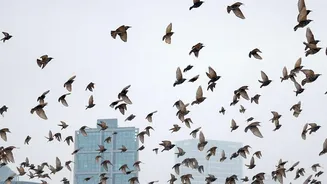
The changes in urban animals go beyond just learned behaviour; in many cases, we are witnessing evolution in action. Scientists call this 'human-induced rapid evolutionary change'. In response to city noise, for instance, some urban birds have started singing at a higher pitch to ensure their calls can be heard over the low-frequency rumble of traffic. Some lizards have evolved stickier toe pads to better grip smooth surfaces like glass and painted concrete. Even physiological changes are occurring. White-footed mice in New York have shown genetic shifts that may help them better digest fatty, human-associated foods like discarded pizza. These are not slow, gradual changes taking millennia, but rapid adaptations happening within generations, driven by the intense pressures of city life.
The Future of Urban Coexistence
The adaptation of wildlife to urban environments is a powerful reminder of nature's resilience. However, it also brings significant challenges, most notably an increase in human-wildlife conflict. From monkeys becoming a nuisance to the very real dangers posed by big cats, sharing our spaces requires new strategies. Successful coexistence depends on smart urban planning. This includes better waste management to avoid attracting animals, preserving green corridors that allow wildlife to move safely, and public education campaigns to help residents understand their wild neighbours. Trapping and relocating animals has often proven ineffective, as they either return or new animals move in. The focus is shifting towards managing our own behaviour to foster a shared urban ecosystem where both humans and animals can thrive.