


Understanding the Foundation of Tree Pose
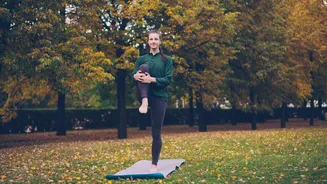
Before exploring arm variations, it's essential to establish a stable base. Begin in Tadasana (Mountain Pose), standing tall with your weight evenly distributed. Shift your weight onto one leg, keeping the knee soft and not locked. Bend your other knee and place
the sole of your foot on the inner ankle, calf, or thigh of the standing leg. A critical safety rule is to never place your foot directly on the knee joint, as this can cause strain. Actively press the lifted foot into the standing leg and vice-versa to create an engaged and stable connection. Find a fixed point in front of you to gaze at—your drishti—to help maintain focus and balance.
Beginner Level: Hands at Your Hips or a Wall
For those new to Tree Pose or anyone feeling a bit wobbly, the most stable arm position involves using external support. Placing your hands on your hips provides a sense of grounding and helps you monitor whether your hips are level and facing forward. An even more supportive option is to stand near a wall and place one hand on it for stability. This modification allows you to build confidence and focus on the alignment of your legs and core without the added challenge of balancing your upper body. It's an excellent way to understand the fundamentals of the pose before progressing.
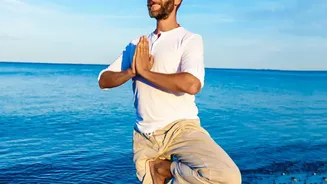
The Classic: Anjali Mudra (Hands in Prayer)
The most common and iconic variation is bringing the hands together in a prayer position at the heart centre, known as Anjali Mudra. This position encourages a tall spine and open chest while keeping the centre of gravity low and stable. Pressing the palms together gently creates a subtle engagement in the upper body that mirrors the action in the legs. This variation helps cultivate focus and a sense of inner calm, making it a popular choice in many yoga classes. It represents a beautiful balance between effort and ease.
Intermediate Challenge: Arms Out Like Branches
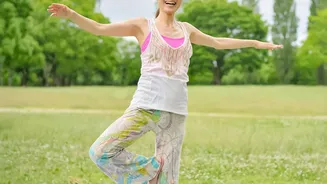
To start increasing the difficulty, you can extend your arms out to the sides, parallel to the floor, like the branches of a tree. This variation widens your base of support in the upper body, which can feel stabilizing for some, but it also introduces a new element for your body to balance. You can keep the arms straight or bend the elbows slightly. This position begins to challenge your proprioception—your body's awareness of its position in space—more than the previous variations. Some practitioners also enjoy a gentle swaying motion here, mimicking a tree in the wind, which further tests the stability of the core and standing leg.
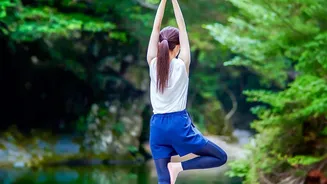
Full Expression: Arms Extended Overhead
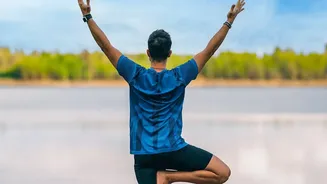
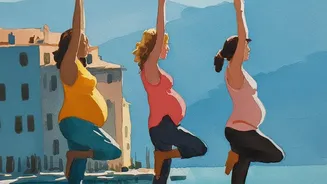
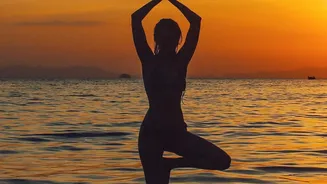
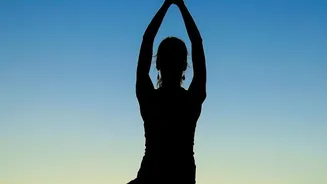
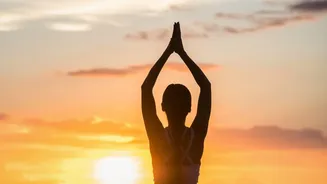
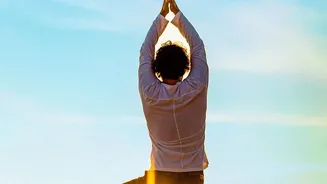
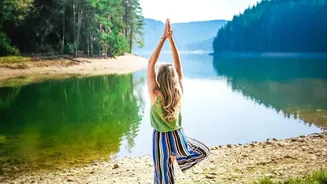
The full expression of Vrikshasana involves reaching the arms straight up towards the ceiling, either with palms touching or separated in a 'V' shape. This movement, called Urdhva Hastasana arms, raises your centre of gravity, which significantly increases the balance challenge. It demands greater core strength to keep the torso steady and prevent the ribs from flaring out. Raising the arms overhead symbolizes growth and openness, stretching the sides of the body and improving posture. For those with high blood pressure, it's often recommended to keep the hands at the heart centre instead of raising them overhead.
Advanced Variations for Deeper Focus
Once you feel stable with your arms overhead, there are further challenges to explore. One option is to introduce a twist, opening the arms wide while rotating the torso, which requires immense core control. Another common progression is to change your gaze by looking up toward your hands. For the ultimate balance challenge, you can try closing your eyes. Removing your visual focal point forces you to rely entirely on your inner sense of balance and the stability of your standing leg. These advanced variations turn the physical posture into a deep exercise in concentration.