






The Moon's Brutal Environment
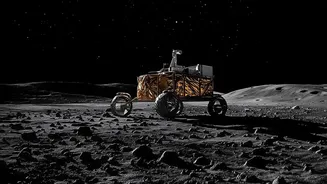
Before humanity can establish a permanent foothold on the Moon, it must solve a formidable problem: the lunar surface is incredibly hostile. Unlike Earth, the Moon has no significant atmosphere or magnetic field to protect it. This leaves anything on its
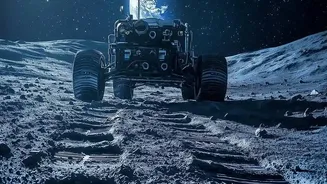
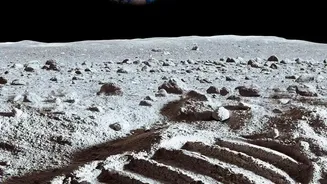
surface exposed to a constant barrage of cosmic radiation and solar flares, which can damage DNA and increase long-term health risks like cancer. The temperature swings are also extreme, from scorching daytime highs well over 120°C to frigid nighttime lows plunging below -130°C. Adding to the danger are micrometeorites, tiny particles traveling at immense speeds that can puncture spacesuits and equipment. Then there's the lunar dust, or regolith. It's not like dust on Earth; it's sharp, abrasive, and electrostatically charged. During the Apollo missions, this dust caused issues from skin irritation to damaging equipment, and long-term inhalation could pose serious health threats.
Nature's Underground Shelters
The solution to these surface dangers may have been waiting for billions of years. Researchers are increasingly focused on lunar lava tubes—vast, subterranean caverns left over from ancient volcanic activity. These tunnels formed when the surface of a lava flow cooled and hardened, while molten rock continued to flow underneath. Once the lava drained away, it left behind a hollow, cave-like structure. The potential scale is staggering; some lunar tubes could be hundreds of meters wide, large enough to house entire cities. The thick rock ceilings, potentially over 100 meters thick, would provide a natural and highly effective shield against radiation and micrometeorite impacts. Inside, temperatures are believed to be stable and mild, possibly hovering around a comfortable 17°C, eliminating the wild temperature fluctuations seen on the surface. These natural bunkers could drastically reduce the complexity and cost of building a lunar base.
Meet the Cave-Crawling Robots
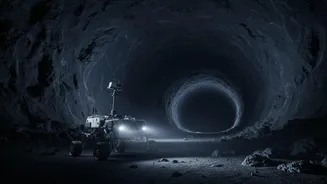
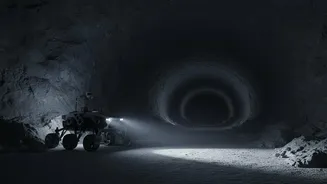
Finding and certifying these tubes as safe requires a new class of explorer: subterranean rovers. You can't just drive a standard Mars rover into a dark, unknown cave. Space agencies and private companies are developing specialized robots designed for this very purpose. These rovers need to be highly autonomous, capable of navigating treacherous, unmapped terrain in total darkness. Recent mission concepts feature teams of robots working together; one might remain at the entrance, while a smaller, more agile rover descends into the pit to explore. For example, NASA is funding the development of a tethered drone that would be lowered into a pit and powered by a laser from a surface rover, allowing it to explore and transmit data from deep inside a cave. Other concepts, like the WOLF Rover, are designed to use instruments like LiDAR to create detailed 3D maps of the tunnels they explore. These missions are the essential next step, moving from orbital observation to ground truth.
Mapping the Unseen World
The primary mission for these rovers is reconnaissance and mapping. For years, scientists have identified potential entrances to lava tubes, called skylights, from orbital data. But we know very little about what lies within. Rovers will be sent to scout these pits, using gravimetric surveys to detect the presence and scale of the void below the surface. Once inside, their task is to create high-resolution 3D maps, assess the structural integrity of the cave, and analyze the internal environment. They will search for potential hazards, such as instability or deep fissures, but also for resources. Some scientists believe these ancient, protected environments could hold deposits of water ice, a resource absolutely critical for long-term habitation, providing drinking water, breathable air, and rocket propellant. These robotic scouts are the advance party, providing the detailed blueprints needed before any human would dare to enter.
From Blueprint to Moon Base
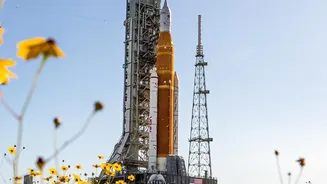
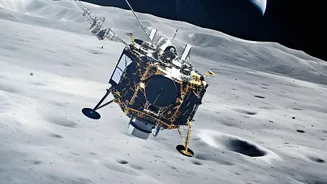
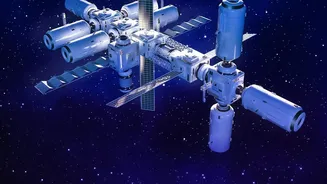
This research is a crucial component of larger plans for a sustained human presence on the Moon, such as NASA's Artemis program, which aims to establish a permanent base camp near the lunar south pole. While surface habitats will be the first step, leveraging a massive, naturally shielded lava tube could be the key to long-term settlement. Instead of shipping and assembling every part of a habitat from Earth, astronauts could deploy inflatable structures inside a prepared section of a cave. This approach dramatically increases safety and reduces reliance on complex life-support systems needed to combat the harsh surface conditions. Companies like Blue Origin, Firefly Aerospace, and Intuitive Machines are already developing large cargo landers capable of delivering the rovers, scientific equipment, and eventually the habitat components needed for such an undertaking. Exploring these subterranean realms isn't just a scientific curiosity; it's a practical step toward making humanity a multi-planetary species.